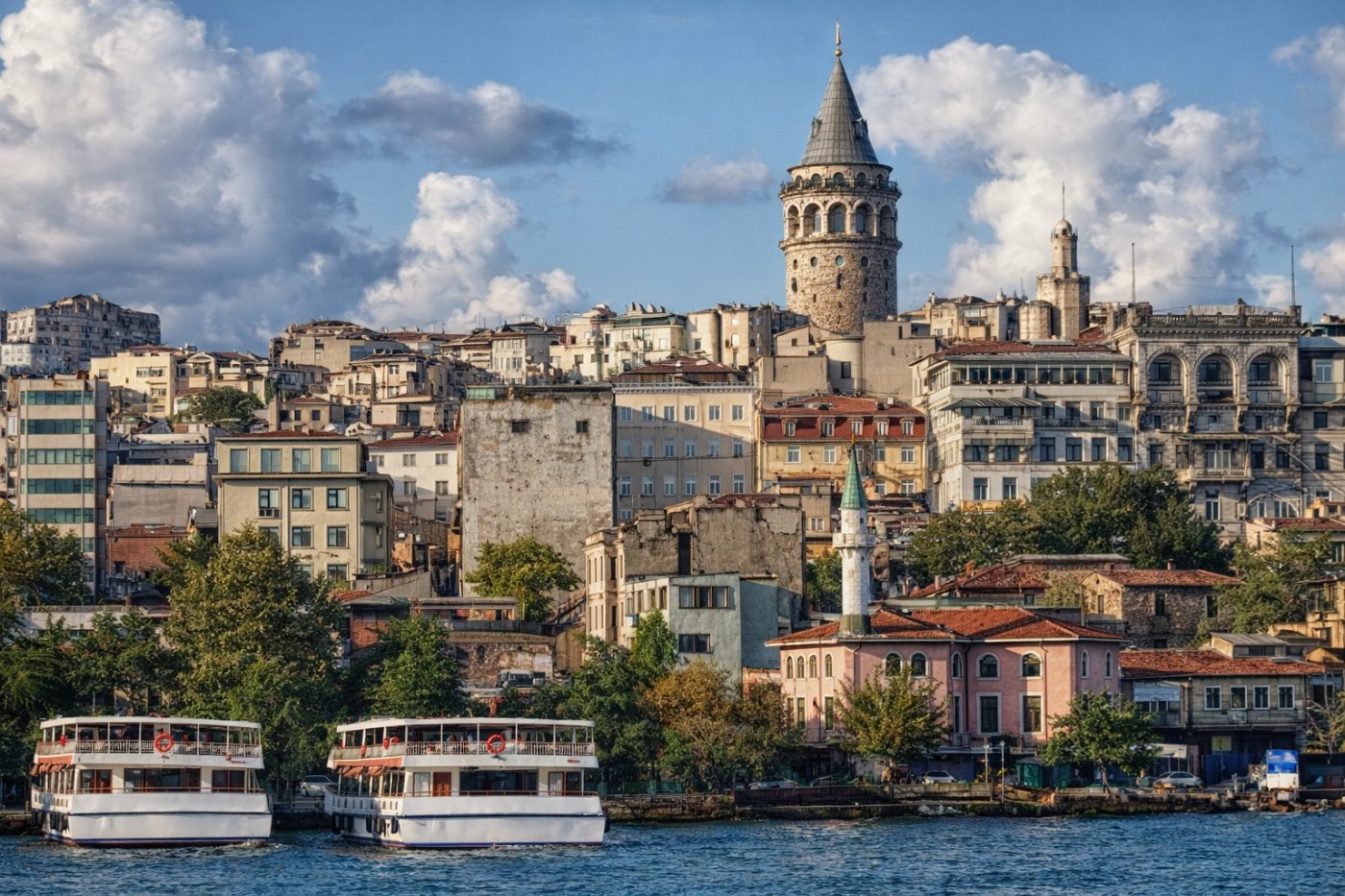
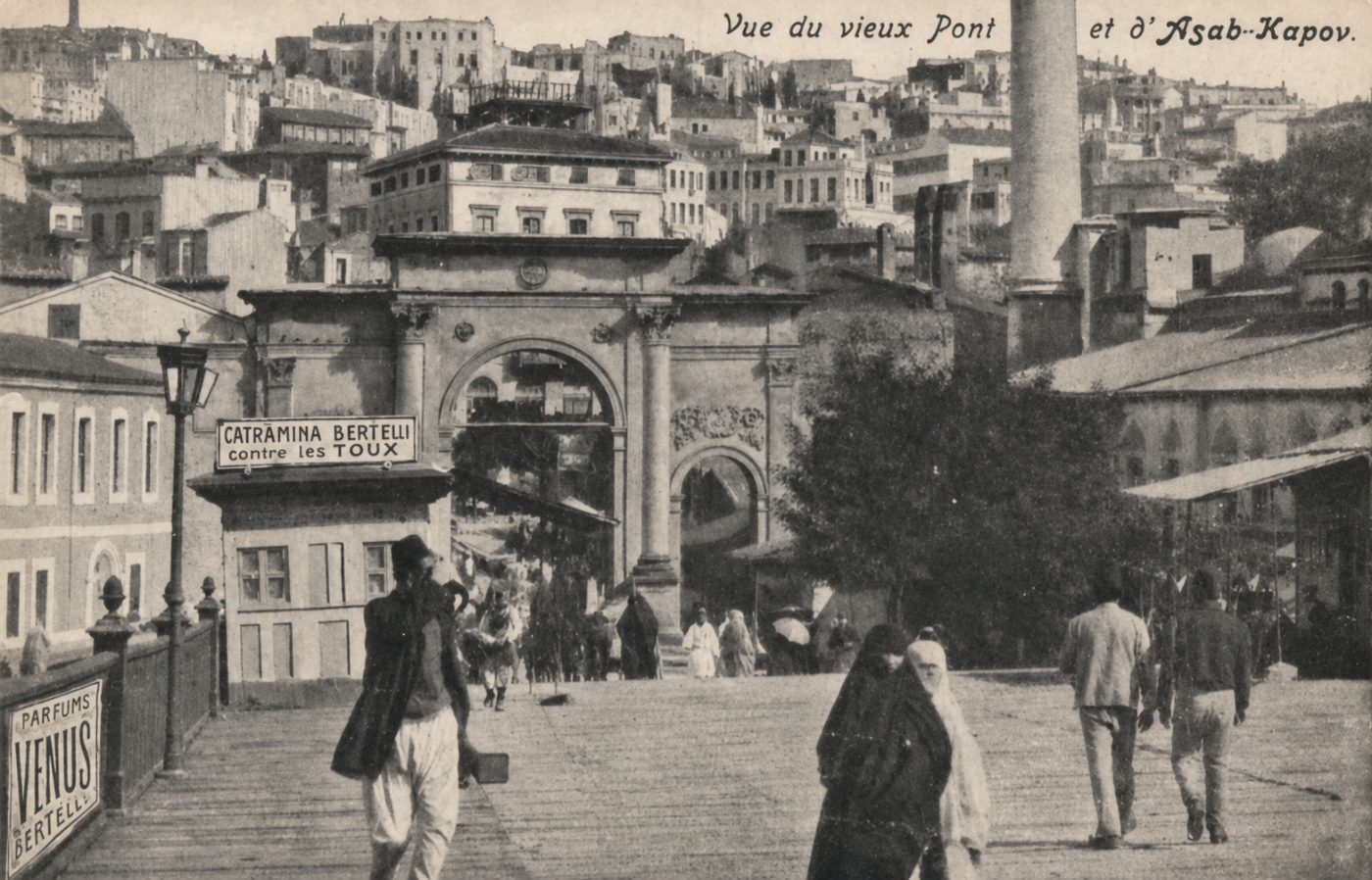
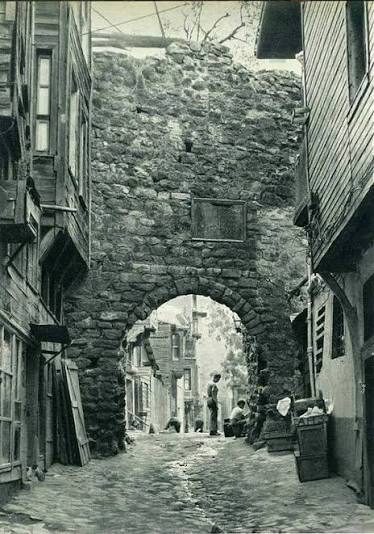
After the Conquest, the city was divided into four, for the purposes of judiciary administration: Istanbul (i.e. the historical peninsula), and Bilâd-ı Selâse (i.e remaining three regions). In other words, four qadiship were created to administer judicial affairs in Istanbul, Eyüp, Galata, and Üsküdar. The seat of the Galata qadi used to be located on Galata Mahkemesi Sokağı.
† The Galata qadiship should not be imagined as confined to walled Galata. At the time, 300 villages and 44 nahiyes (sub-districts), from Kasımpaşa as far north as İstinye and Yeniköy, lay within its bounds. Besides villages on the European shore of the Bosphorus such as Beşiktaş, Yeniköy and İstinye, the kazas (districts) of Marmara Island, Kapıdağ, Erdek, Mudanya and Bandırma were also attached to the Galata qadiship and governed by deputies (naib).
† The building of the Galata qadi is thought not to have survived. Some sources, however, suggest that Saksı Han, on the block bounded by Perşembe Pazarı Street and Bekar and Zencefil streets, was used as a courthouse in Ottoman times. Indeed, its plan does not follow the architecture of a han, and it has no courtyard; yet there is no document showing that it was the seat of the qadi. Saksı Han is thought to be an 18th-century building; the joints and the brick and stone work of its lower courses show that a Genoese building once stood on the site.
† According to Ekrem Hakkı Ayverdi, citing a record from 1476, towards the end of the reign of Mehmed II there were 1,521 houses in Galata – 535 Muslim, 592 Greek, 332 Frankish and 62 Armenian – and 260 shops.
It’s a narrow street that barely allows the passage of a vehicle and it is lined with 4- or 5-storey hans and office buildings with shops on the ground floor – just like many other narrow streets, or sokak, in the region. Some of the buildings on the street and its vicinity are of note for being examples of the architecture styles of Ottoman, Byzantium and Genoese eras; especially the following:
- The building at the intersection of Galata Mahkemesi Street and Perşembe Pazarı Street...
- The building at the intersection of Perşembe Pazarı Street and Keresteci Fazıl Sokak...
- The han at the intersection of Perşembe Pazarı Street and Eski Tay Çıkmazı Sokak.
Although there is no record about their construction dates, they probably date back to 18th, or even 17th century.
† Walking these streets, especially on Sundays when the businesses are closed, feels like stepping into a time tunnel.
From recent research
Captain for a single voyage in Galata
The register records that a captain (reis) was appointed to a ship for a single voyage on the Reşid İskelesi route, for 250 esedî kuruş. Hanife Çavdar examines this appointment as one of the cases in which owning a ship and captaining it could be separate.
Source: Hanife Çavdar (2026), Galata’da Deniz Ticareti ve Şirketleşme: XVII. Yüzyılın İkinci Yarısında Gemi Reisleri, Emek ve Ortaklık Yapıları, pp. 334–336, esp. p. 335 (Galata court register 110/37a-1).
Source: Akdoğan Özkan, A Traveler’s Guide to Galata (Nar Turizm, 2016), translated by Volkan Ersoy. Paragraphs marked † appear only in the 2017 Turkish edition of the book (Galata Gezi Rehberi) and were translated for this site.
Last updated: · Last checked: (address and map position)
Spotted a mistake or something missing on this page? Suggest a correction