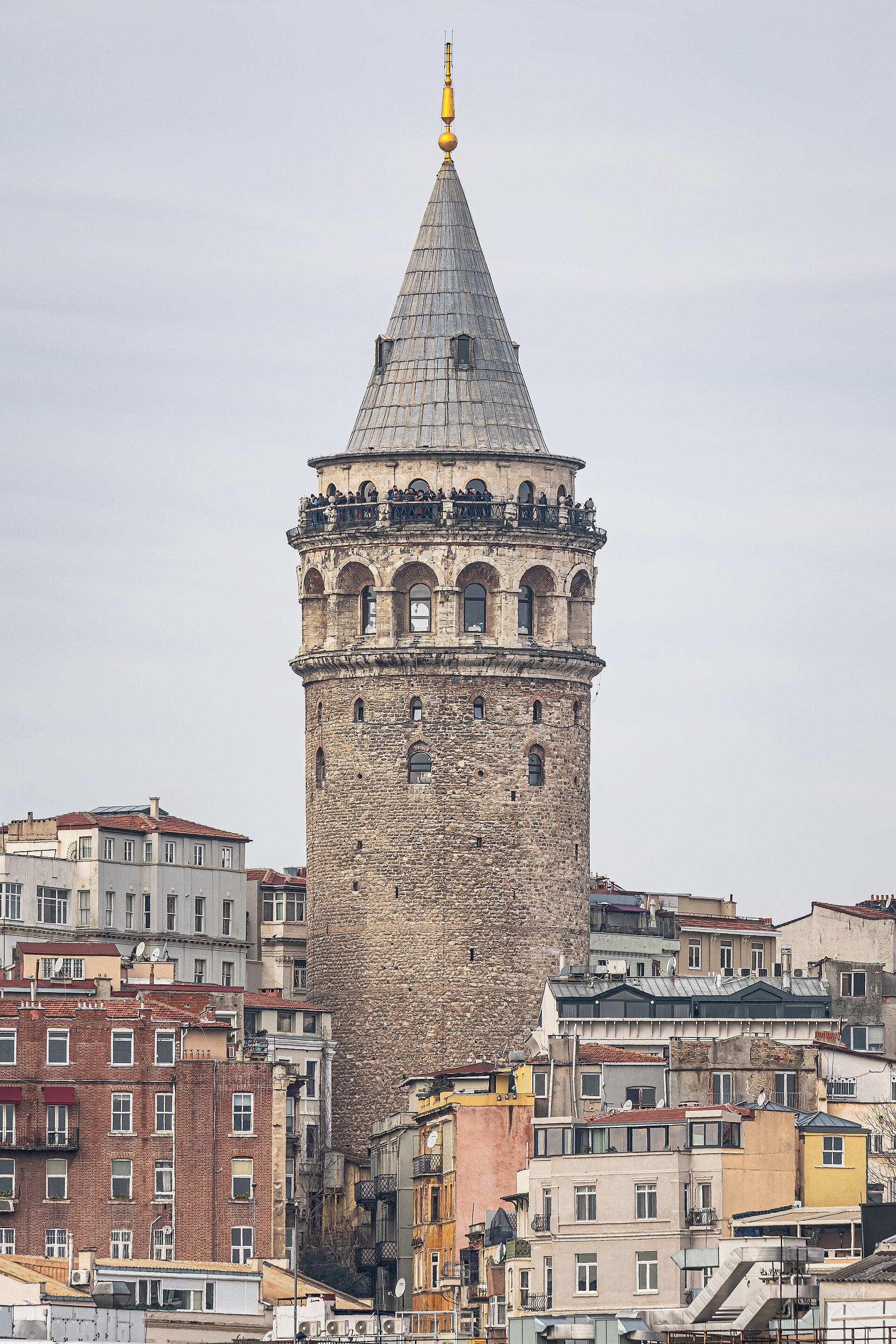
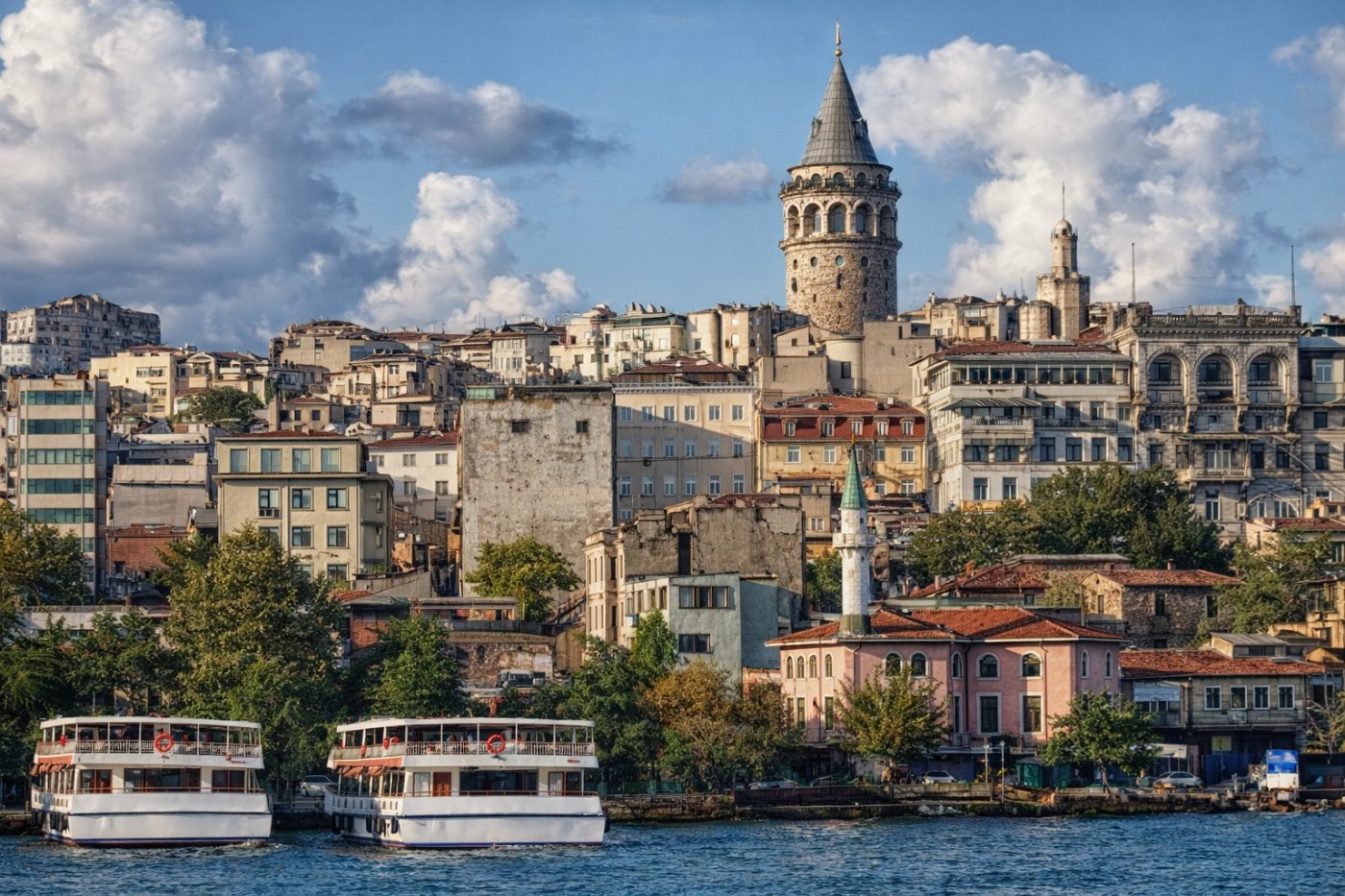
Galata Tower
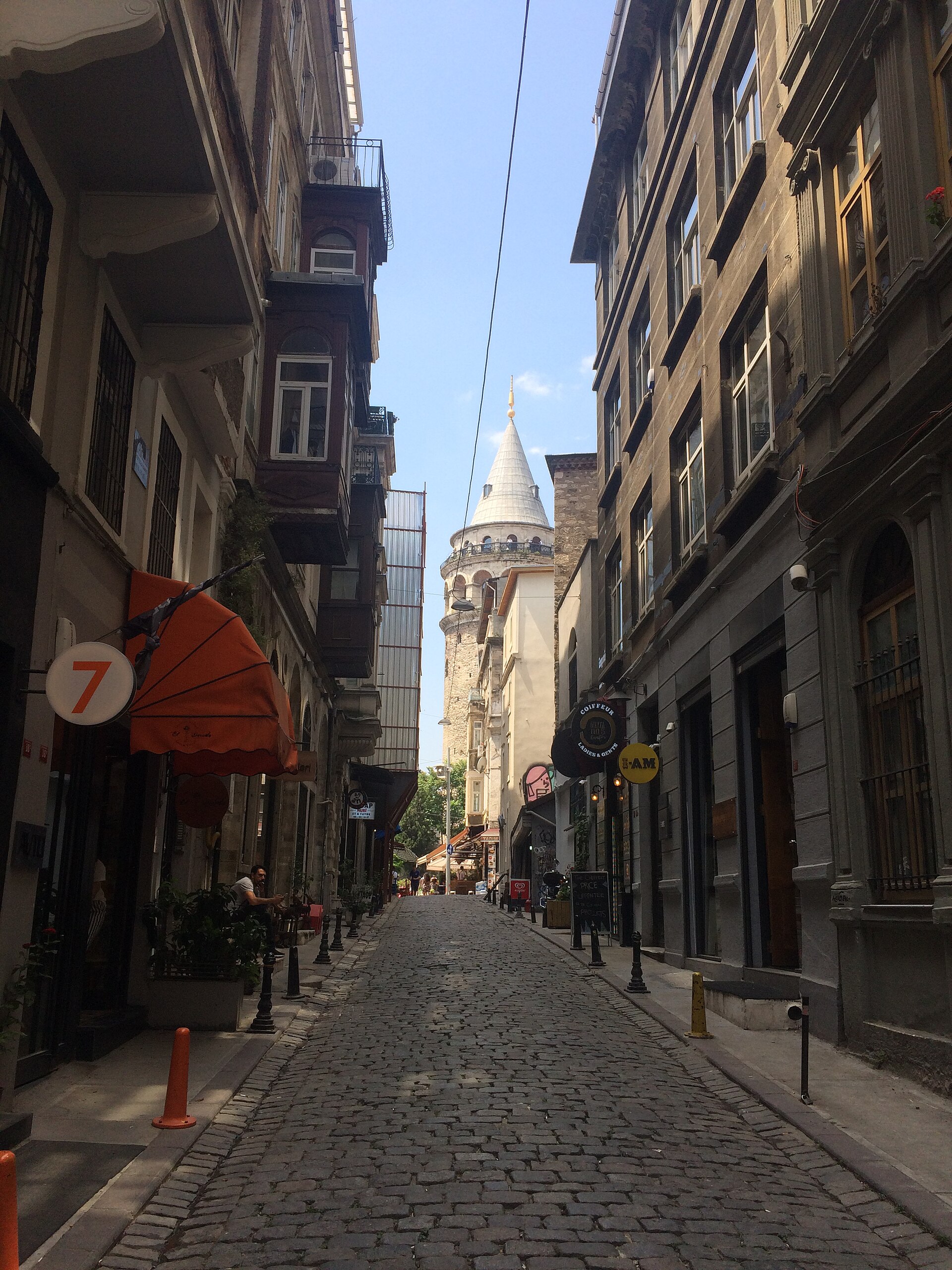
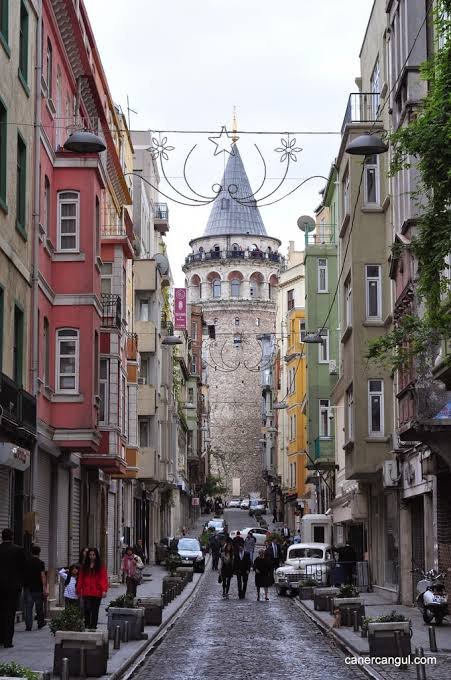
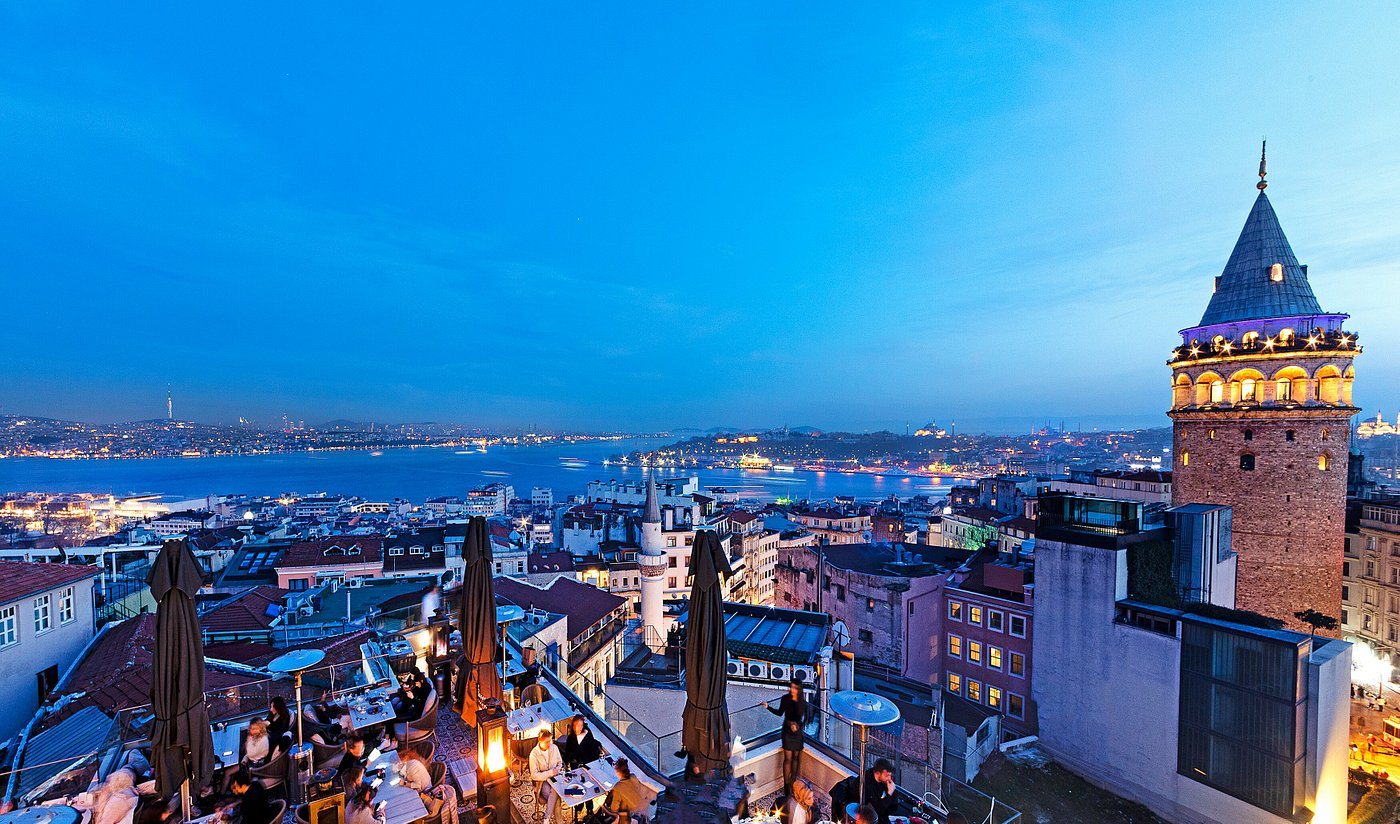
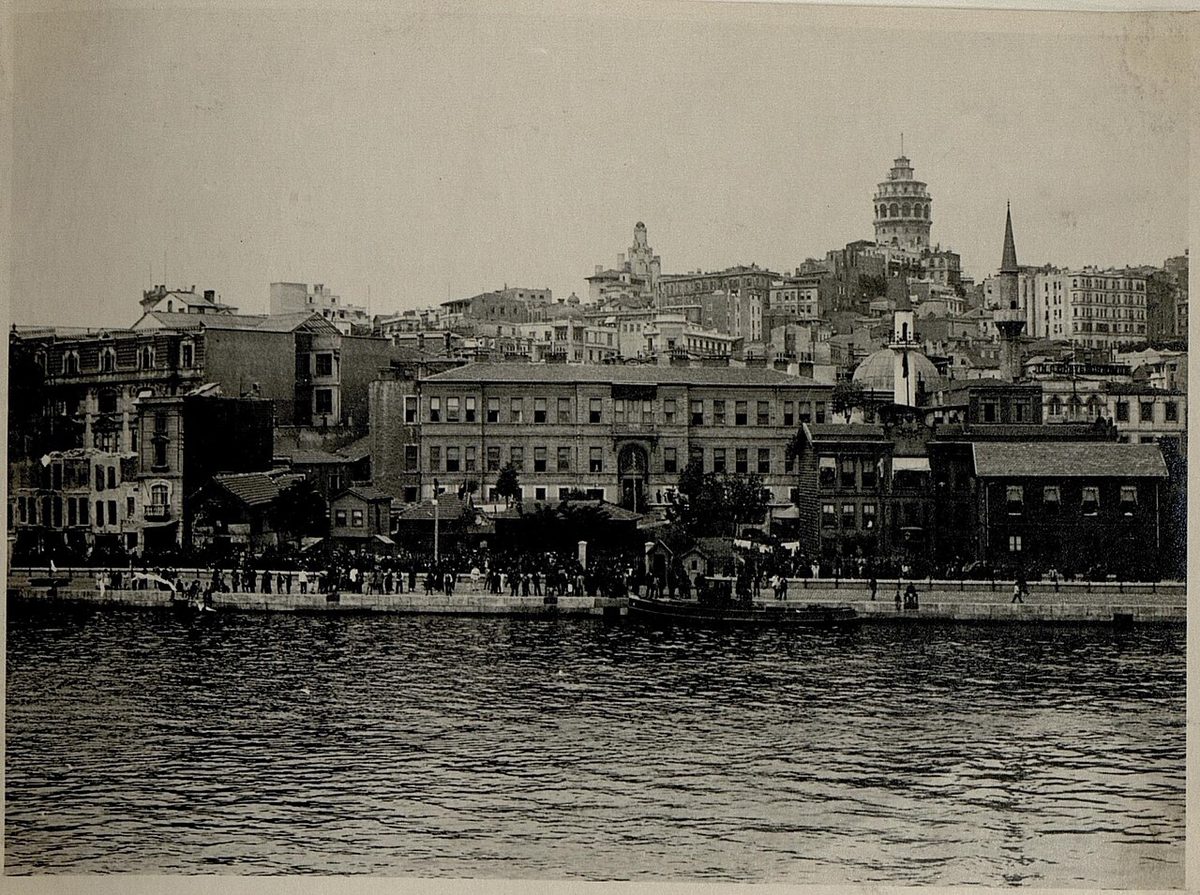
Galata Tower was located on the highest point of the Galata walls, commanding a magnificent view of the Golden Horn and the southern end of the Bosphorus.
Walking routes, historic buildings and places to stay, eat and drink in Istanbul’s Galata district. All 115 places in the guide are available in English. The original guide is in Turkish.
From the western end of the walls to the Golden Horn shore: old city gates, fountains and the hans of Perşembe Pazarı.
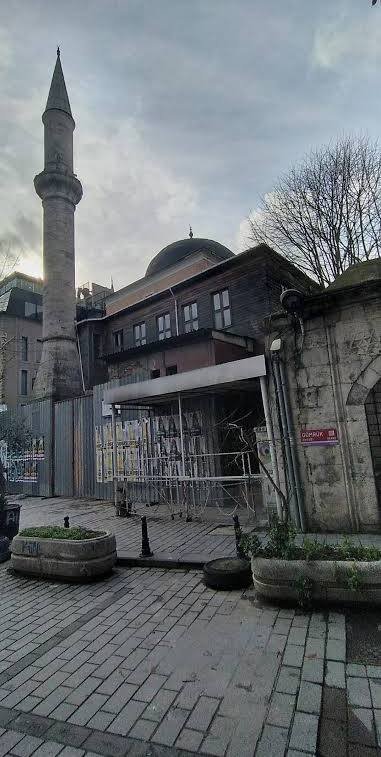
From Tophane Square to Karaköy: the legacy of the cannon foundry, churches, waterfront hans and the Underground Mosque.
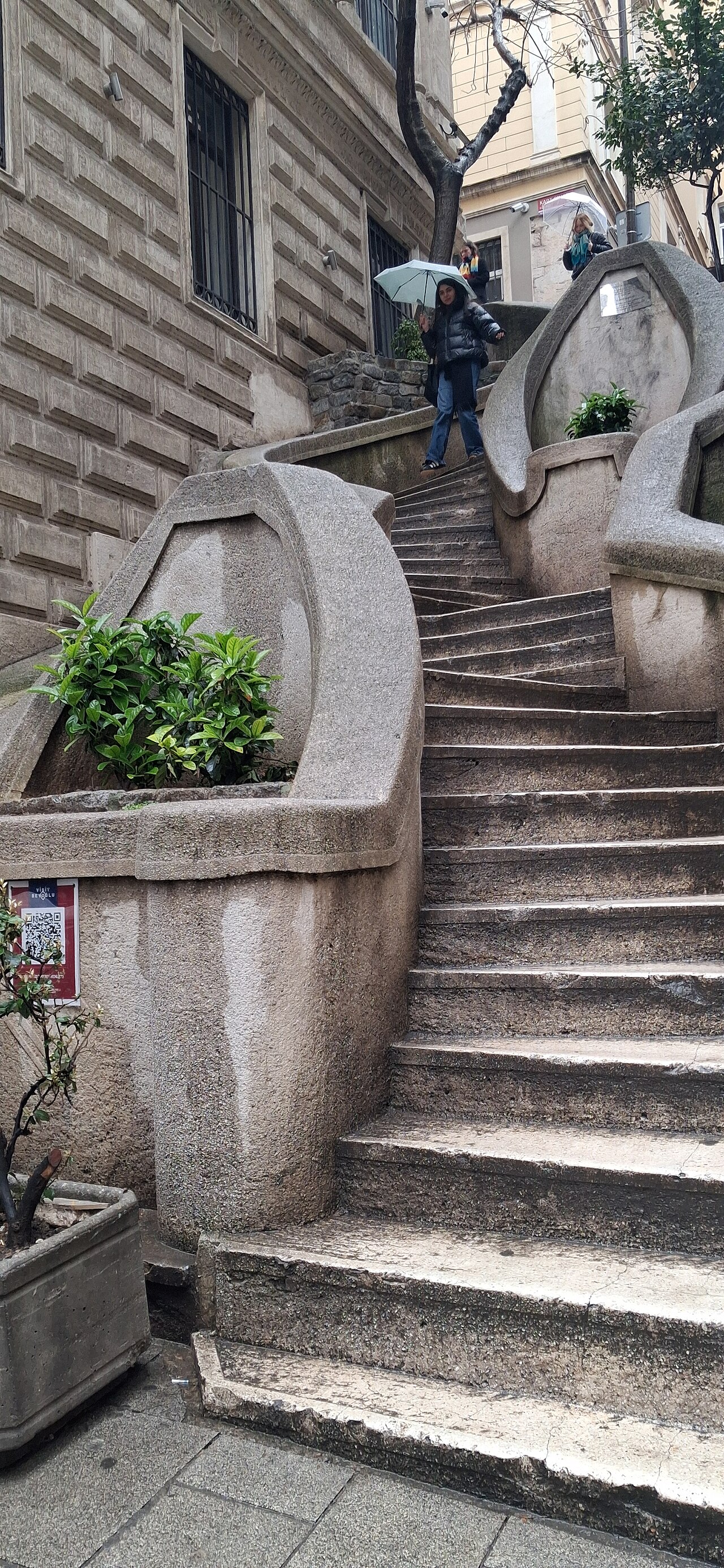
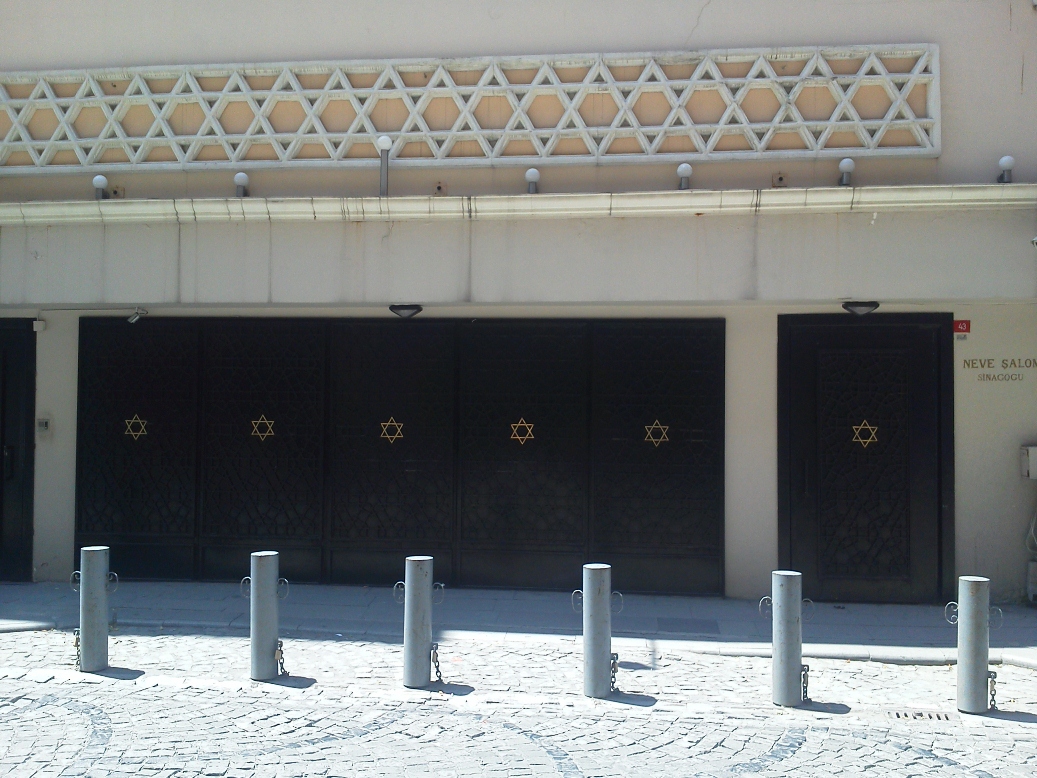
The Ottoman axis of finance: neoclassical bank buildings, hans, synagogues and the Camondo Stairs.
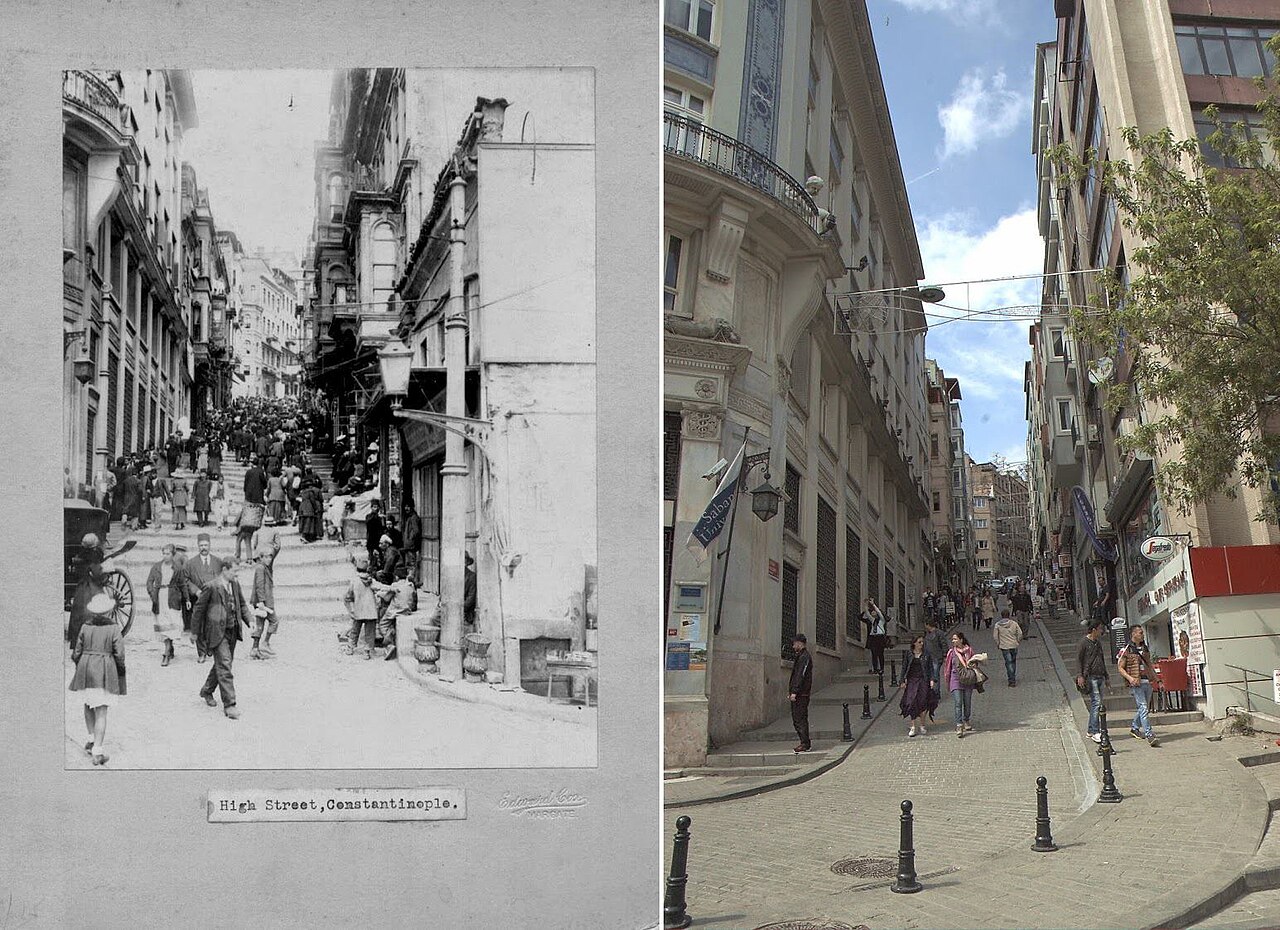
The final route: from the Dervish Lodge and Serdar-ı Ekrem Street to the Galata Tower, then down Yüksek Kaldırım to Karaköy.
Themes: Genoese Galata · Ottoman Galata: Tophane and Azapkapı · Galata's communities · Banks and hans · Architects and apartment buildings · Taverns, music and entertainment
Seasons: Galata in winter · Galata during Ramadan · Galata in summer
Galata Tower was located on the highest point of the Galata walls, commanding a magnificent view of the Golden Horn and the southern end of the Bosphorus.
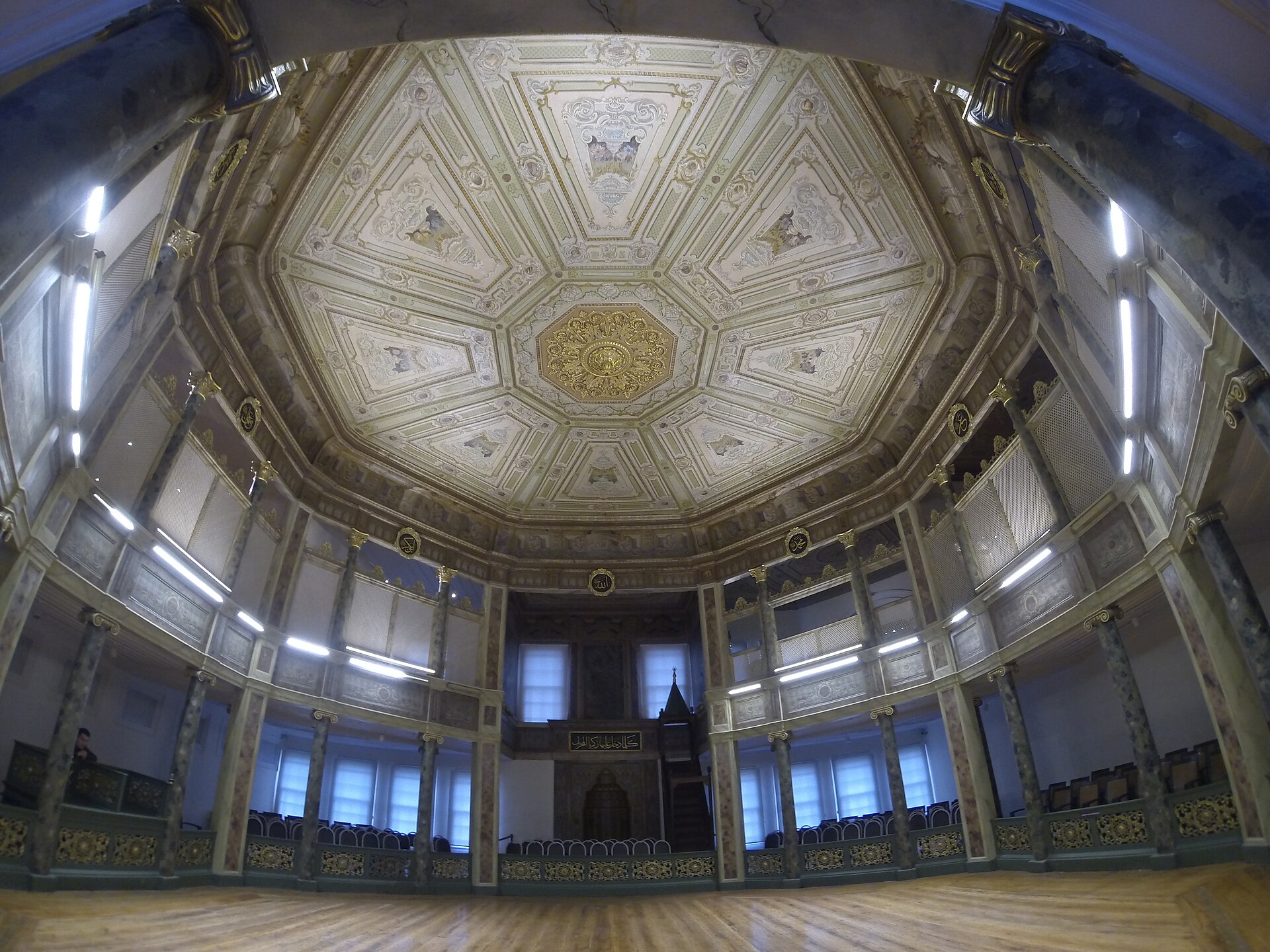
Galata Mevlevîhânesi, or Galata Dervish Lodge, is probably the oldest of the still-standing dervish lodges and cloisters in Istanbul – once, there were more than 300.
Financed by British capital, the Ottoman Bank was founded in 1863, under the name “Bank-ı Osmanî-î Şahane.”
It is one of the most interesting architectural feats of the city, one of a kind in Galata and the whole Istanbul.
In 1856, the City Planning Council (“İntizam-i Şehir Komisyonu”) was established under Şehremaneti, the first local governing body of Istanbul.
While Jews were mostly settled in districts such as Balat and Hasköy during the Ottoman era, they also inhabited Galata and established a community there, once it gained commercial significance.
The Latins had built 9 churches in Galata by the end of 18th century. Amongst them, only three medieval Latin-rite churches are still standing.
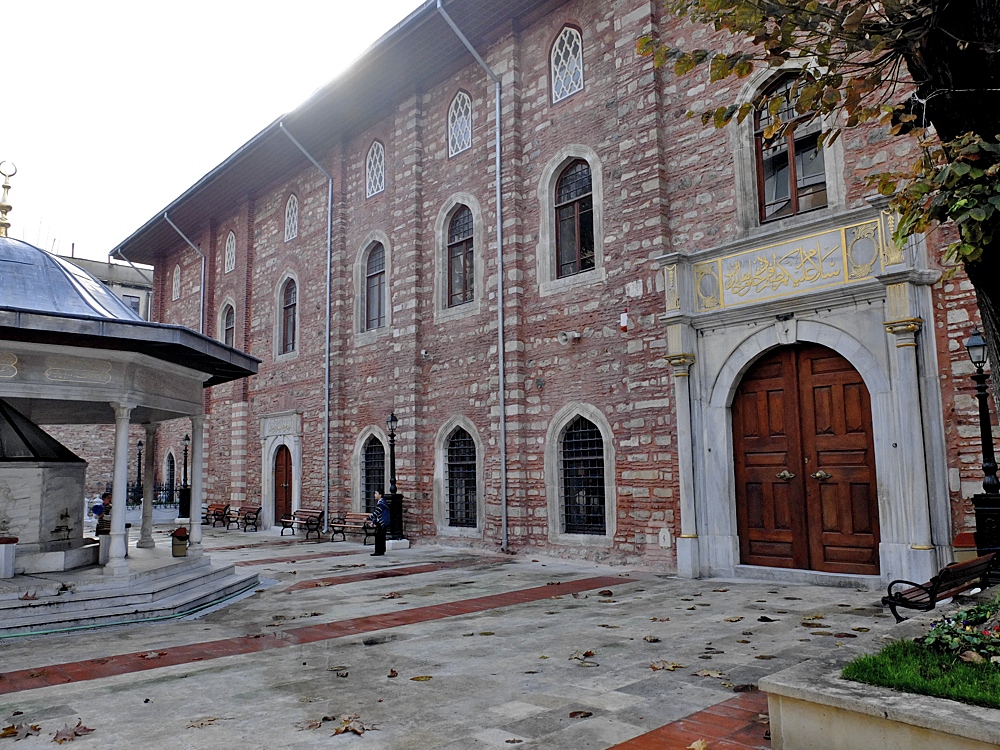
Once located outside the Galata walls, Kılıç Ali Pasha Mosque bears the name of an Ottoman seaman of Italian origin, who has been the Grand Admiral of the Ottoman fleet between 1571 and 1578.
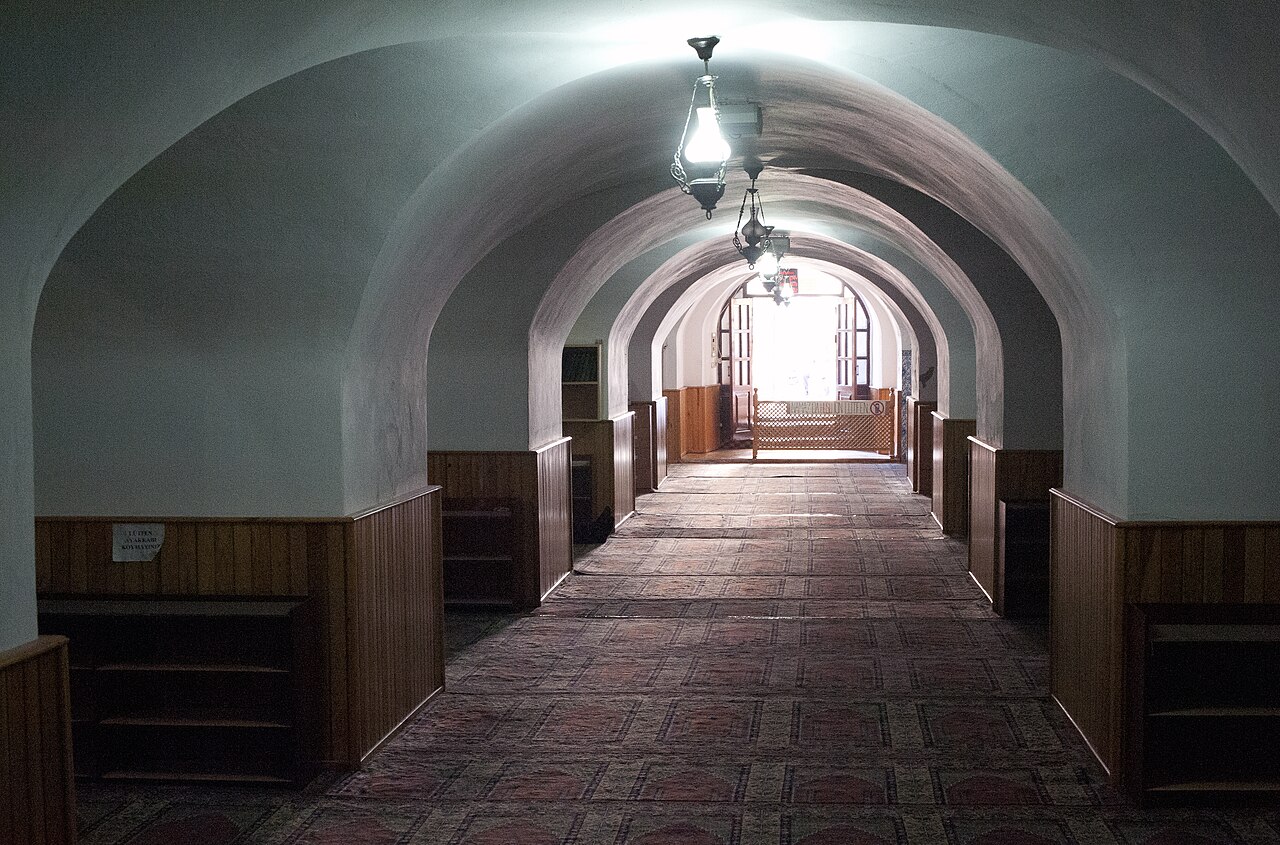
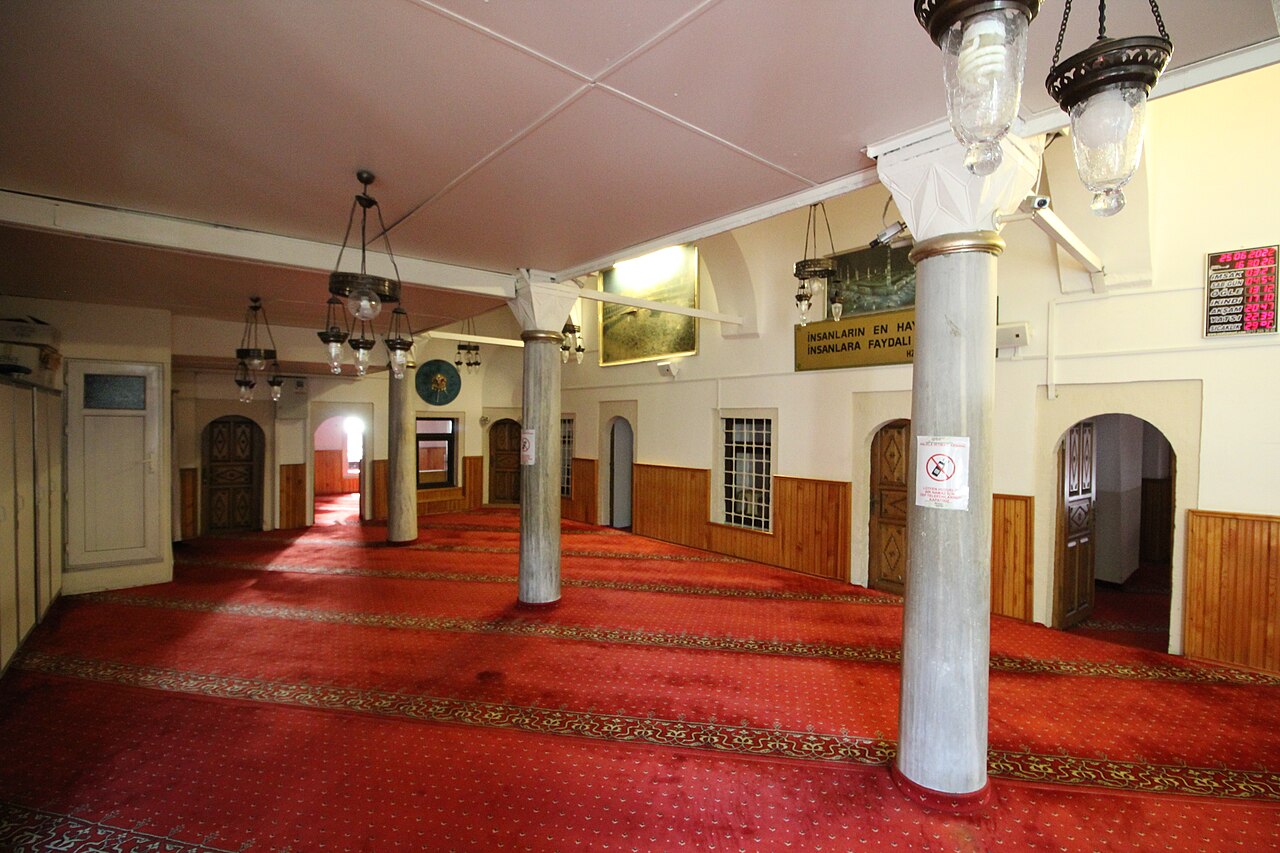
Located near the Karaköy ferry terminal, this mosque has an entrance accessed by a few steps down, in contrast to other mosques.
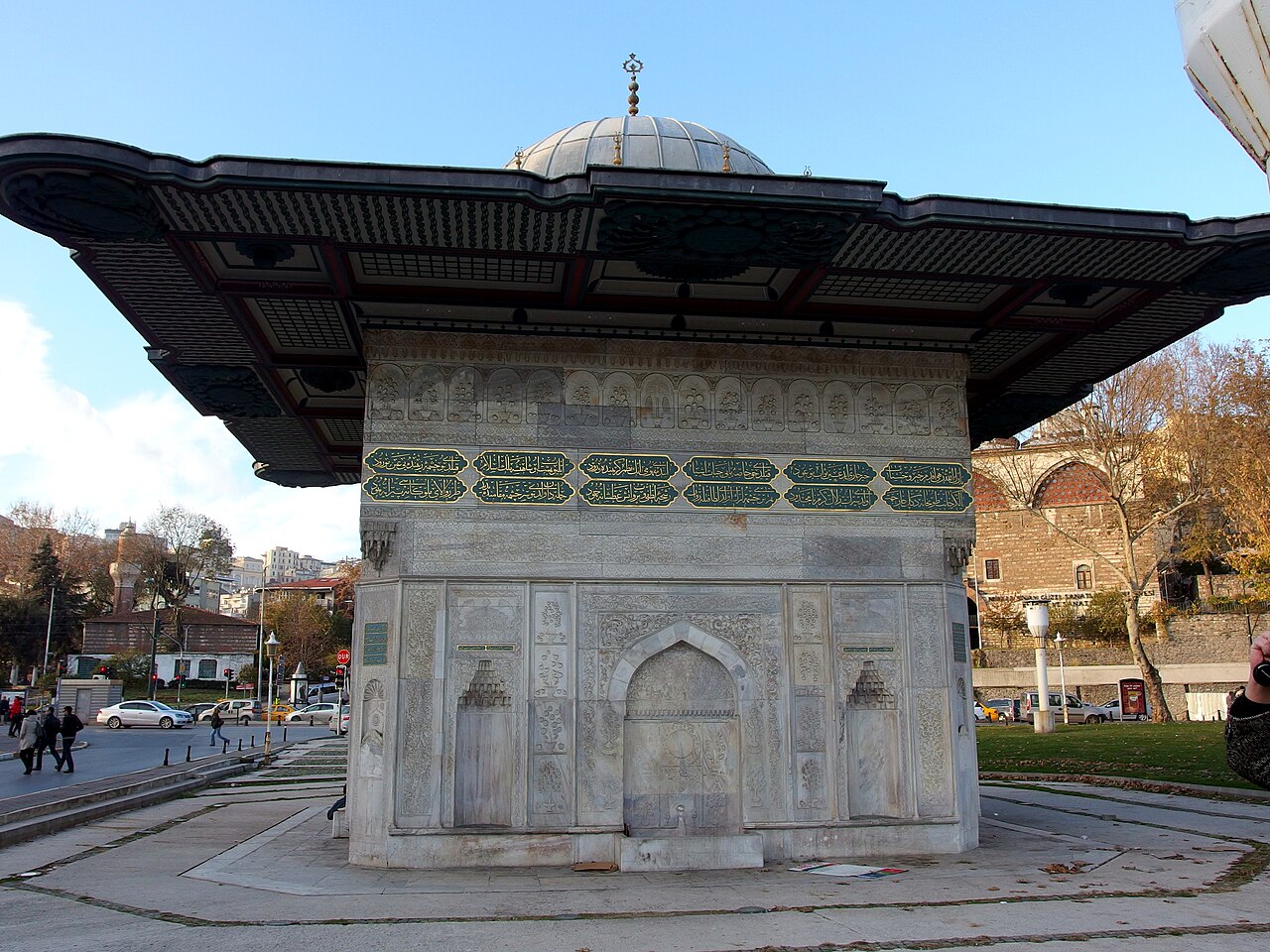
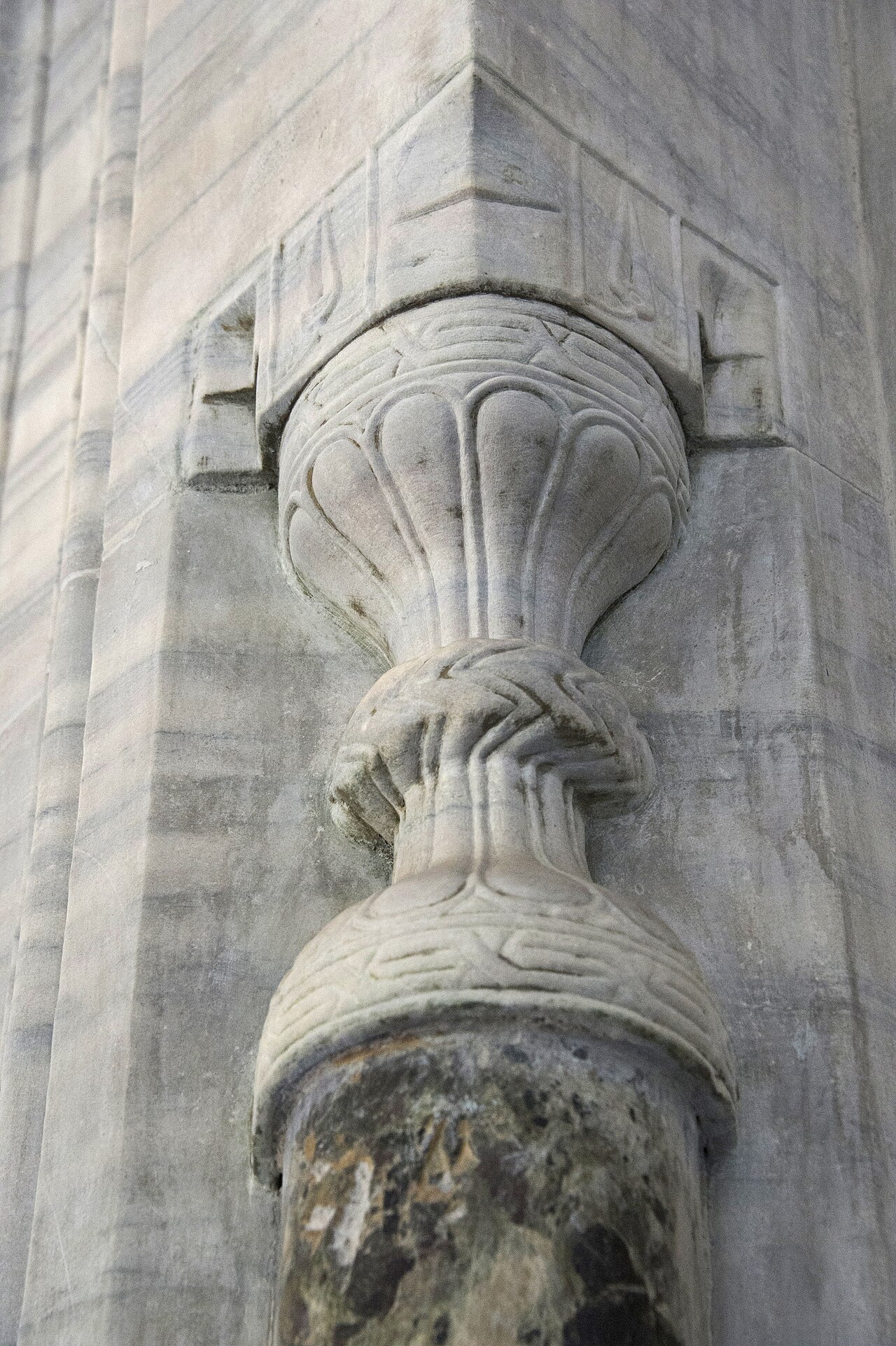
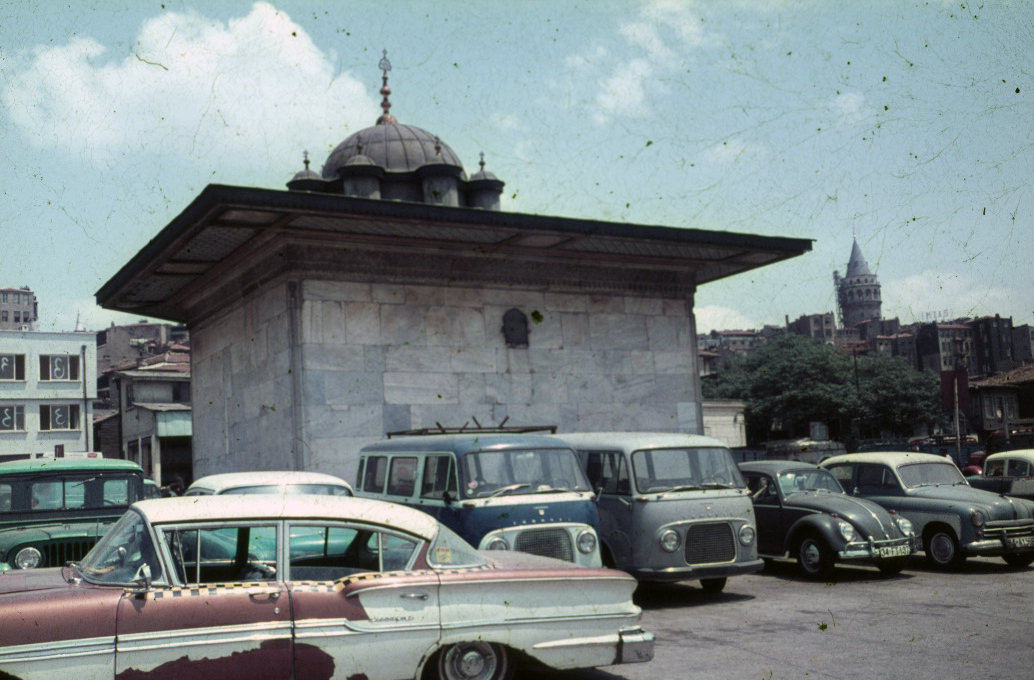
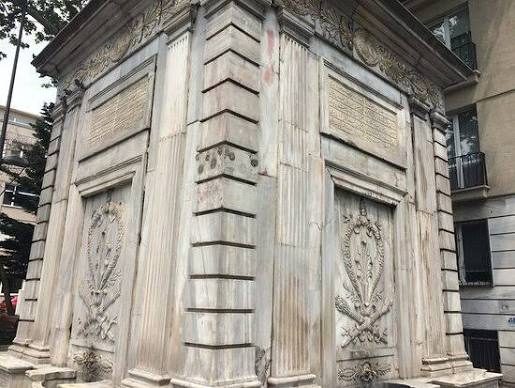
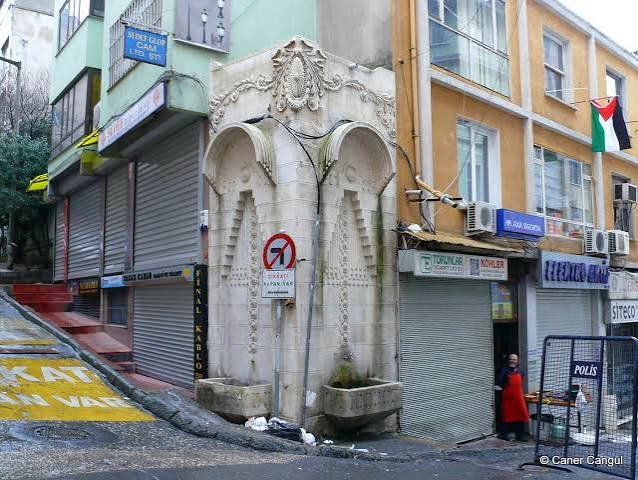
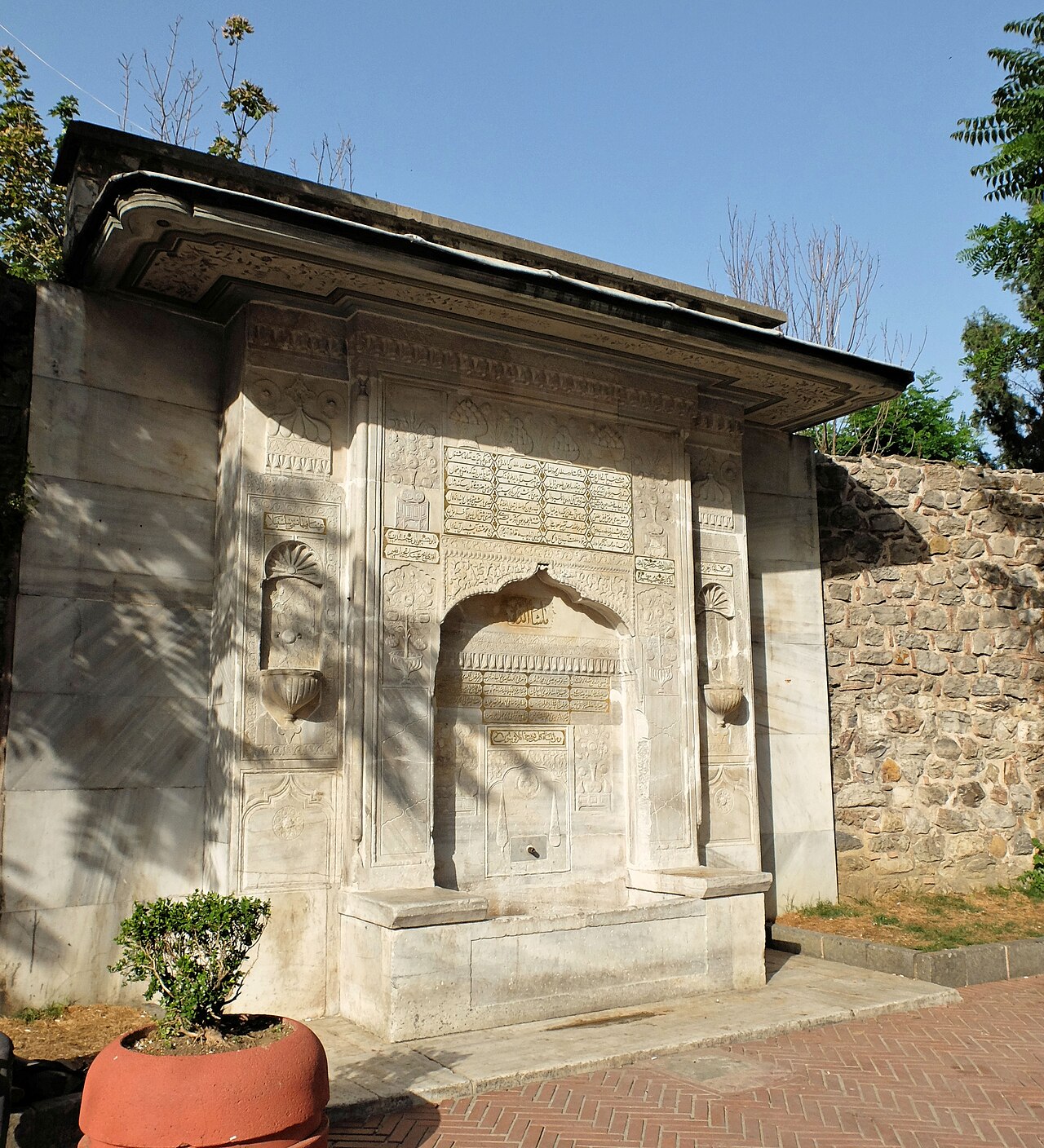
This matchless monument adorns Tophane Square in the eastern Galata. Tophane Fountain has the tallest walls in any fountain in the city and its marble façades are adorned with relief motifs.
At the beginning of the 20th century, Bankalar Street (lit. “Banks Street”) was home to “the masters of money” who had the Ottoman government on a string.
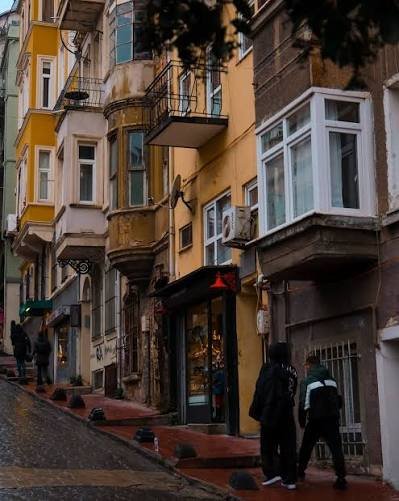
Serdar-ı Ekrem Street is one of the few streets with the tallest - and comparably large - residential buildings around the Galata Tower.
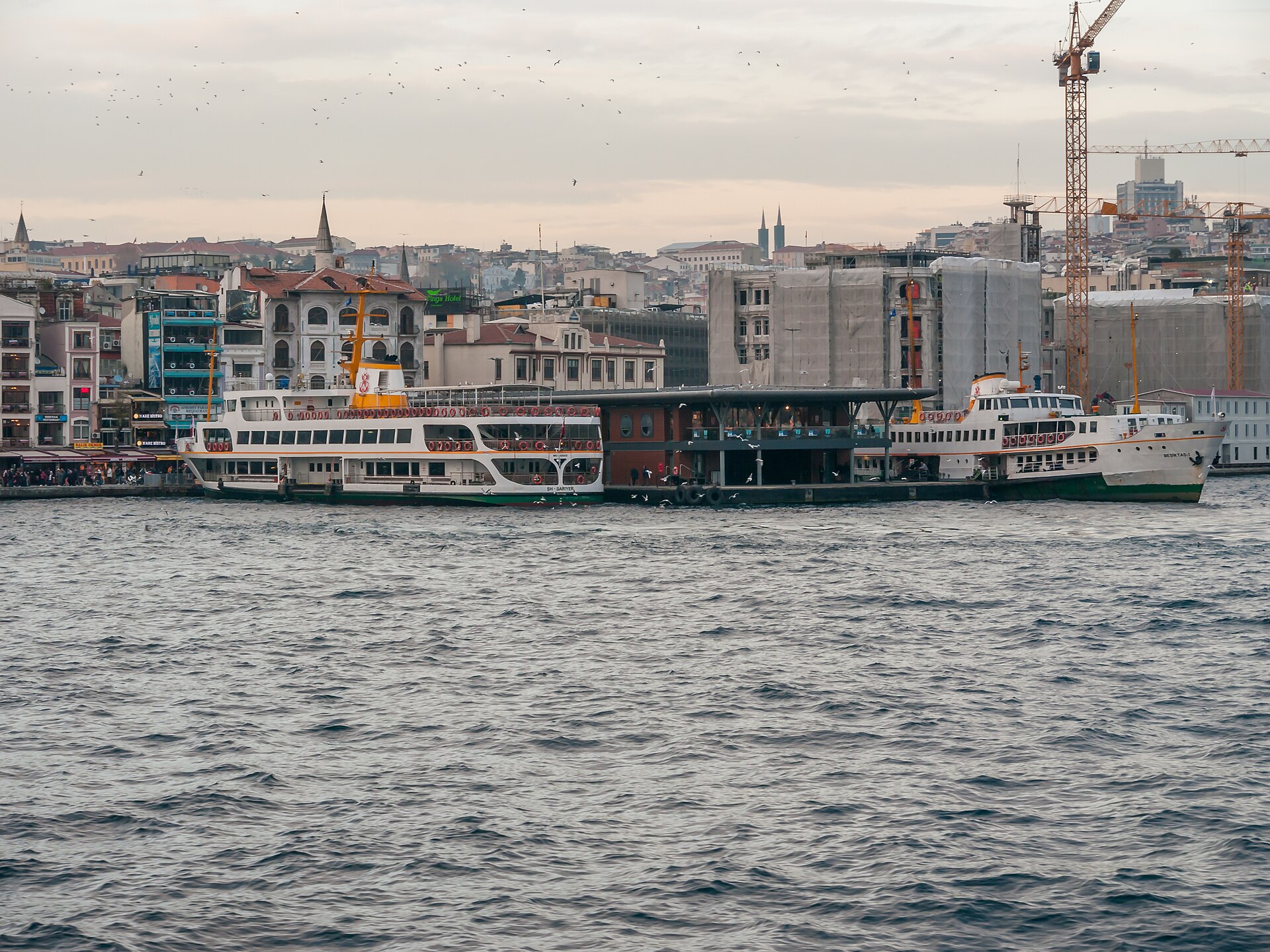
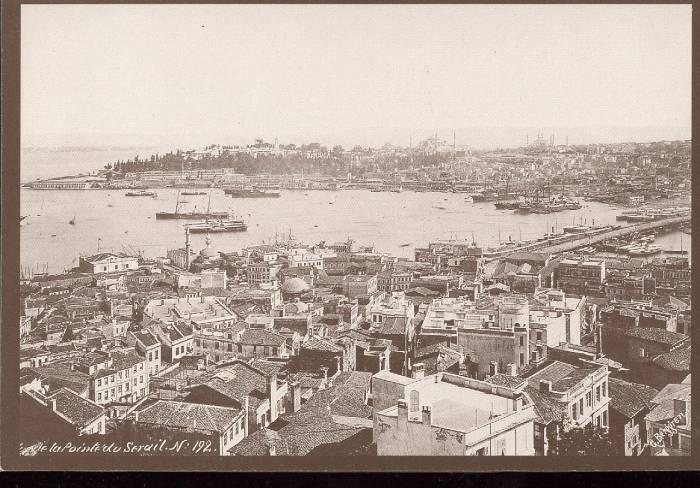
Galata coastline of the Golden Horn is in fact one of the best places to enjoy Istanbul’s historic silhouette, especially during the sunset, and visiting the Perşembe Pazarı coastline would be the crowning touch to end the tour.
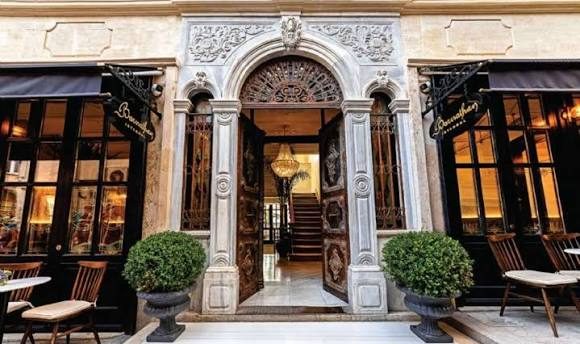
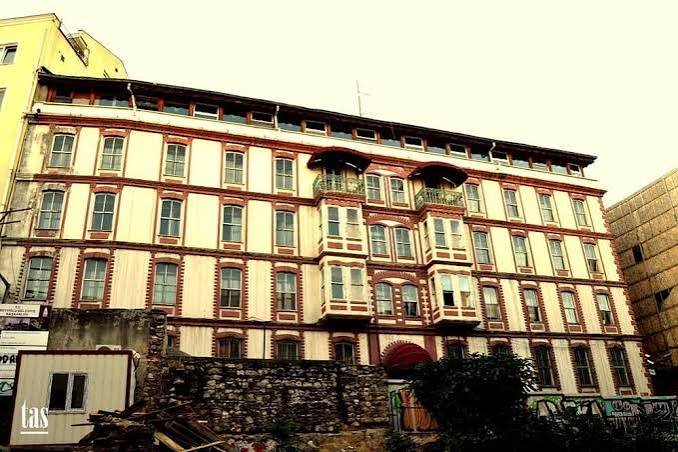
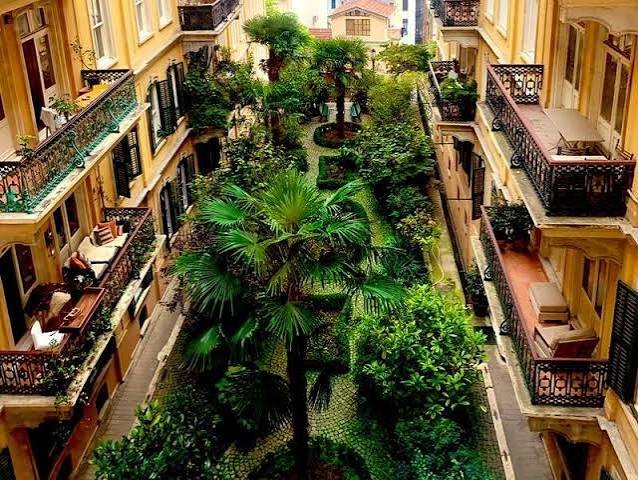
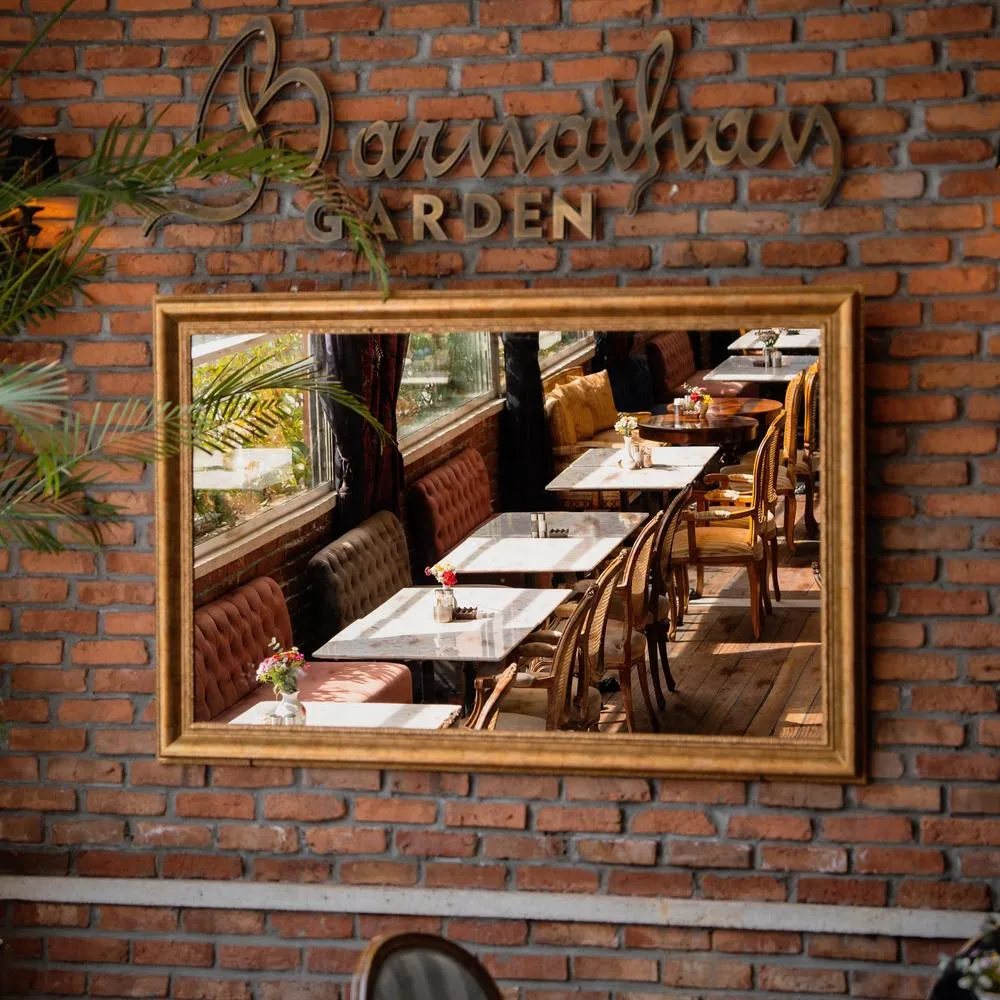
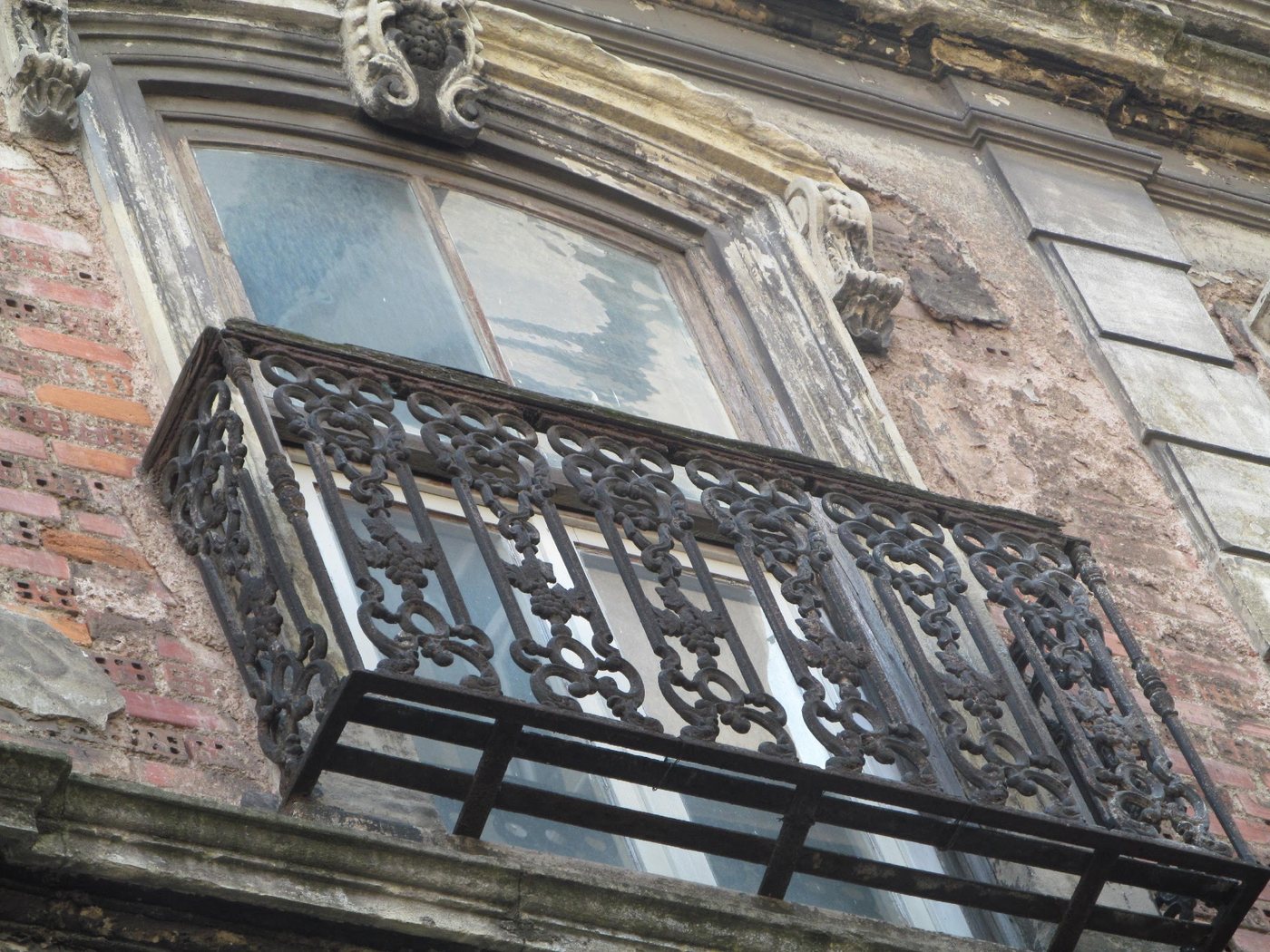
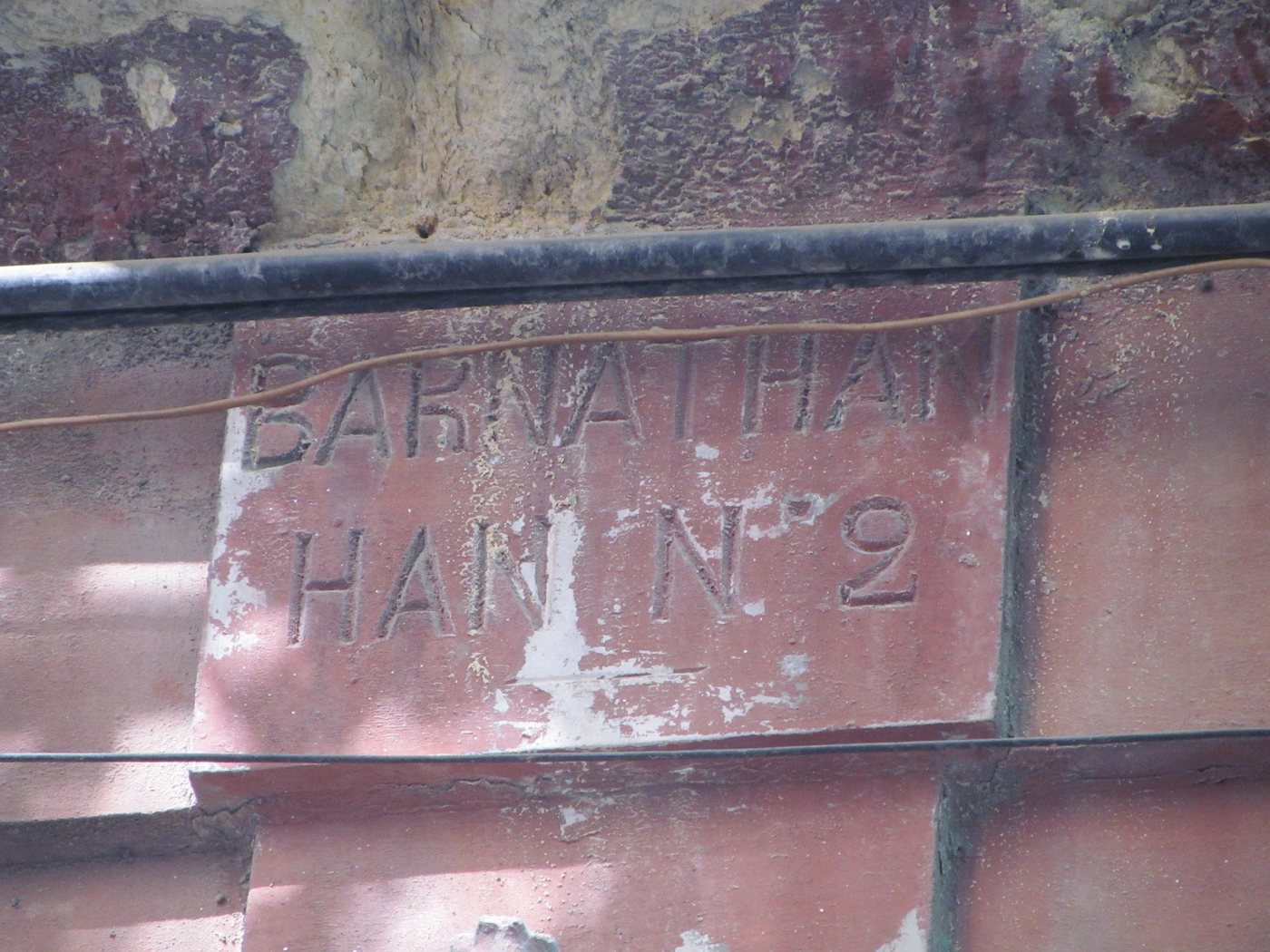
Barnathan Apartments were once one of the most elite residence buildings in the Galata region.
Towards Tersane Street, the wall ruins extending 25-30m along southwest-northeast axis are from the 14th century.
A mosque built by Mimar Sinan for Grand Vizier Sokollu Mehmed Pasha, dated 1577–78 by its inscription. For a traveler who lands on Galata wharfs in the second half of the 18th century, the experience would be an awe-inspiring one, because the squares these wharfs opened to were adorned with matchless monuments.
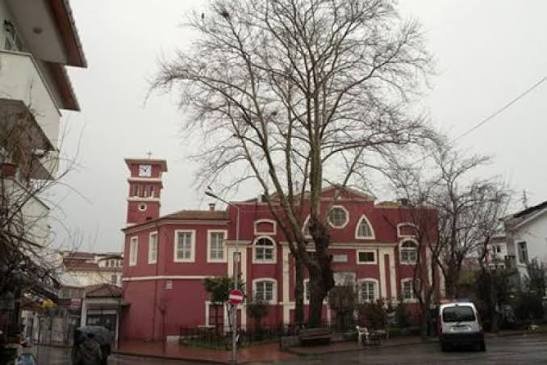
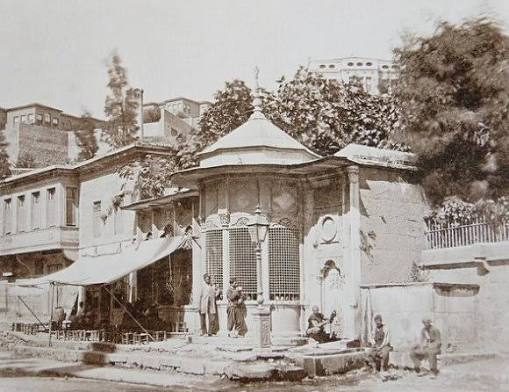
Featuring a drinking water kiosk in the middle and two taps on both sides, this monumental fountain was one of the most beautiful freestanding meydan fountains (lit.
It is also known as Yeşildirek Sebil or Çinili Hammam (Tiled Hammam) Sebil. This water kiosk is on the left corner from the restaurant at 120 Tersane Street.
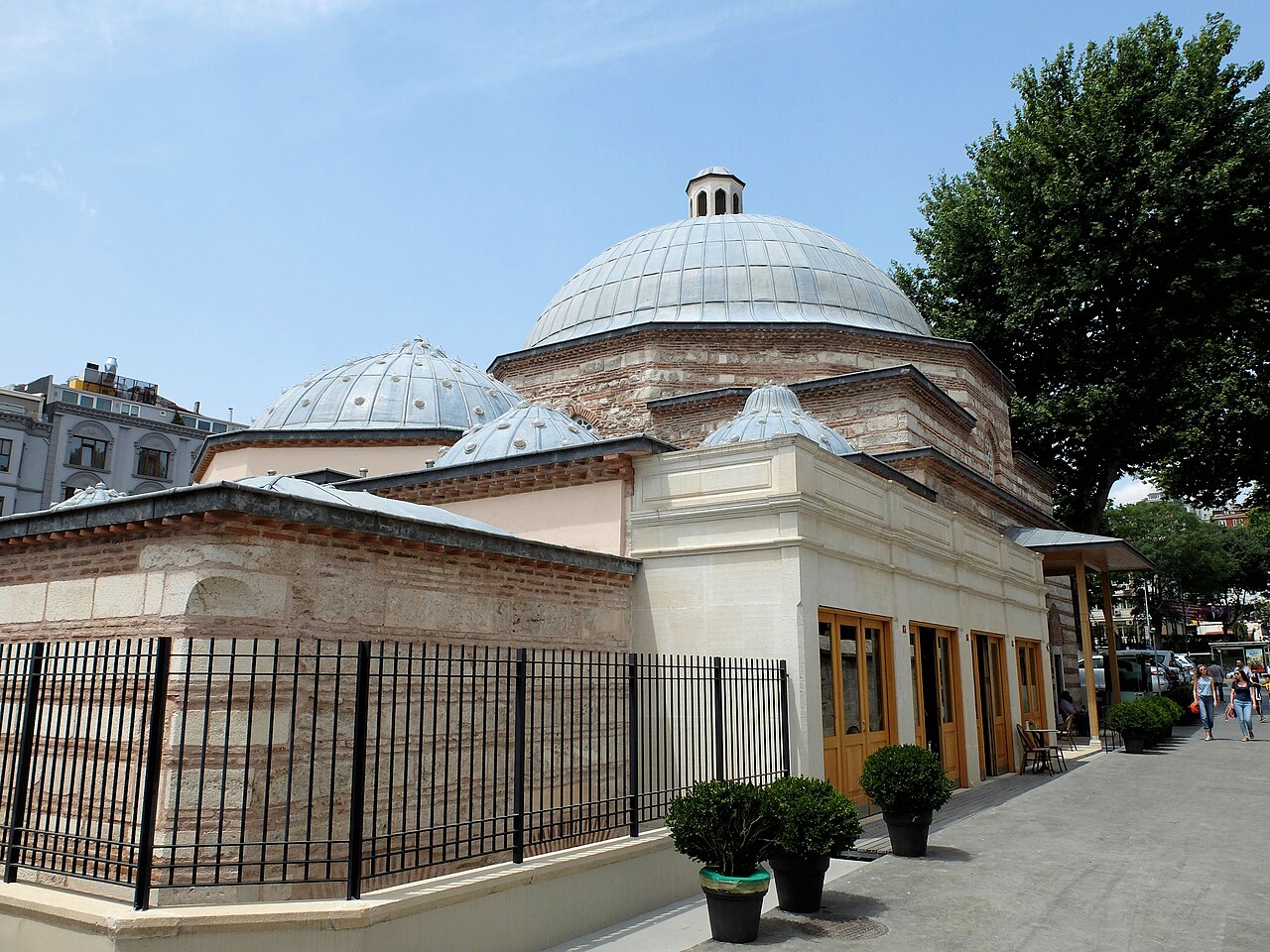
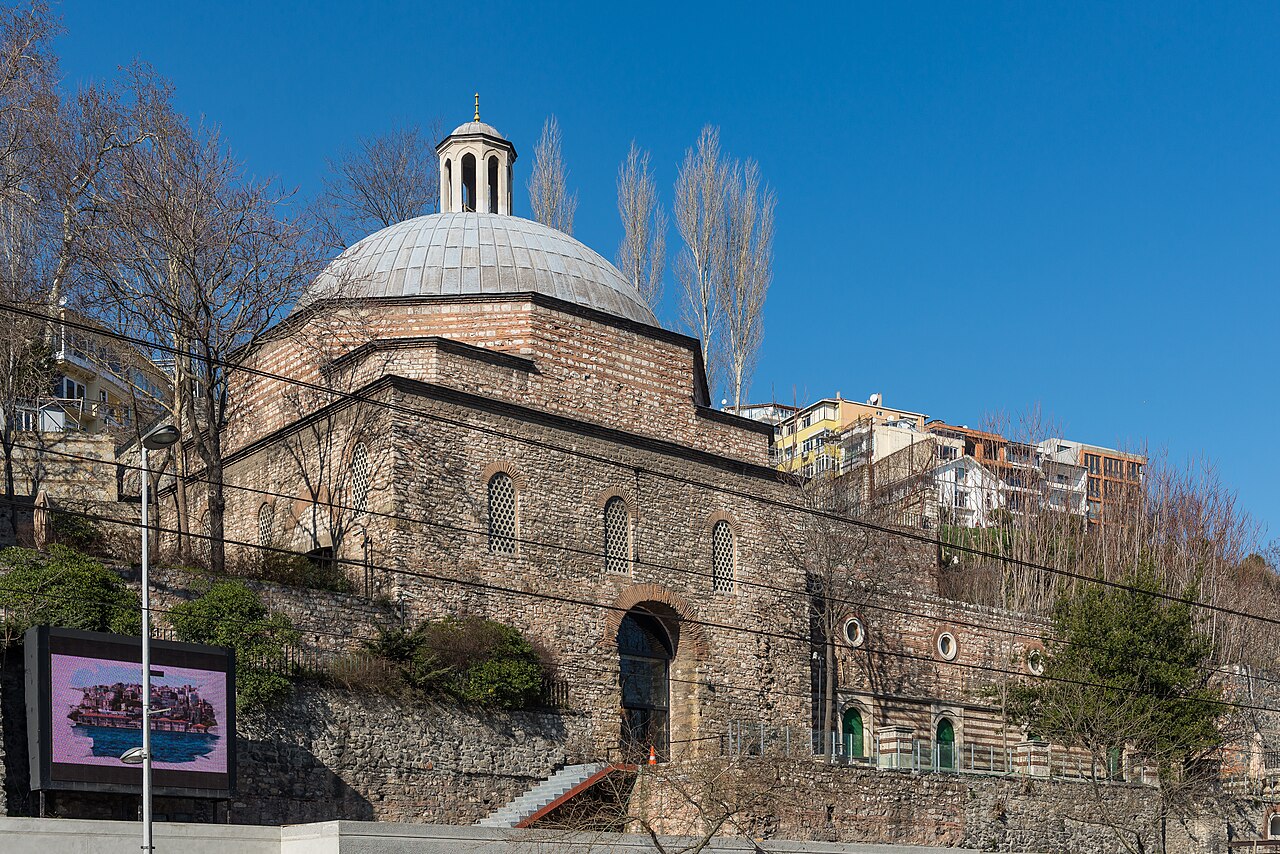
A hammam designed by Mimar Sinan and commissioned by Grand Vizier Sokollu Mehmed Pasha, on Tersane Caddesi in Azapkapı.
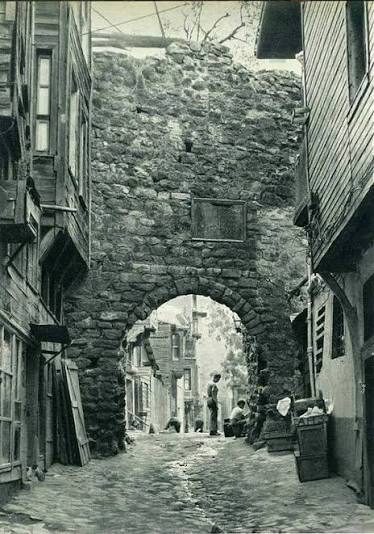
If you had the chance to visit Galata in the 16th century and land on a Golden Horn wharf, say, near Saint Antonio Gate, you would enter the city by passing through the old Buğulu (Bugalice) Gate, proceed to the north along the wall line on your left and, after some walk, you would encounter the Harup Gate from 1387, and the Saint Bartholomew Tower from 1442, further along to the north.
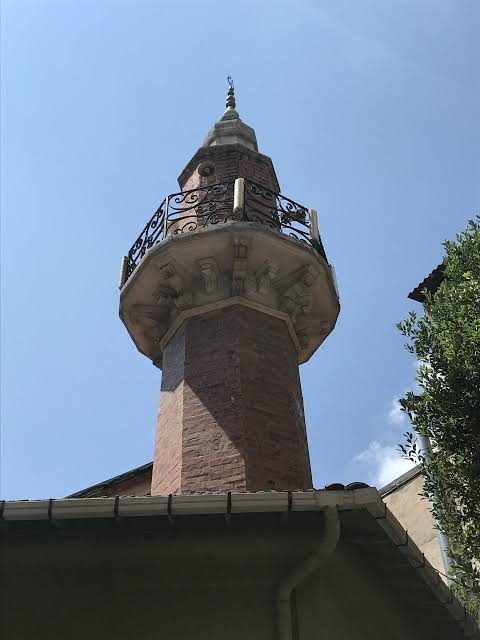
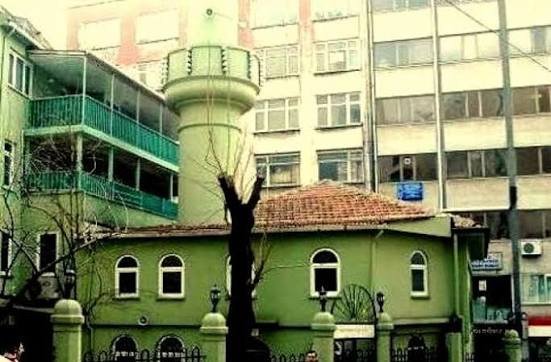
Located at 1 Minare Sokağı, Emekyemez quarter, this triangular mescid (small mosque) is from Galata’s Turkification period after the Conquest.
The fountain is in Yüksek Minare Sokağı near Emekyemez Mescidi. Because of the elevation difference between the intersecting streets, today it seems as if half sunk to the ground.
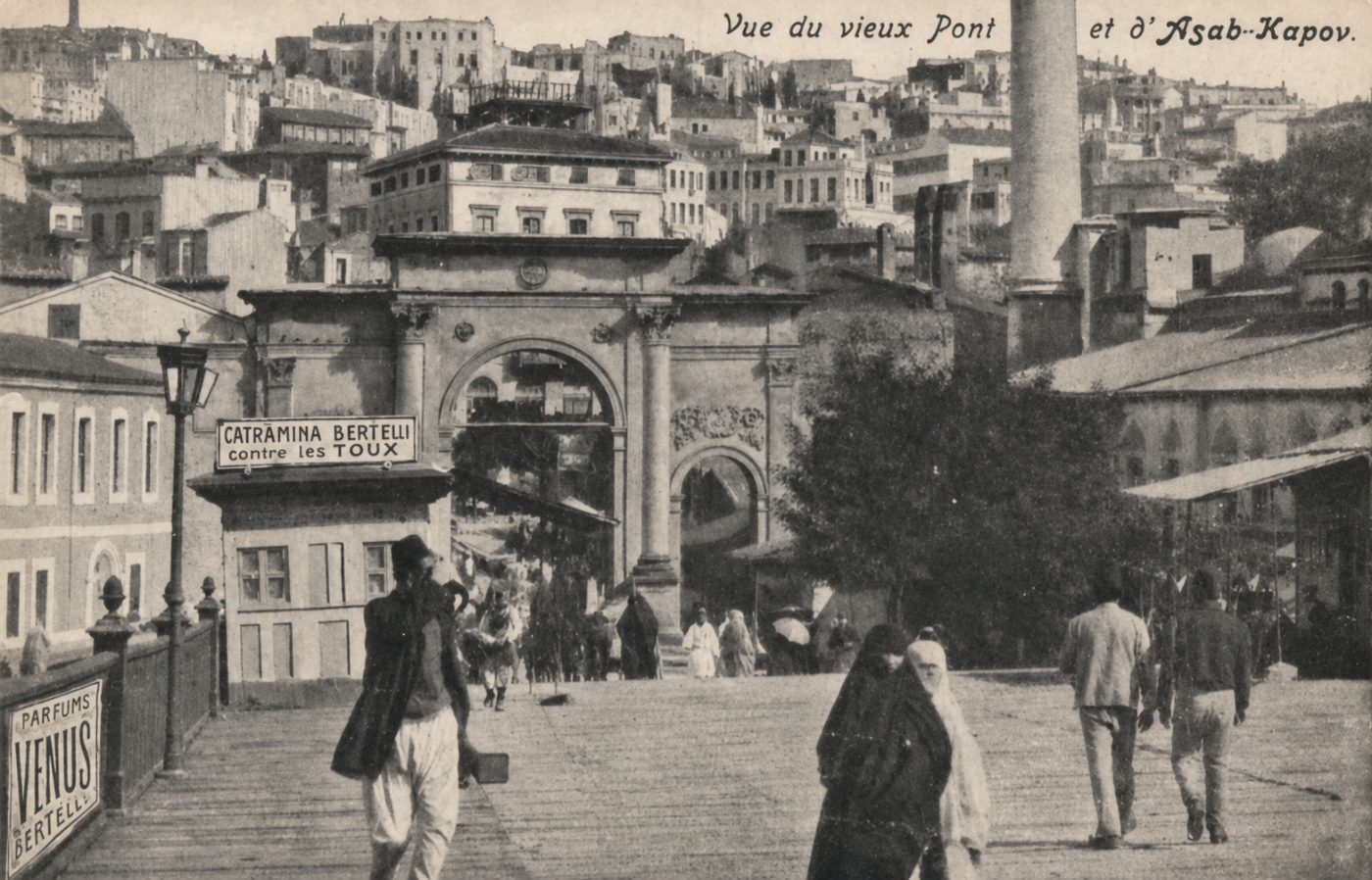
As mentioned before, most of Galata’s walls were demolished during the development project of 1864, and only a few sections have survived until today.
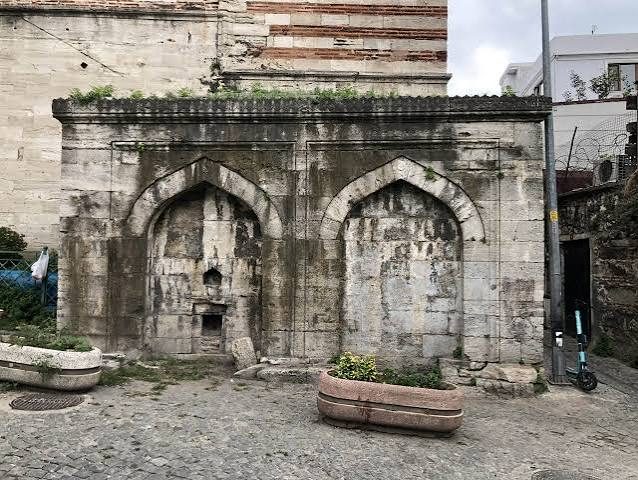
At the intersection of Yanıkkapı Sokak and Abdüssalah Sokak in Azapkapı, this single-fronted, simple fountain is half buried into the ground.
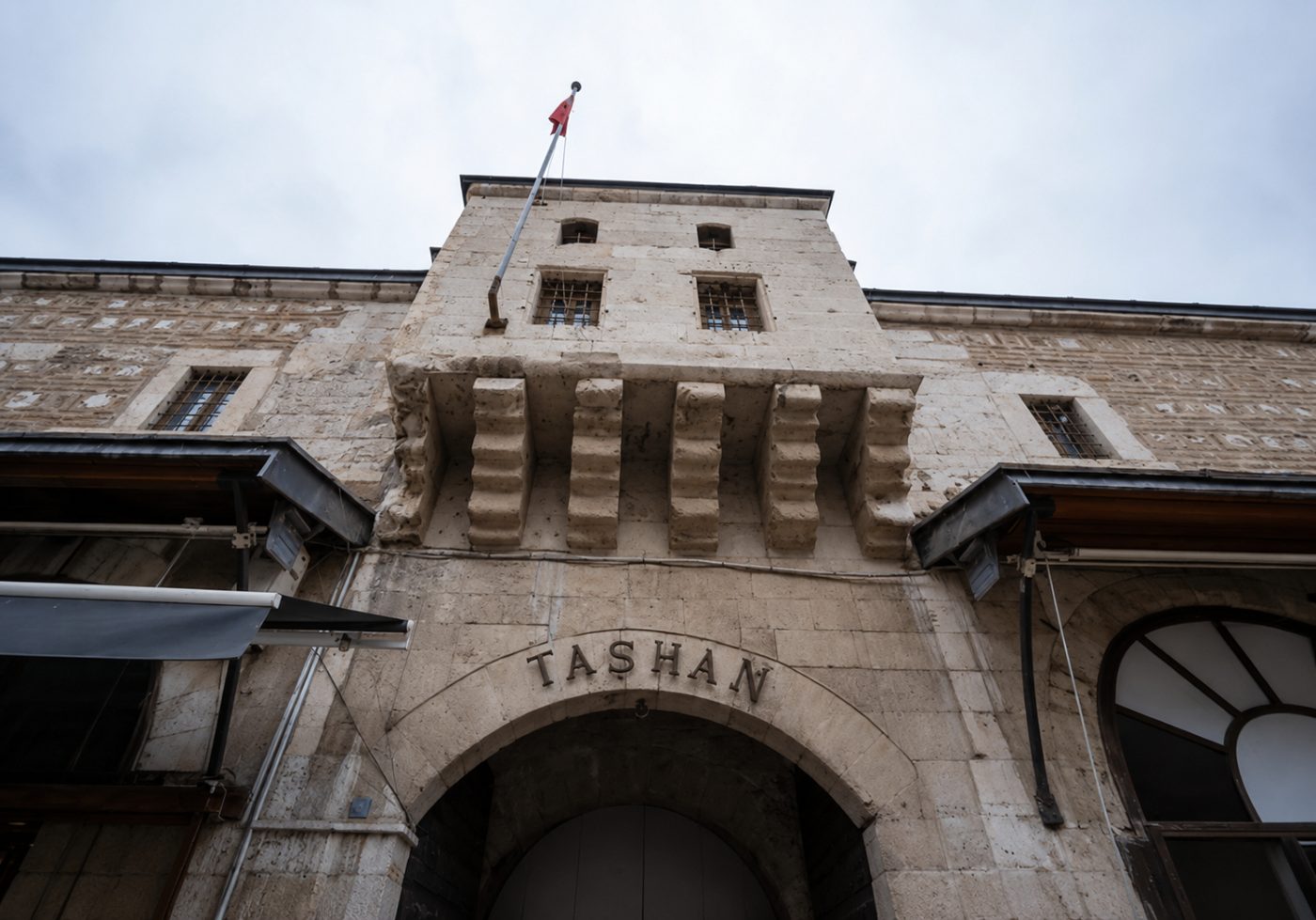
In Azapkapı, on the seaward side of Tersane Street and near Yemeniciler Sokağı, is one of the two most important buildings – except for the bedesten, or covered bazaar – of Ottoman Galata: Yelkenciler Han (han = Ottoman commercial complex/inn).
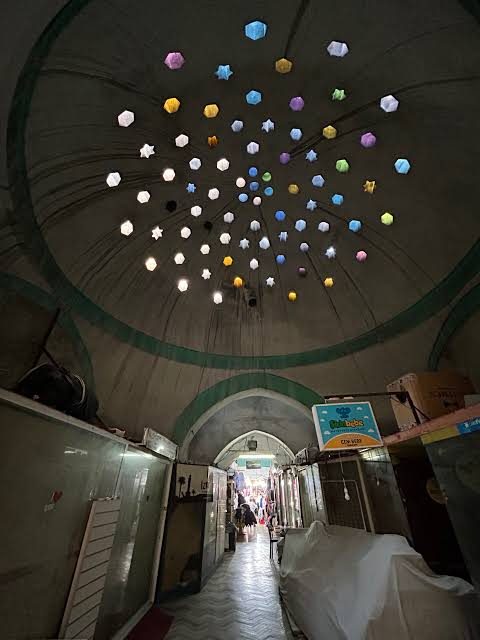
Bedestens were important commercial centers of Ottoman era Turkish cities. Galata Bedesteni, one of these centers, is located in the Lonca neighborhood, which extends inward from the Yağkapanı Gate (or, formerly, İskelekapısı Gate).
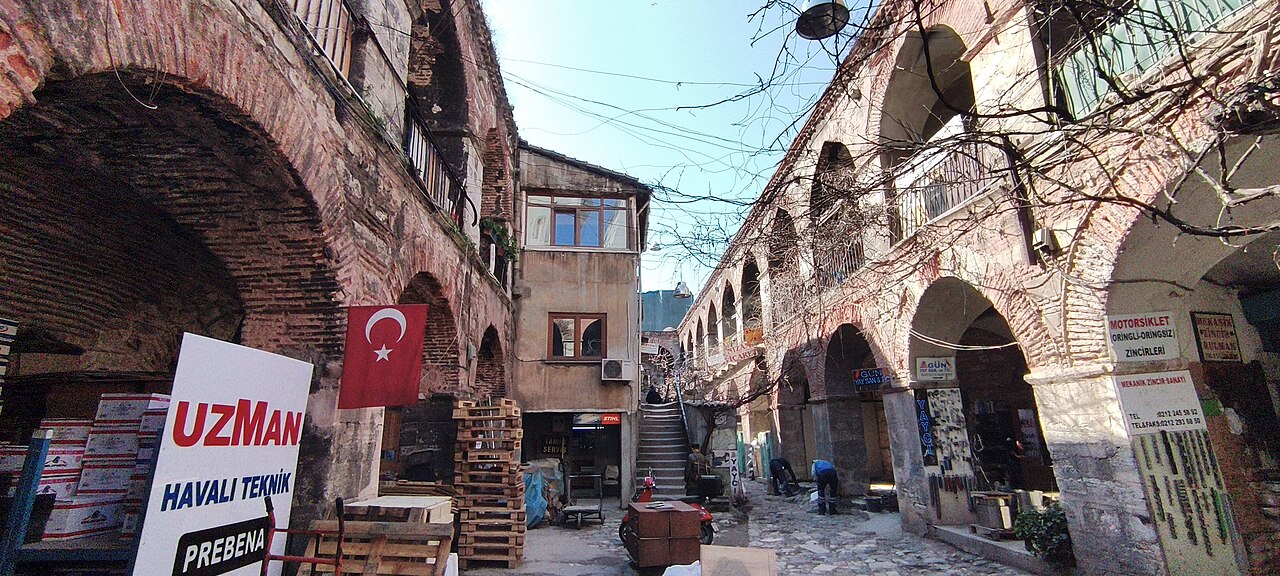
Galata had another han, rather operating like a caravanserai for merchants who visit the city.
After the Conquest, the city was divided into four, for the purposes of judiciary administration: Istanbul (i.e. the historical peninsula), and Bilâd-ı Selâse (i.e remaining three regions).
The Russo-Turkish War of 1877–78 left the defeated Ottoman government with a heavy foreign debt, most of which borrowed through Galata Bankers.
Located at the intersection of Perşembe Pazarı Street and Eski Tay Çıkmazı, this historic han catches the eye with its face stone and brick drywall work.
On this street was once Bereketzâde Külliyesi (külliye = Islamic social complex). The original mosque of the külliye does not exist anymore.
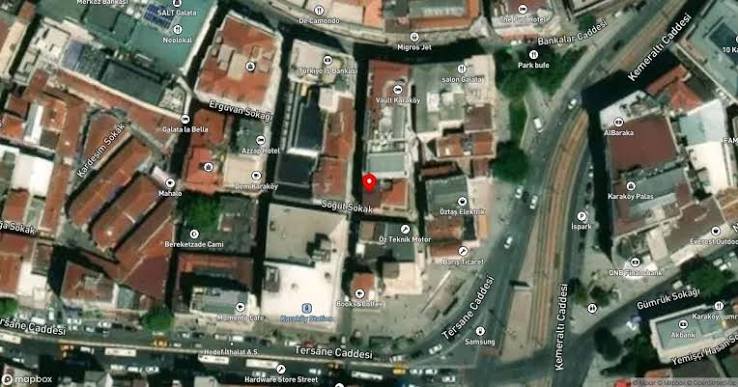
Çituri Han is at the intersection of Teğmen Hüseyin Sofu Sokağı (former Mertebani Sokak) and Söğüt Sokak.
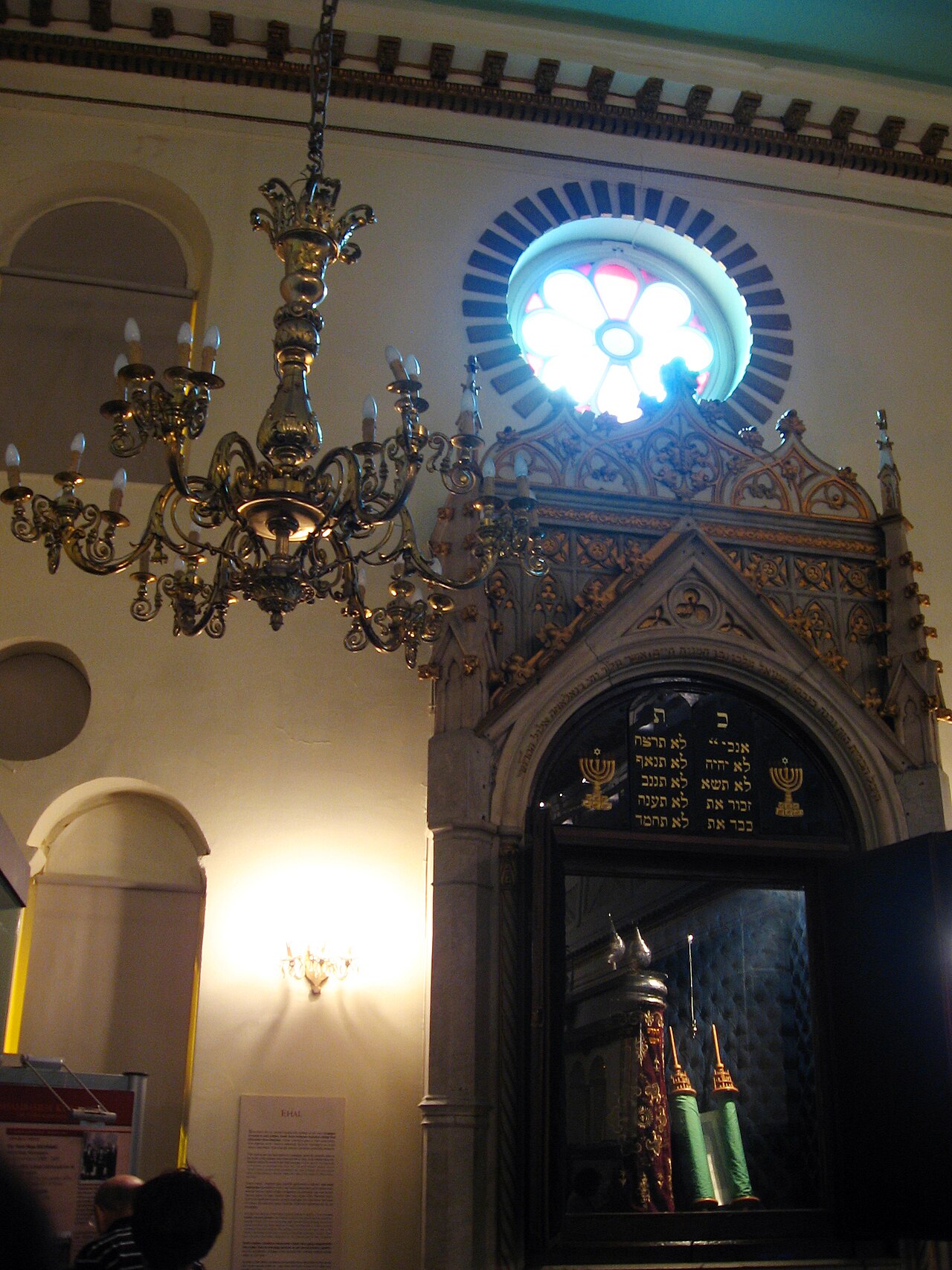
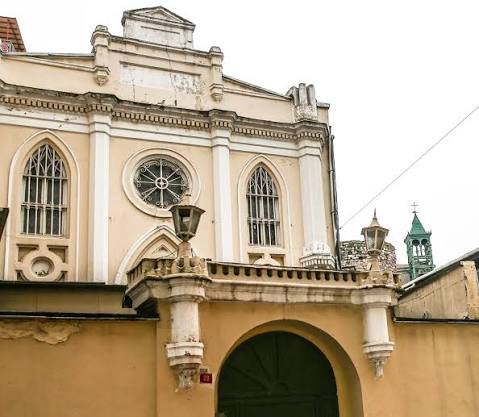
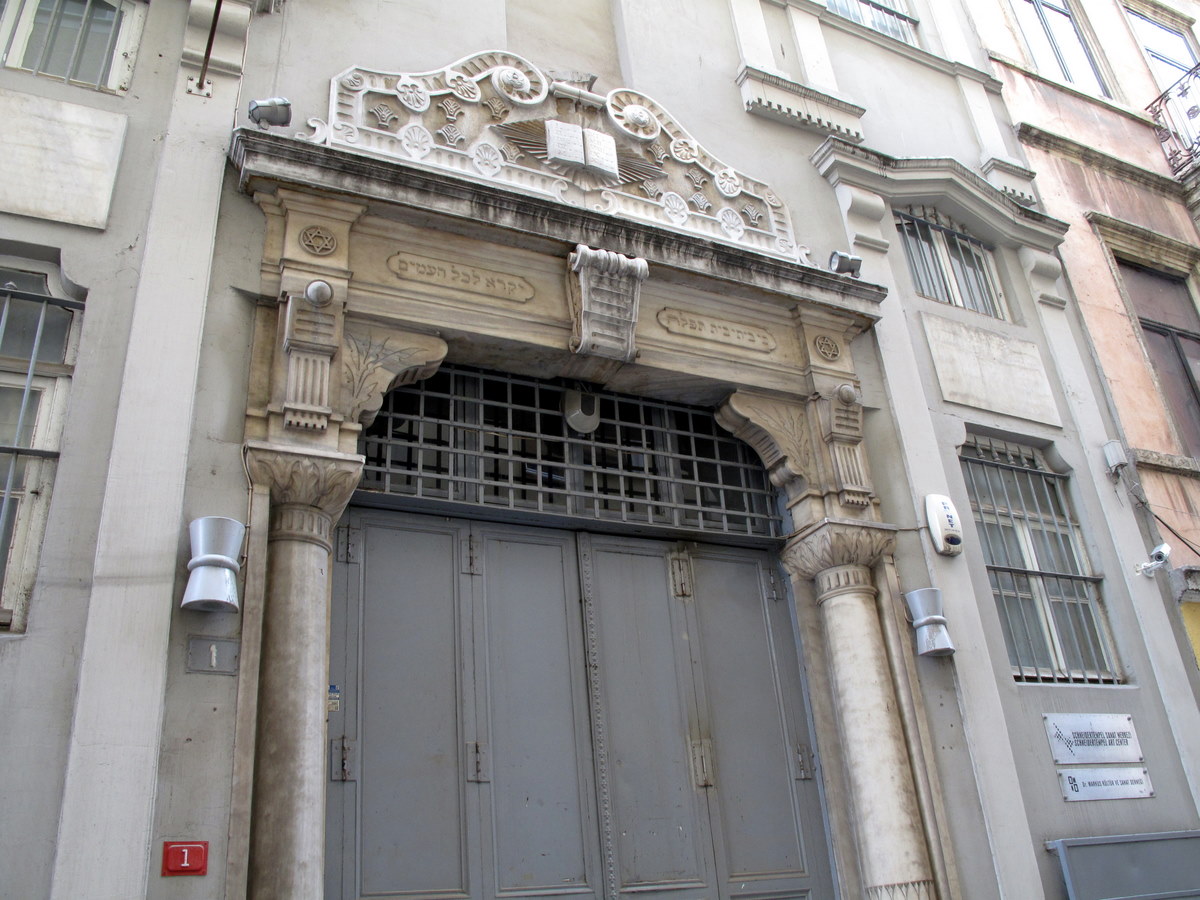
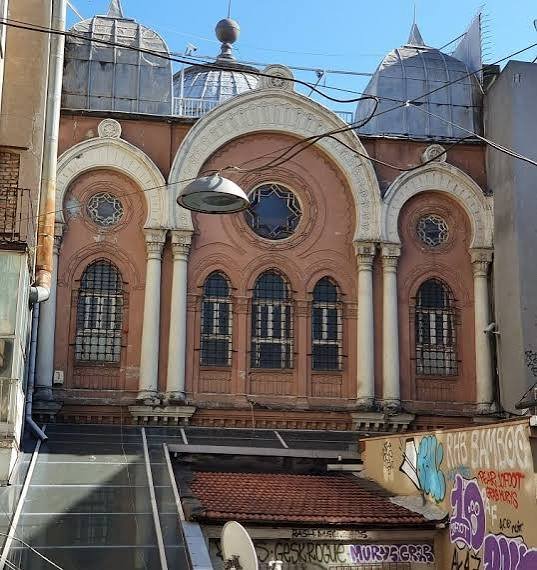
Zulfaris is a very old synagogue that is hard to find in the busy Karaköy area. On the entrance of the synagogue is a verse from the Hebrew Bible:
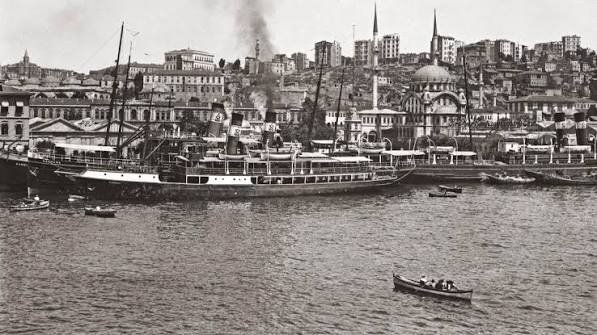
Following Istanbul’s conquest by Mehmed II, Galata became not only the commercial but also the military center of the Ottomans’ naval power.
Named as Metopon (forehead) during the Byzantine era, Tophane (lit. “cannon foundry”) gained a new character after the Conquest with the establishment of iron foundries and artillery barracks.
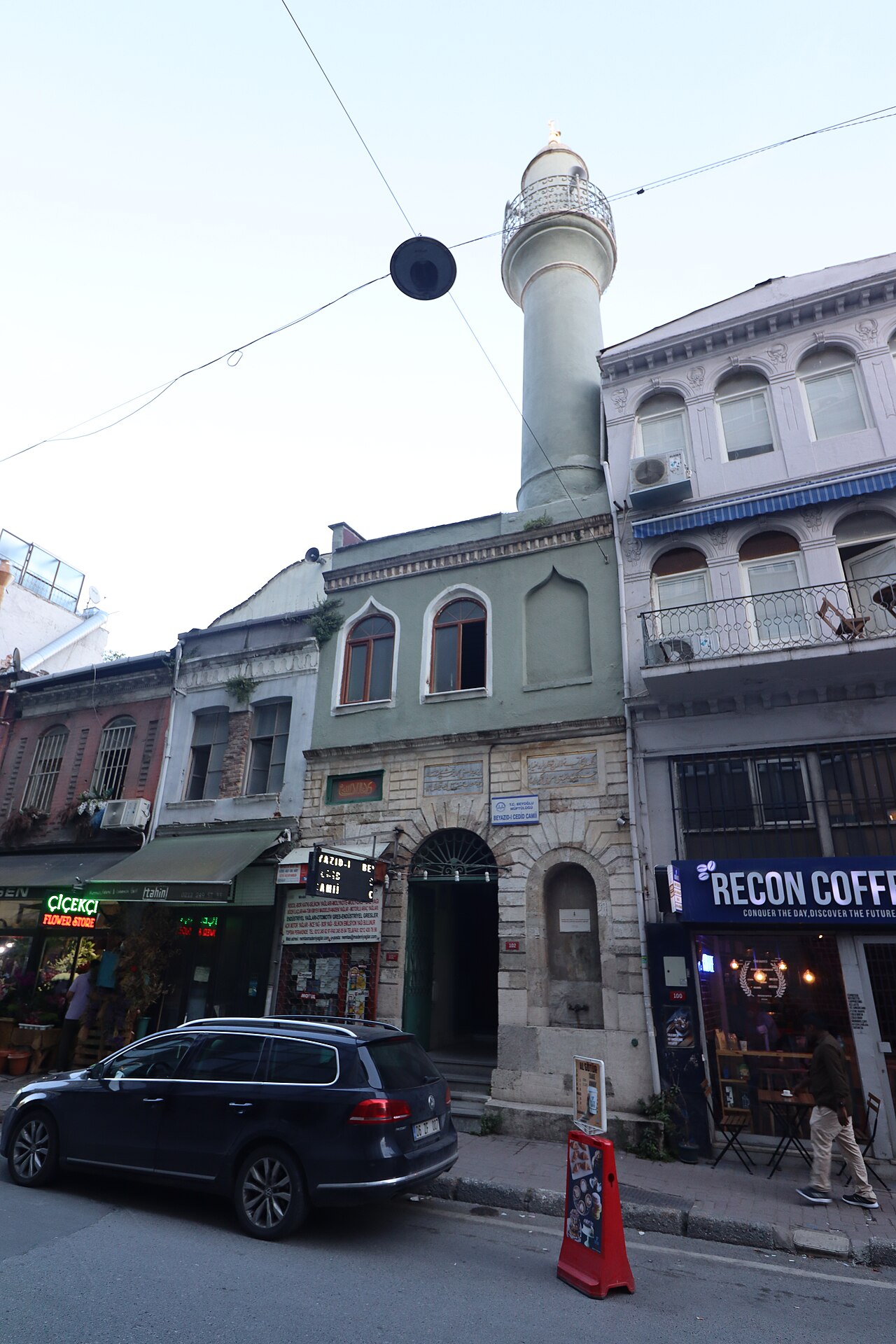
Sultan Bayezid Mescid also faces Necati Bey Street, which lies in parallel to Kemaraltı Street between Karaköy and Tophane.
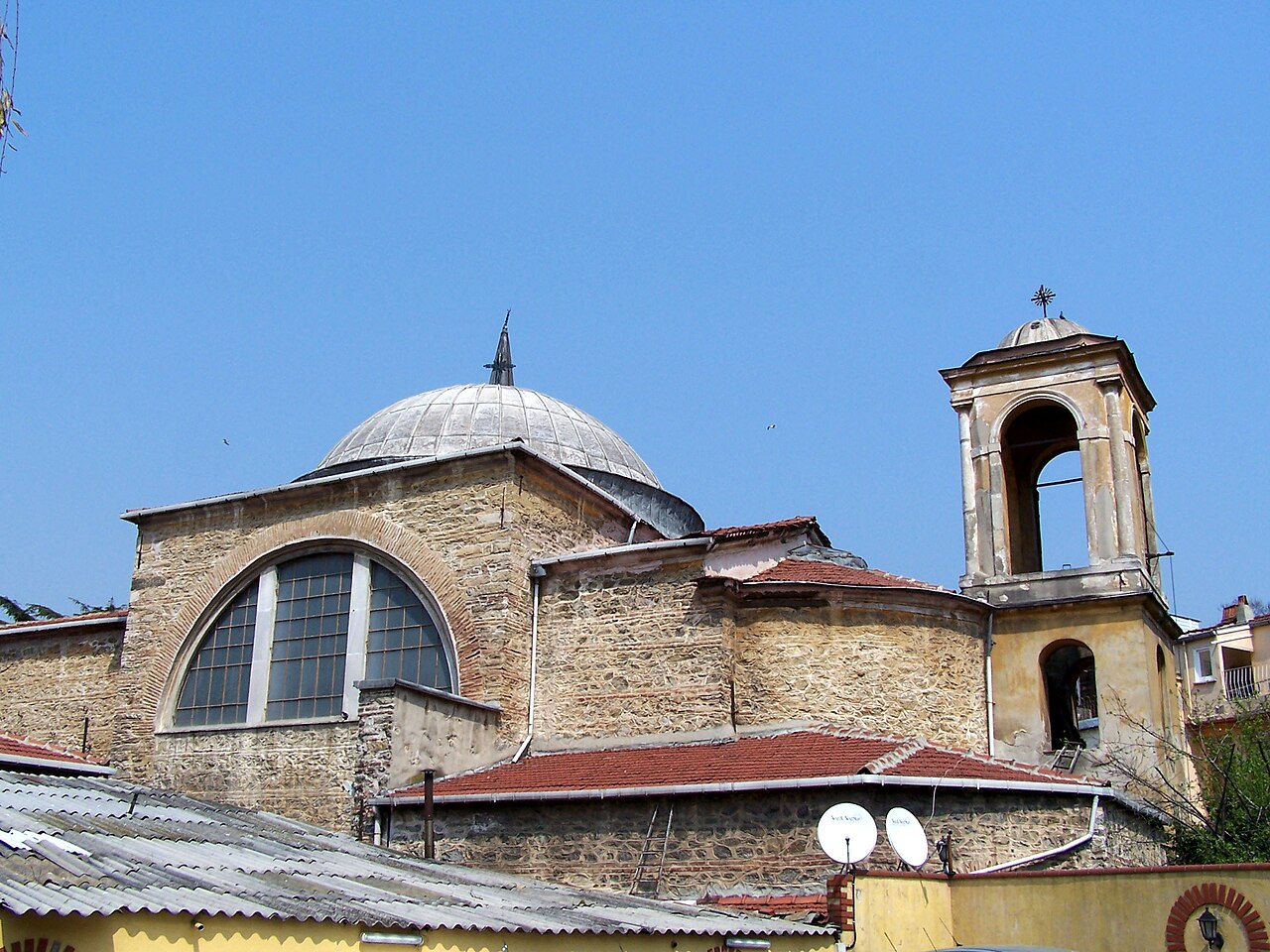
This church is believed to be built in 1475 by the Greeks of the Kefe Khanate of Crimea, who arrived to Istanbul in 1462.
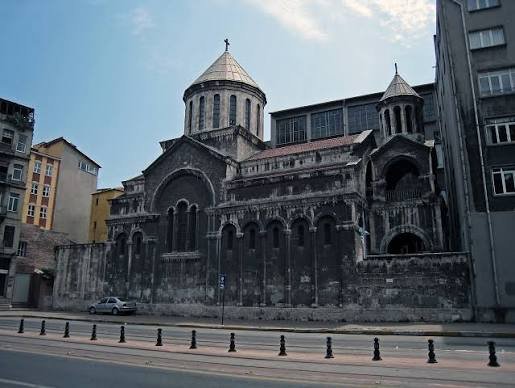
After the foundation of the Armenian Patriarchate of Istanbul (1461), 55 Armenian churches have been built in the city.
One of the five Armenian high schools in Istanbul, the Getronagan Lycee is also known as the “Galatasaray of Armenians” – with Galatasaray historically being one of the most influential high schools of Turkey.
This church dedicated to and named after John the Baptist (Aya Yani), is located in the middle of a courtyard surrounded by high walls.
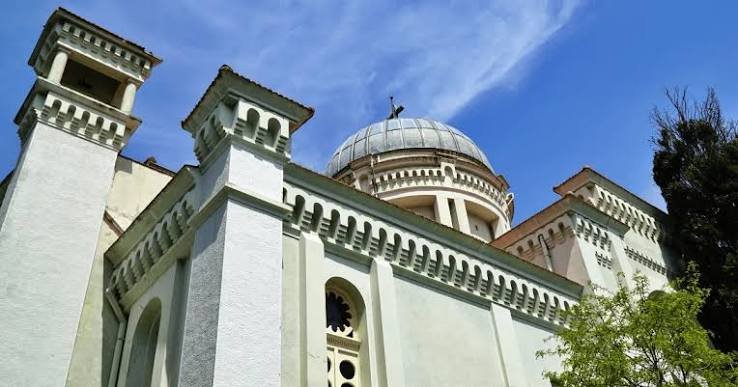
This church is dedicated Agios Nikolaos (St. Nicholas), patron saint of seamen. He was the Bishop of Myra (or, Demre in modern-day Turkey) in Lycia.
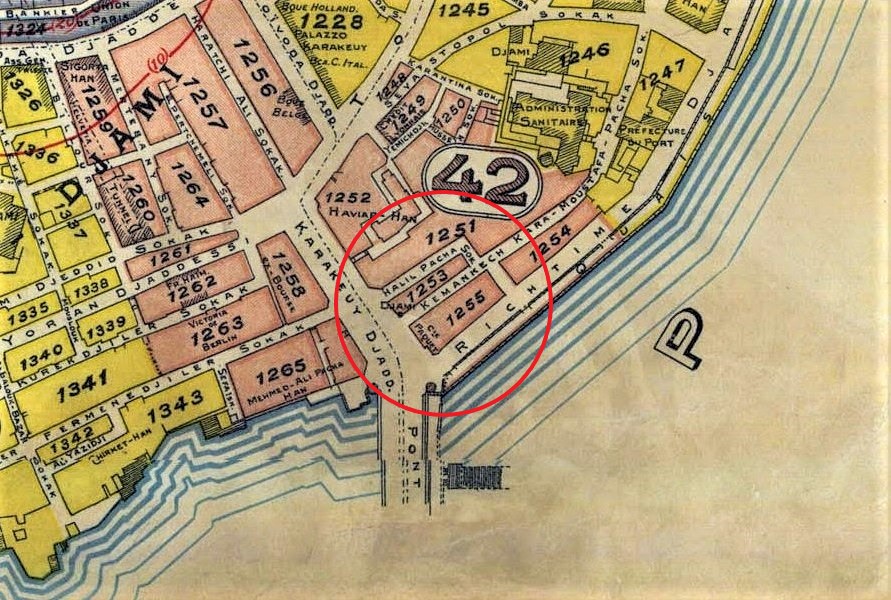
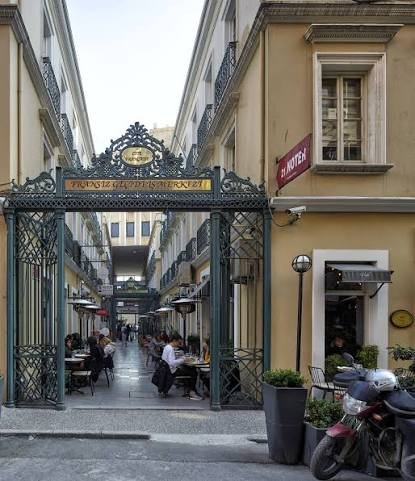
French Passage (Cité Française), or Fransız Pasajı in Turkish, is a commerce center between Kemankeş and Mumhane Streets – it is very close to present-day Karaköy police station.
Wine was once brought by vessels to Istanbul in casks from Erdek, Foça, Bozcaada (Tenedos island) and Bülbülce, unloaded at Galata’s “Şarap İskelesi” (meaning “Wine Wharf”), and from there, hauled to taverns.
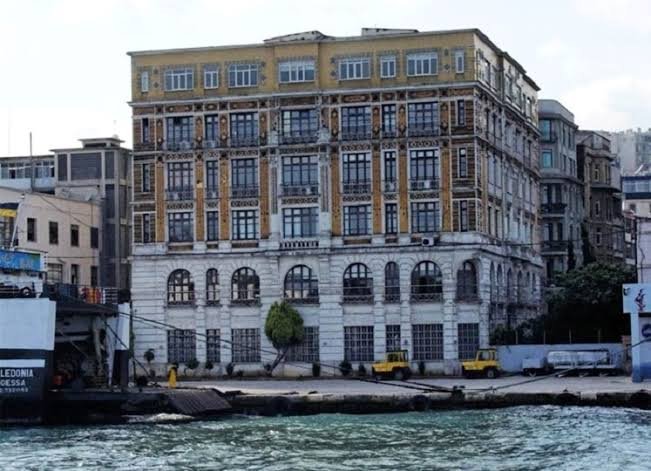
One of the two important buildings on Galata Docks is Çinili Han, which was built in Art Nouveau style in 1910-11.
Kemankeş Kara Mustafa Pasha Mosque was once a church within the seaward walls of Galata, close to the now-vanished Kastellon Tower.
The han has an entrance from the Yemişçi Sokak, but the main entrance is on Halil Pasha Sokak, next to a crowded pedestrian area around Karaköy ferry terminal.
During the World War I, German and Austrian-Hungarian banks extended their activities in Galata.
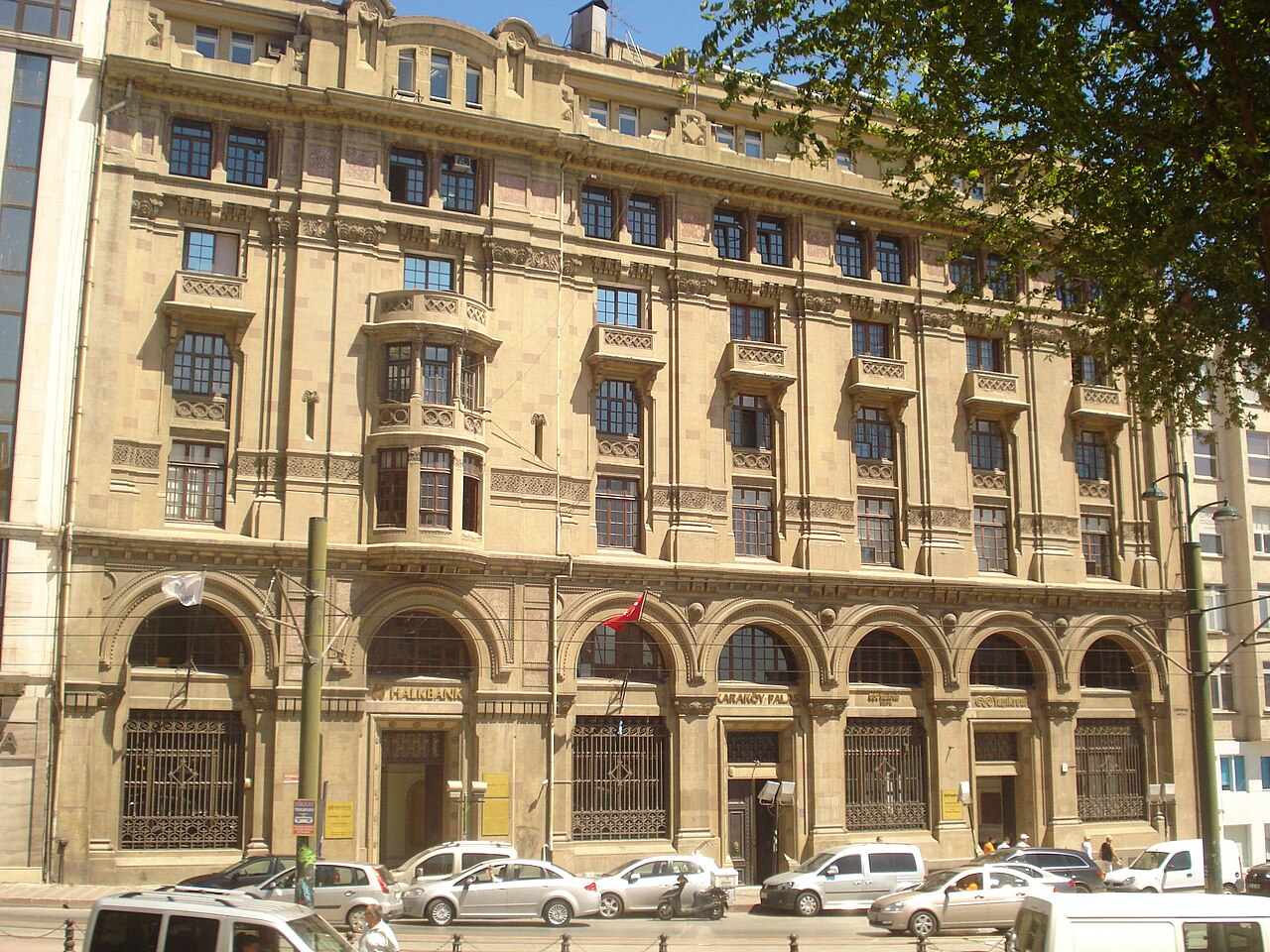
Karaköy Palas is the most flamboyant and glorious building on the square of the same name.
The building is located at the intersection of Meşrutiyet Street and Nergis Sokak (10, Nergis Sokak) and it functions as Galata Antik Hotel today.
6th Municipal Department (“Altıncı Daire-i Belediye” in Ottoman Turkish) was the first western-style municipality of Istanbul.
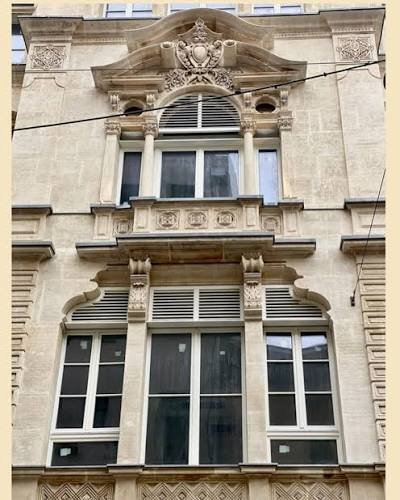
In Istanbul, multi-storey masonry buildings and apartments were first introduced - and quickly spread around the Galata and Pera regions.
In Turkish, Büyük Hendek means “large – and deep – moat”, while Küçük Hendek meaning “small moat.”
Located at the corner of Laleli Çeşme Sokağı, Laleli Fountain is a stunning example of Art Nouveau architecture applied to a fountain.
The Genoese sanctuaries in Galata are not limited to Catholic churches, because the region was also inhabited by a large Italian Jewish community.
Galata Tower was not the only tower in the Galata walls built by Genoese.
As this mescid (small mosque) do not bear an inscription, the construction date is unknown.
Like the Ottoman Bank building, Hezaren Han was designed by Alexander Vallaury, and it opened doors in 1903 after a record-breaking construction period of 5 months.
Before the Conquest, the Genoese colony in Galata was ruled by a governor, who was called as “podesta,” and assigned by the Genoa Republic as its permanent ambassador to Byzantium.
As the building does not bear an inscription, the architect and the exact construction date is unknown.
The building is estimated to be built in the 1880s, and it was shown on 1895-dated R. Huber map.
The building was commissioned by the Italian insurance company Assicurazioni Generali to Italian architect Giulio Mongeri in 1909.
It is one of the best-protected hans in Galata. As it doesn’t bear an inscription, the construction date and architect is unknown but it is believed to be built in 1903-04.
Tütün Han was built in 1911 on the lot created by combining the lots of three demolished hans.
This beautiful building was constructed between 1911 and 1913.
Terziler Synagogue (lit. “Tailors’ Synagogue”), or “Tofre Begadim Synagogue” as the Jewish community calls it, belonged to Ashkenazi Jews.
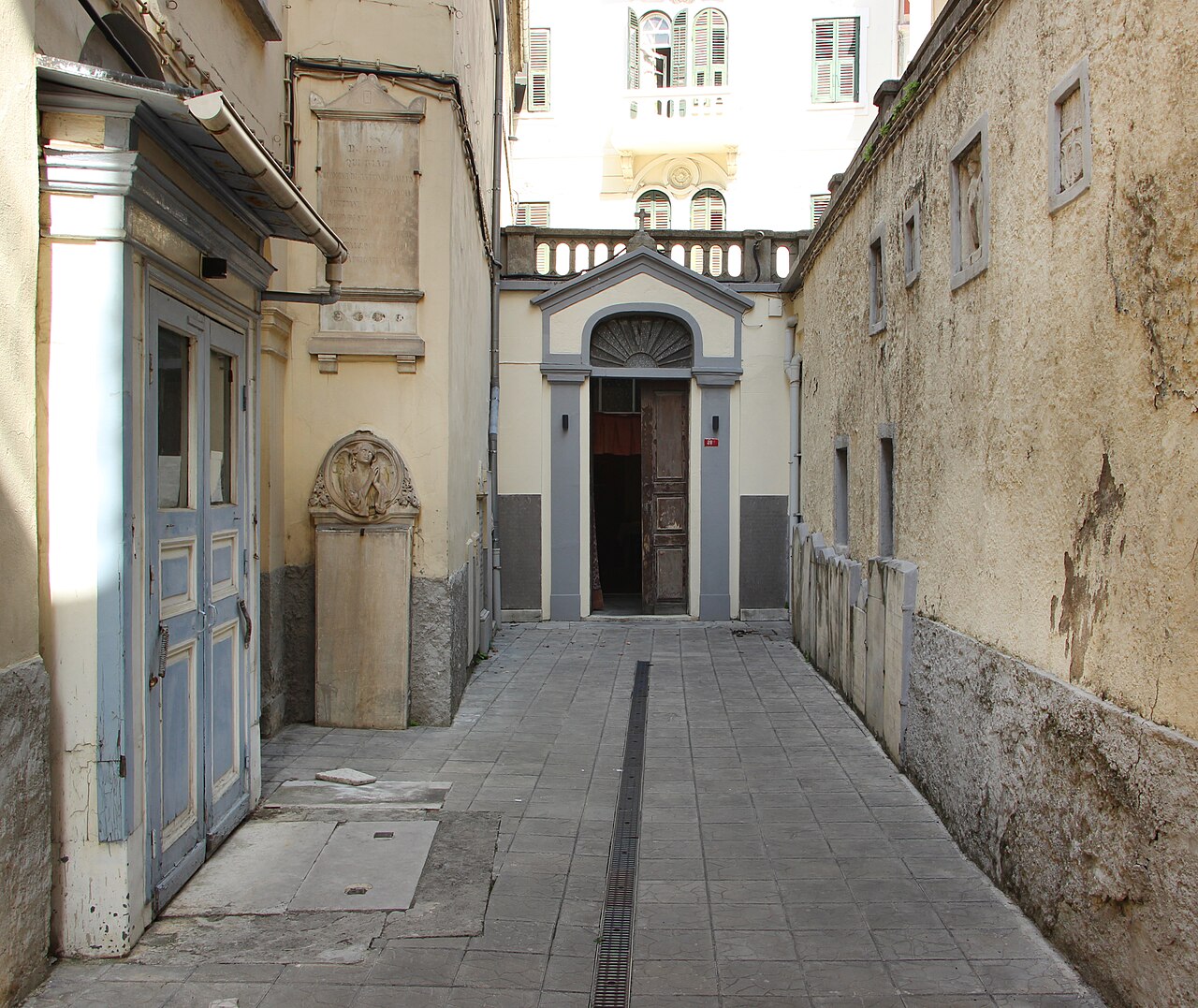
One of the three still-standing medieval Latin-rite churches in Galata is the Sankt George Catholic Church on Kart Çınar Sokak.
The Saint Pierre Han was built in 1771 upon the request of François-Emmanuel Guignard, the Count of St.
The building at 15 Galata Kulesi Sokak served as the British Prison between 1904 and 1919, and then, between 1919 and 1923, it was used as a police station by the occupation forces.
If you have a look at Galata Tower when you are walking from Galata Bridge to Karaköy, an interesting turret next to it may attract your attention.
Camondo family was one of the wealthiest Sephardic Jew families of Istanbul, and they made considerable contribution to the modernization of the city.
As mentioned before, the first property bought by the Prussian embassy in the Galata/Pera region was a lot with an old Turkish mansion on it, near the Galata Dervish Lodge.
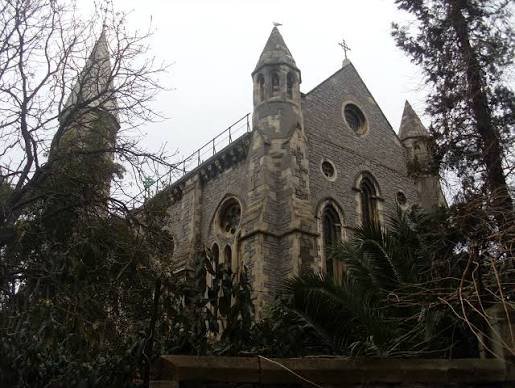
Crimean Anglican Church is a Protestant church that was built in 1866 by the British in memory of British soldiers who died in the Crimean War (October 1853-February 1856).
As mentioned before, Lüleci Hendek Street – like Büyük Hendek and Küçük Hendek Streets – marks the location of where a line of deep moats used to be.
It is one of the most beautiful fountains of the 18th century.
Once, this street was a part of İstiklal Street. This 270 m long slope connects Galip Dede Street to Karaköy and the wharf; in other words, it connects Pera to the Galata coastline.
The first known Istanbul synagogue of Ashkenazi Jews, i.e. Jews of Germany, Austria and Eastern Europe origin, opened doors in 1831 in a house on Büyük Hendek Sokak.
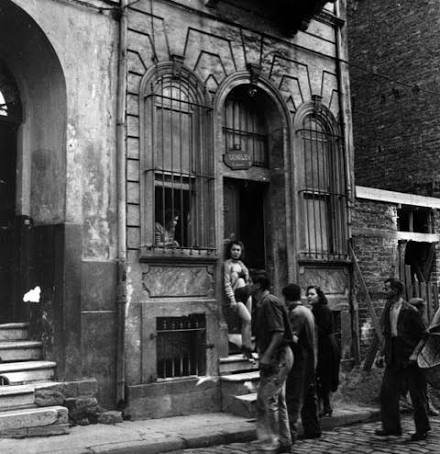
Walking down the Alageyik Sokak, a bit further is a gate on the right hand side and the access through this gate is only allowed after an ID check because the Zürefa Sokak on the other side is home to the most active brothels of Istanbul.
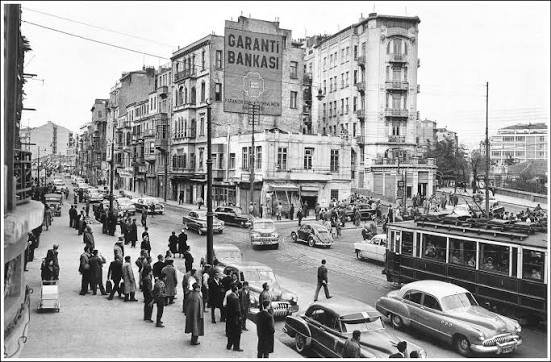
Kemeraltı Street was designed to funnel the traffic from the historic peninsula – via the Galata Bridge – to the north of the city, and in fact, it owes its name to the fire of 1771.
Although most of the Armenians in Turkey are of Orthodox faith, there are some who converted to Catholicism under the influence of the missionaries.
The Church of Saint Benoit is situated in a land surrounded by high walls on Kemeraltı Street.
Galata Greek School was built in 1885 for the education of the children of Ottoman Greek families.
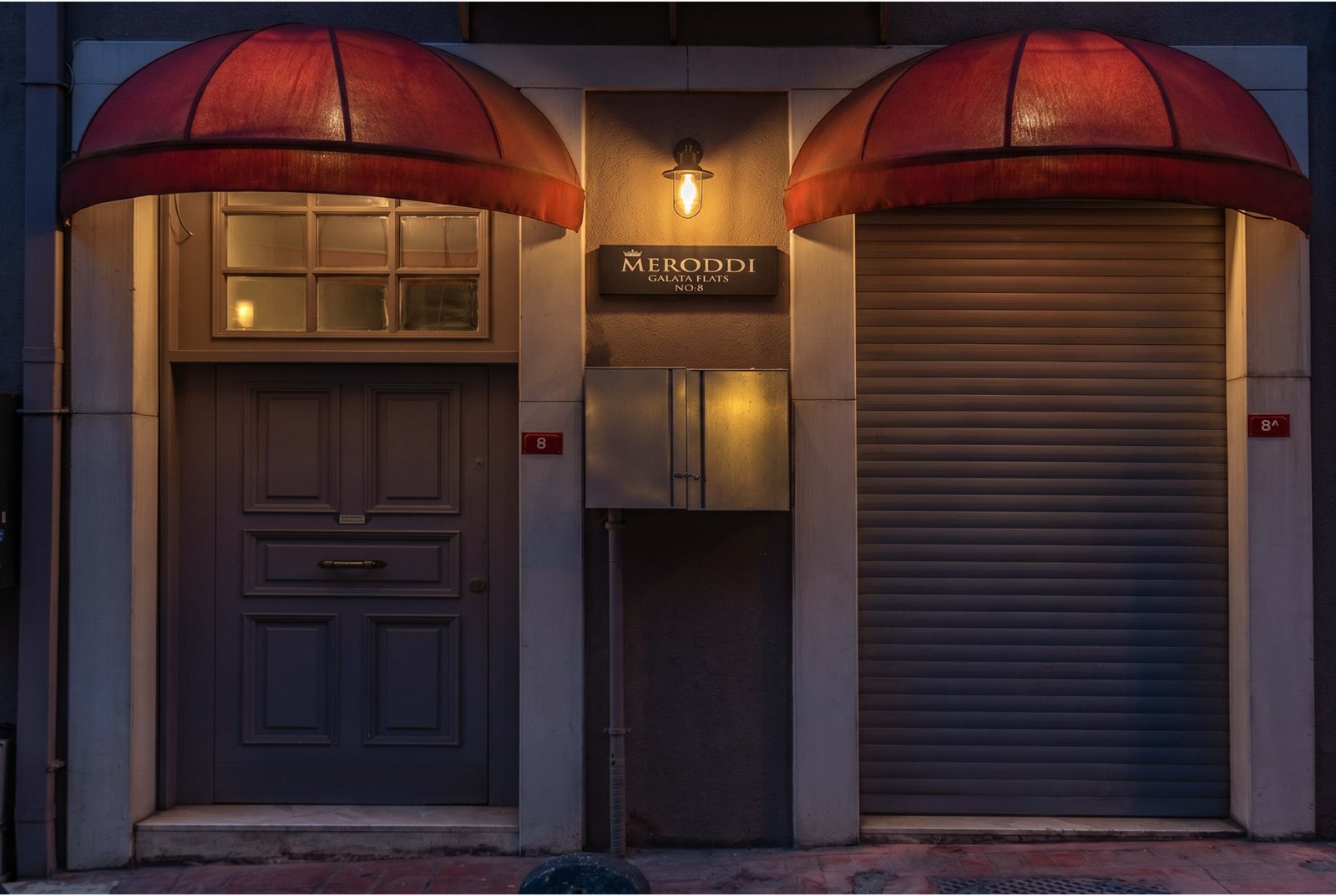
Two- and three-bedroom apartments with kitchens in a historic building known from a title deed of 1891, one minute from the Galata Tower. Suited to families and larger groups.
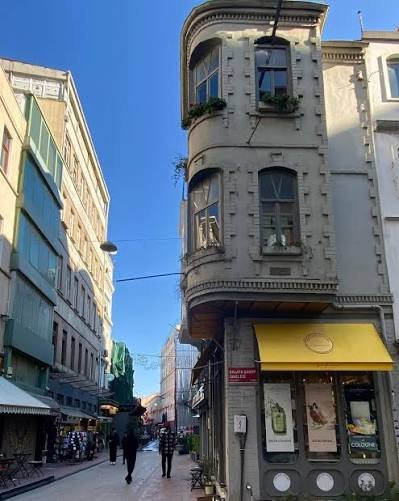
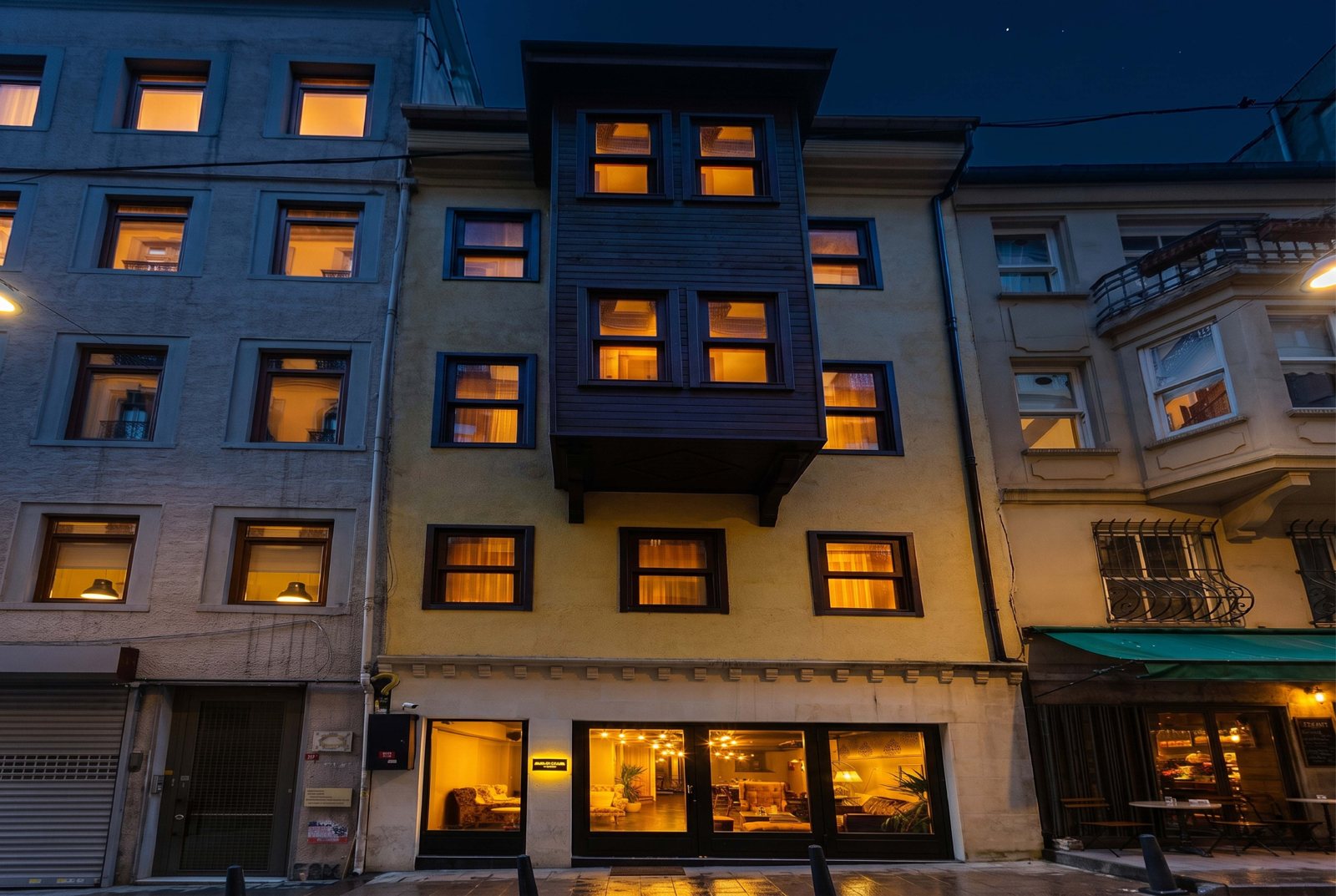
A hotel in a historic bay-windowed building of the early 1890s on Serdar-ı Ekrem Street, four minutes from the Galata Tower. Lattas Cafe Bistro is on the ground floor.
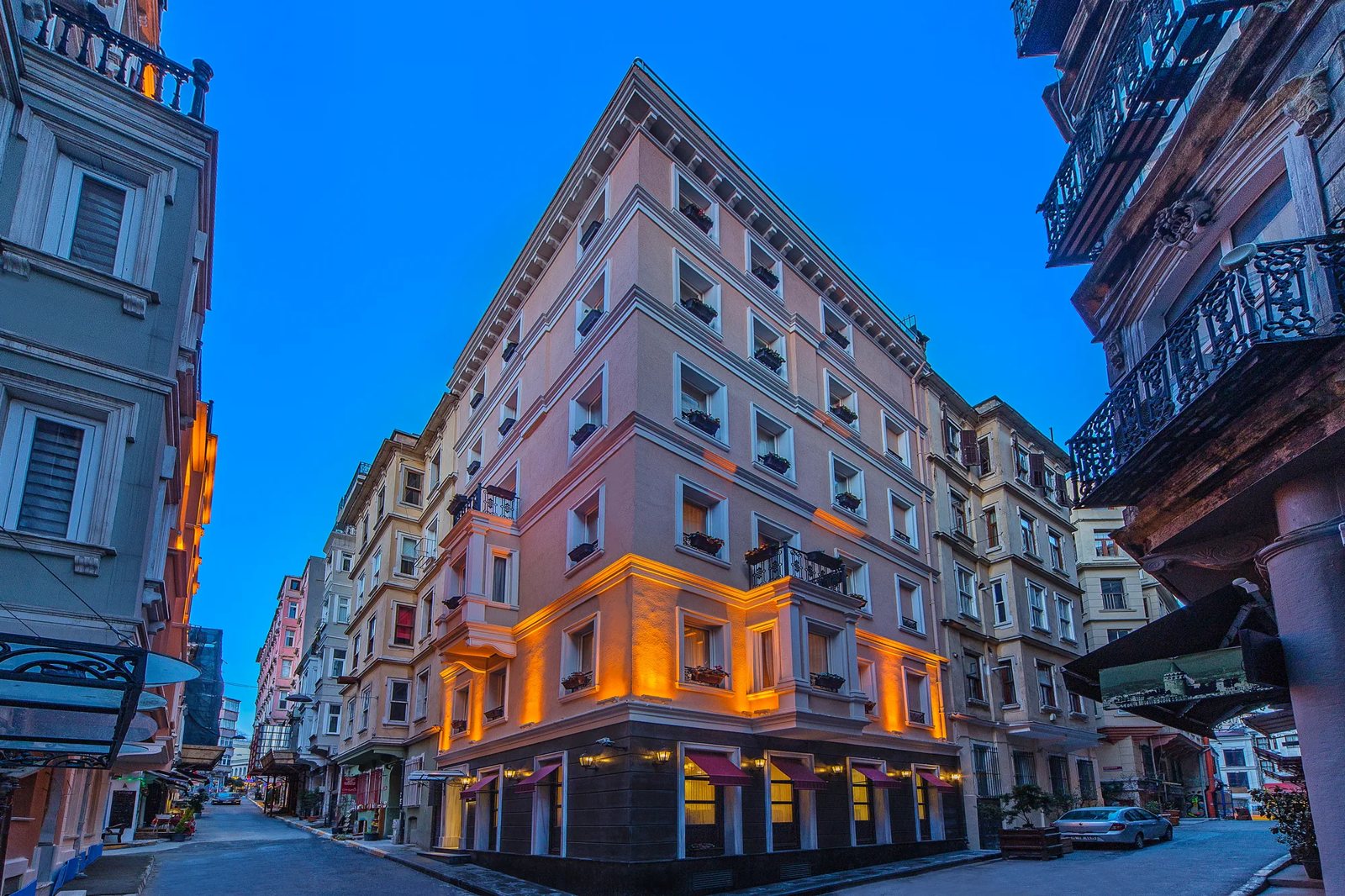
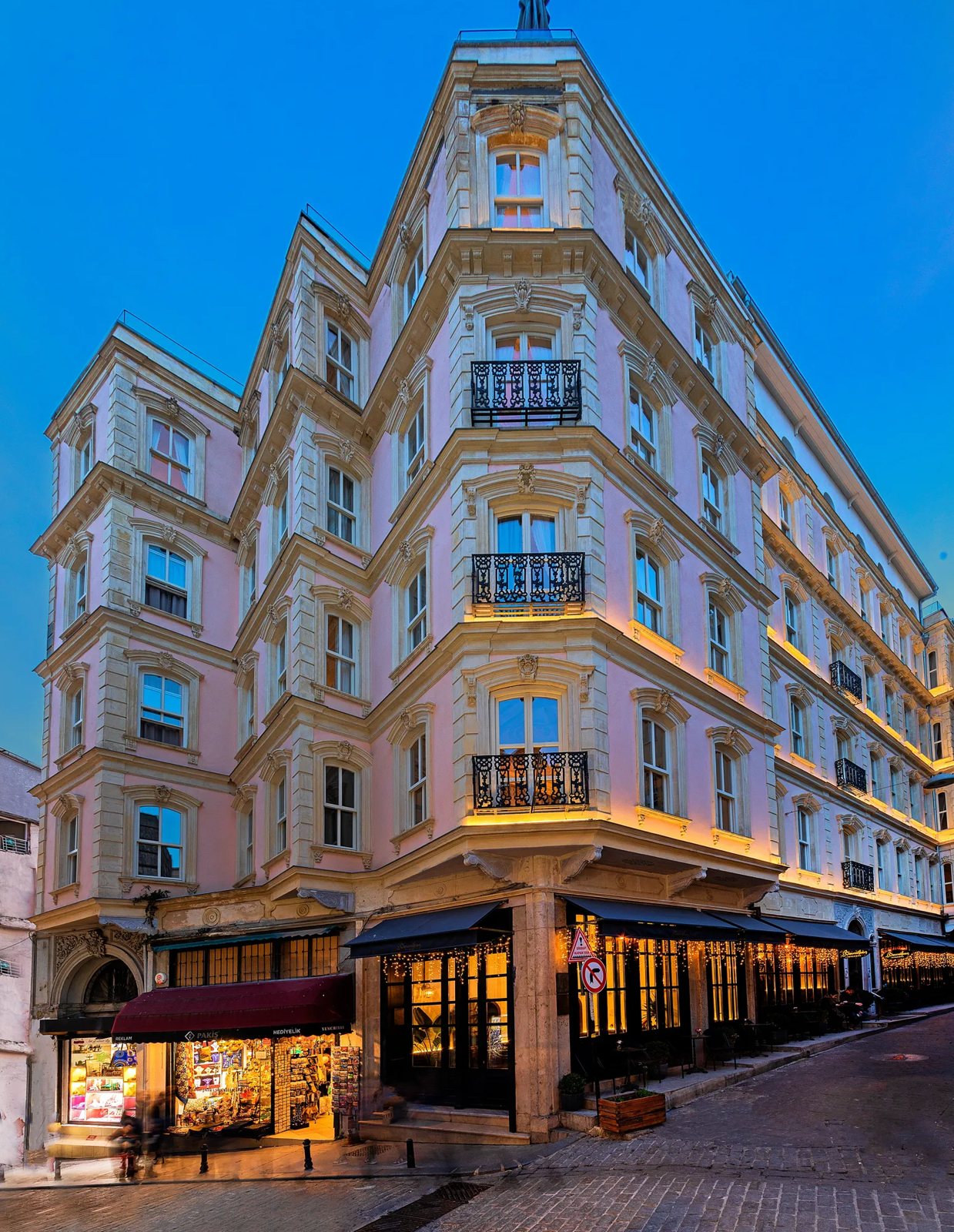
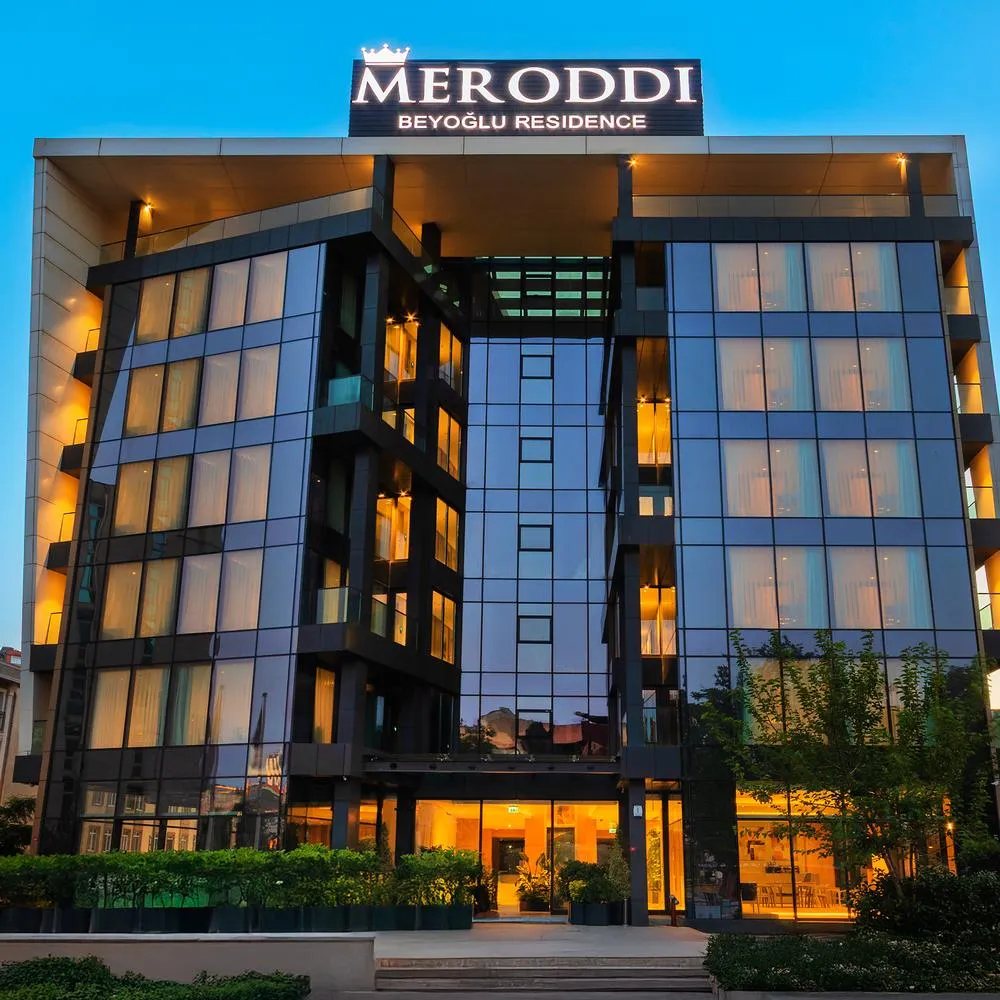
A hotel in twin apartment buildings put up between 1895 and 1905. Two minutes from the Galata Tower, on a quiet street; the Şişhane metro station is a few minutes away.
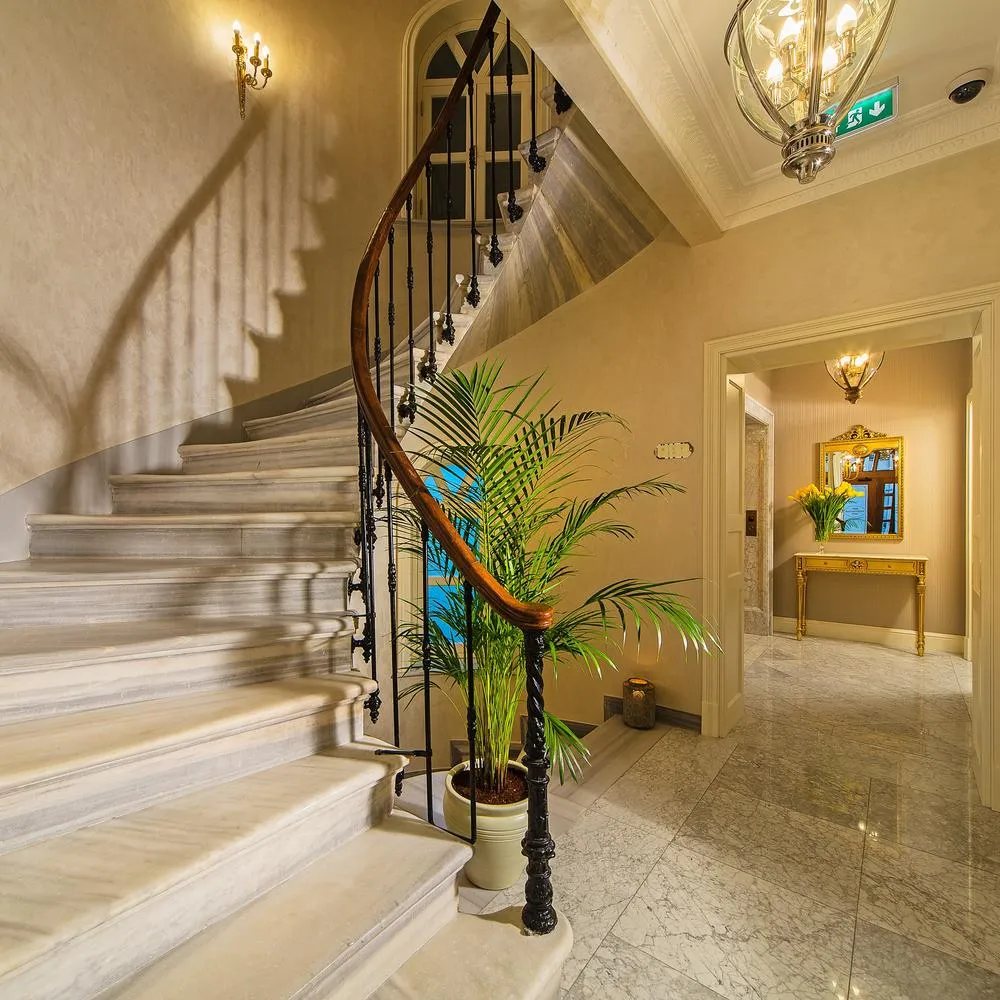
A boutique hotel in the Barnathan Apartment building of 1892, two minutes from the Galata Tower. Selected rooms have a view of the tower or the Bosphorus; a buffet breakfast is served in the garden on the ground floor.
Apartments with a private entrance and a kitchen, 200 metres from the Galata Tower. For short and long stays.
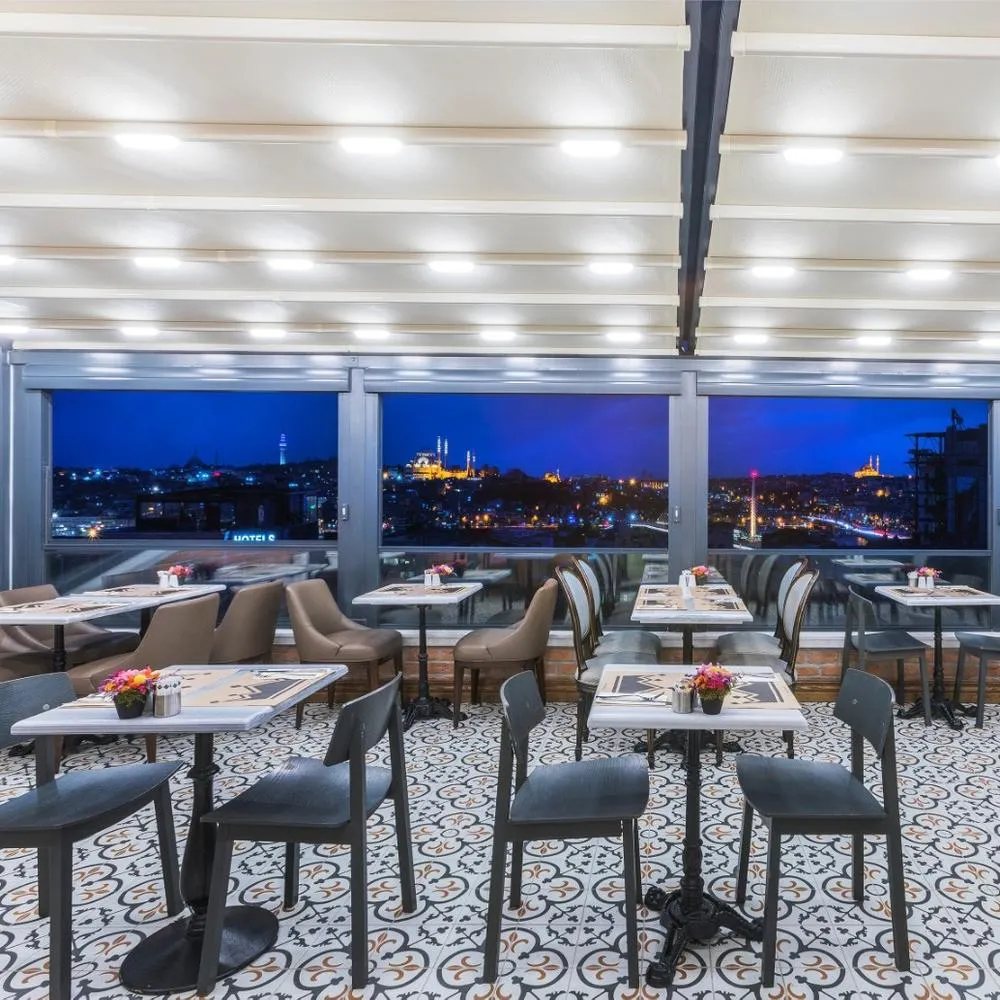
A boutique hotel with few rooms, one minute from the Galata Tower. Breakfast is served on the roof terrace, which looks out to the tower, the Genoese walls, the Golden Horn and the historic peninsula.
Serviced apartments with kitchens and balconies in Piyalepaşa, from studios to two-bedroom units. Free parking, electric vehicle charging and a free shuttle to Taksim and Şişhane.
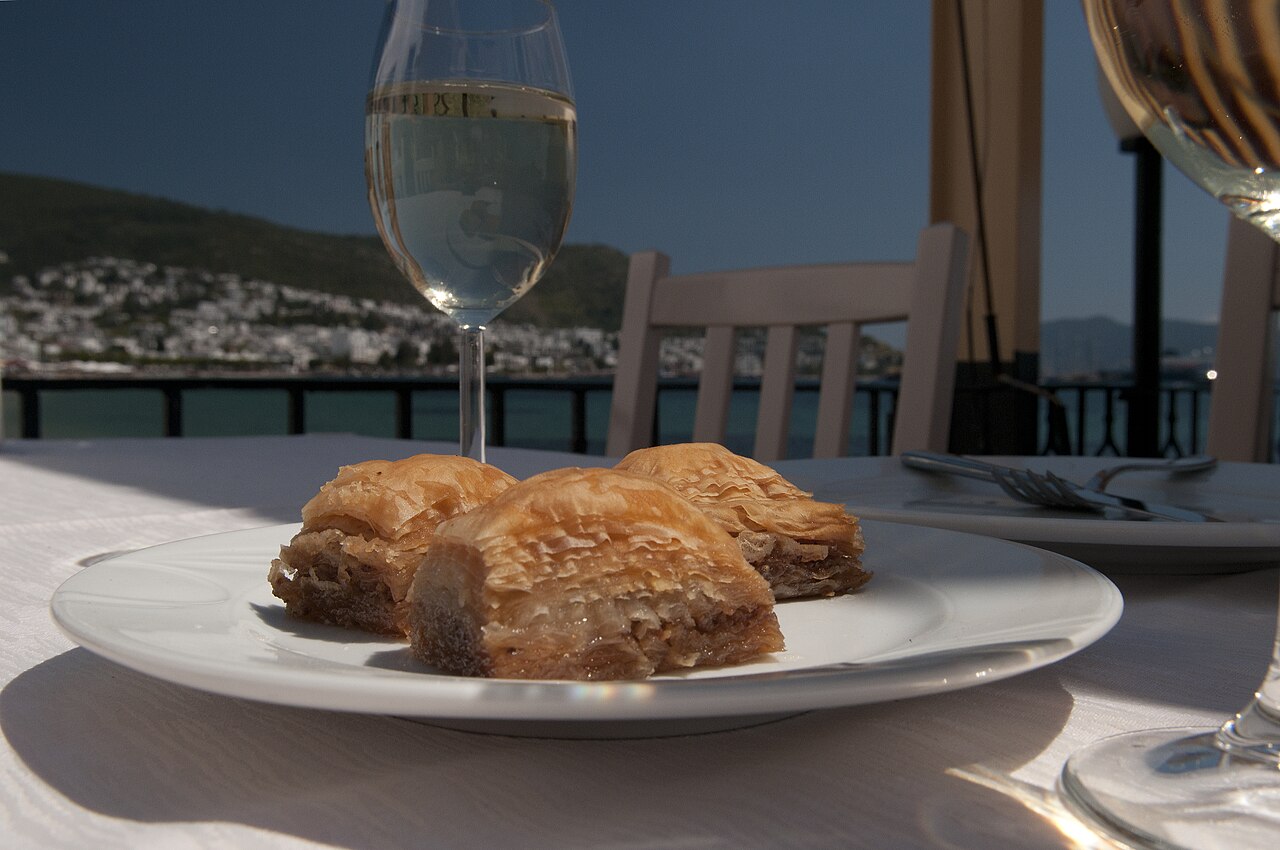
The baklava shop opened in Karaköy in 1949 by the Güllü family from Gaziantep: a self-service counter from pistachio baklava to kadayıf, with börek and poğaça in the morning.
A symbol of the district with its turquoise-tiled interior. By day a modern esnaf lokantası (tradesmen’s restaurant) with a menu that changes daily; in the evening an elegant meyhane where dinner stretches out over rakı and meze. Recommended in the Michelin Guide.
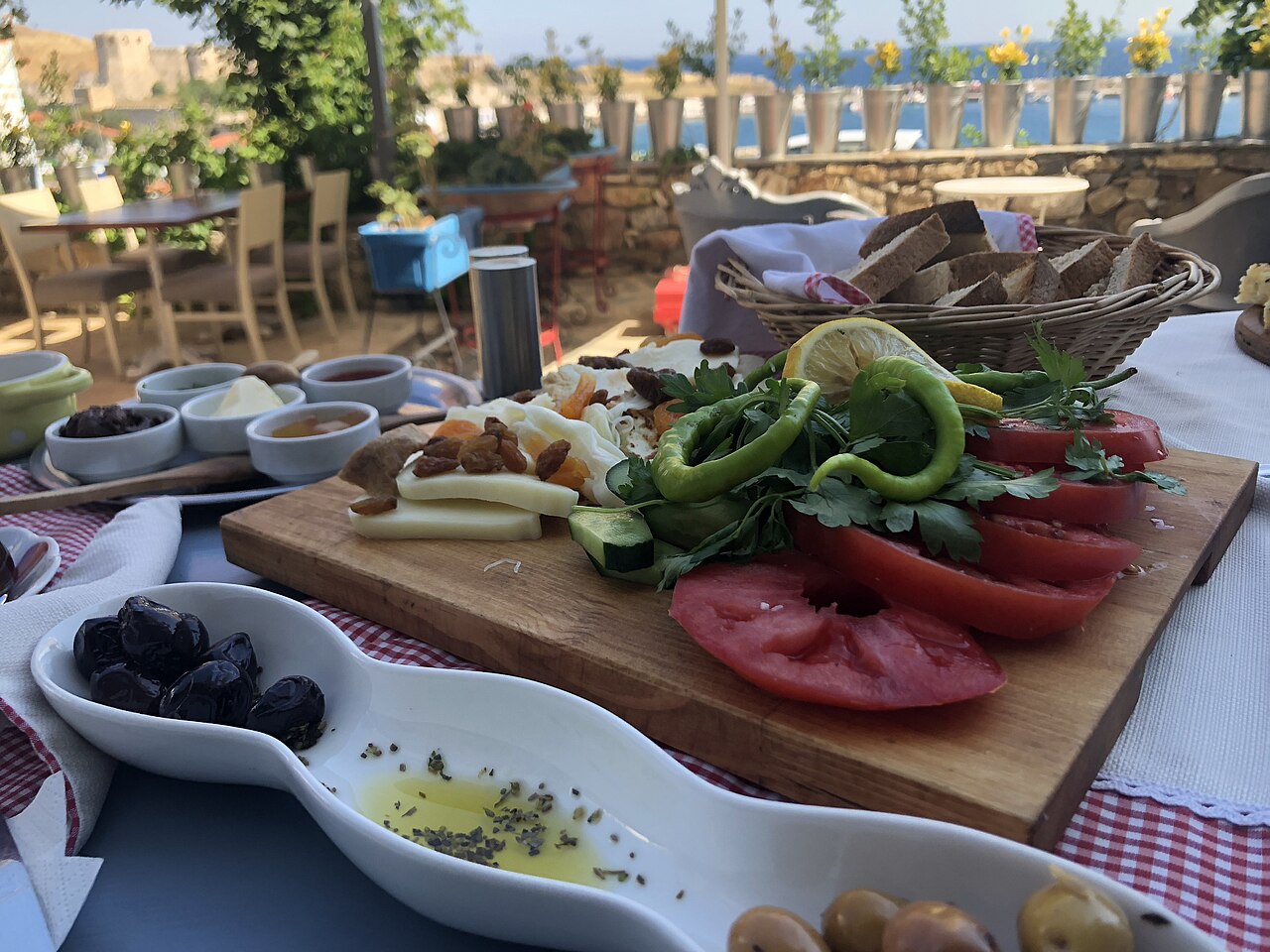
A delicatessen, café and restaurant in one, and one of the district’s longest-established addresses for a serpme (spread) breakfast. Famous for its plates of imported and regional cheeses, honey and kaymak (clotted cream), dozens of kinds of olives and grilled halloumi and sucuk; the outdoor seating with a sea view is a bonus.
A modern bistro and bar in the heart of Karaköy. Breakfast and light dishes by day, and in the evening a lively meeting place over wine and cocktails. With its industrial-chic décor, it is one of the emblematic addresses of the district’s food and drink transformation.
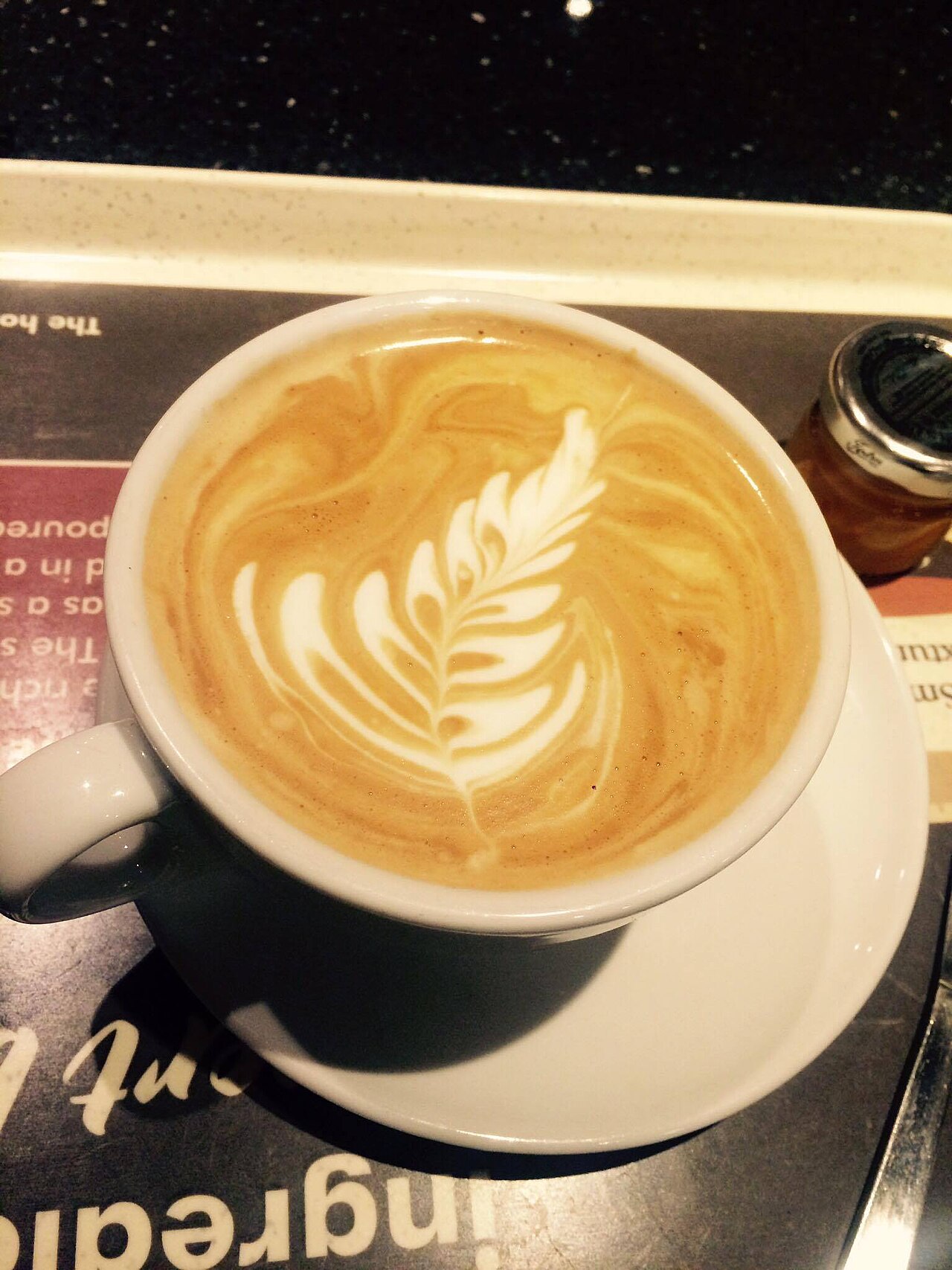
One of the long-established names of the third wave of coffee in Istanbul, led by the barista trainer Sam Çeviköz. With its signature coffees, with notes of spice, raw almond and dark chocolate, and its hearty brunch, it is one of Karaköy’s favourite coffee stops.
Converted from an abandoned metal workshop, a pioneer of the district’s coffee culture since 2011. With its coffees brewed from Julius Meinl beans and its quiet inner courtyard, it is the symbol of the third wave in Karaköy.
A garden restaurant with a view of the Galata Tower, on the ground floor of the Barnathan Apartment building of 1892. Buffet breakfast in the morning, Turkish and world cuisine through the day, live music every evening except Monday.
On the terrace floor of the Barnathan Apartment building: a rooftop restaurant where the Galata Tower, the Golden Horn and the Bosphorus are seen from the same terrace. Breakfast is à la carte; dinner service begins at 18.00.
A quiet café on Serdar-ı Ekrem Street, opposite the Doğan Apartments. Barista coffee, desserts made daily and outdoor tables facing the street.
In the past, vineyards and forestlands were stretching to the north of Galata walls, i.e. behind the Galata Tower.
Zellichs were a Croatian family who made a reputation in the Ottoman Empire with their lithograph postcards.
Some of our earliest knowledge about Galata comes from Dionysius of Byzantium, an epic poet and geographer of the 2nd century AD.
From early on, Galata was one of the most important outer districts and ports of Constantinople.
The March 1304 treaty with the Byzantium was granting self-governance rights to the Genoese colony in Galata, but it didn’t grant them the right to build fortification walls.
The walls of Galata were not pulled down in a day. Ottoman archive documents and old maps tell the story, from the decision of 1863 to the metro line that opened in 2014.
How is Bereket Han, near Bankalar Street, connected to the seat of government of Genoese Galata? A book, a study and two dates shed light on the question.
What do the curves of the stairs on Bankalar Street connect? Old plans and a photograph by Ali Öz show two different periods of the same structure.
How did places for handing out water, for reckoning time and for reading come to stand side by side at the entrance on Galip Dede Street? A look at the Galata Dervish Lodge from its gate.
Why did the names of pulley makers and sail makers stand side by side on the Galata shore? A neighbourhood record and a photographer’s notebook follow the tradesmen at two different dates.
How did water distributed at Taksim become visible in the squares of Azapkapı and Tophane? The story of the line that joins Saliha Sultan’s fountain with Mahmud I’s.
A building contract dated 1881 shows how a tenant left its mark on a building in Galata. Reading the bank years in the plan of Saint Pierre Han.
In 1663 part of a cargo of lemons sent from Kos to Istanbul rotted on the way. How did the freight to be paid, in the account brought before the kadi of Galata, come down to 308 akçe?
Why did coffeehouses in Galata appear as home addresses in the registers of Şirket-i Hayriye workers? Ten door numbers reveal ties reaching from the Black Sea to Istanbul.
Yağkapanı Gate, the Bedesten and Kurşunlu Mahzen tell of two different periods of the Galata customs. Using court registers and maps, we follow why an old address changed.
Every year swifts return from Africa to nest in the gaps in the walls of Galata Tower. We gathered the birds’ calendar, what happened during the restorations of 2020 and 2024, and the story of their Turkish name.
How many pupils at the Alliance girls’ school in Galata paid fees in 1880, and how many studied for free? A table published by Esther Benbassa also shows who kept the school going.
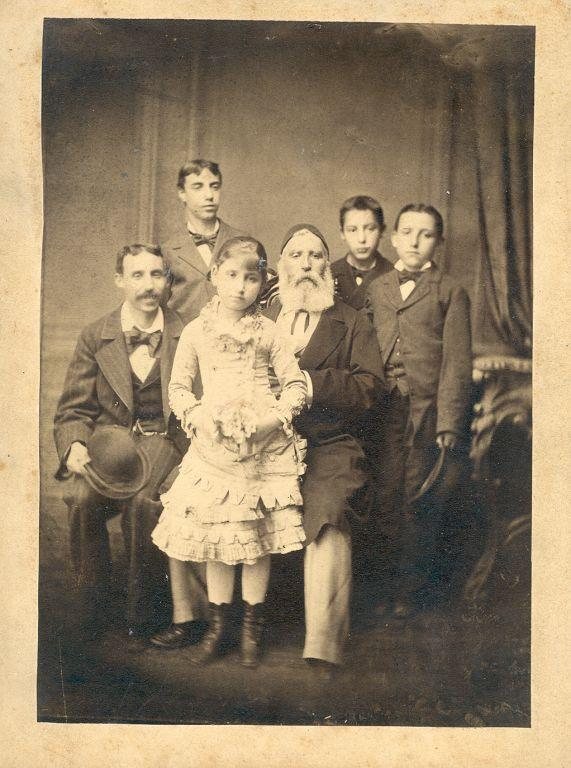
The Barnathan family was among the Jewish community who migrated to Ottoman Empire in 1492 from Spain. This Sephardic community was settled mainly around Galata in Istanbul.
It is possible to see all the details and spatial design of the Barnathan Apartments in the plan drawn on a silk piece dated back to 15 February 1896.
The apartments, as mentioned before, were built to provide an income for the owners. All the residents were tenants who were working around Galata.
Barnathan Apartments were among the first representative examples of apartment architecture in Istanbul.