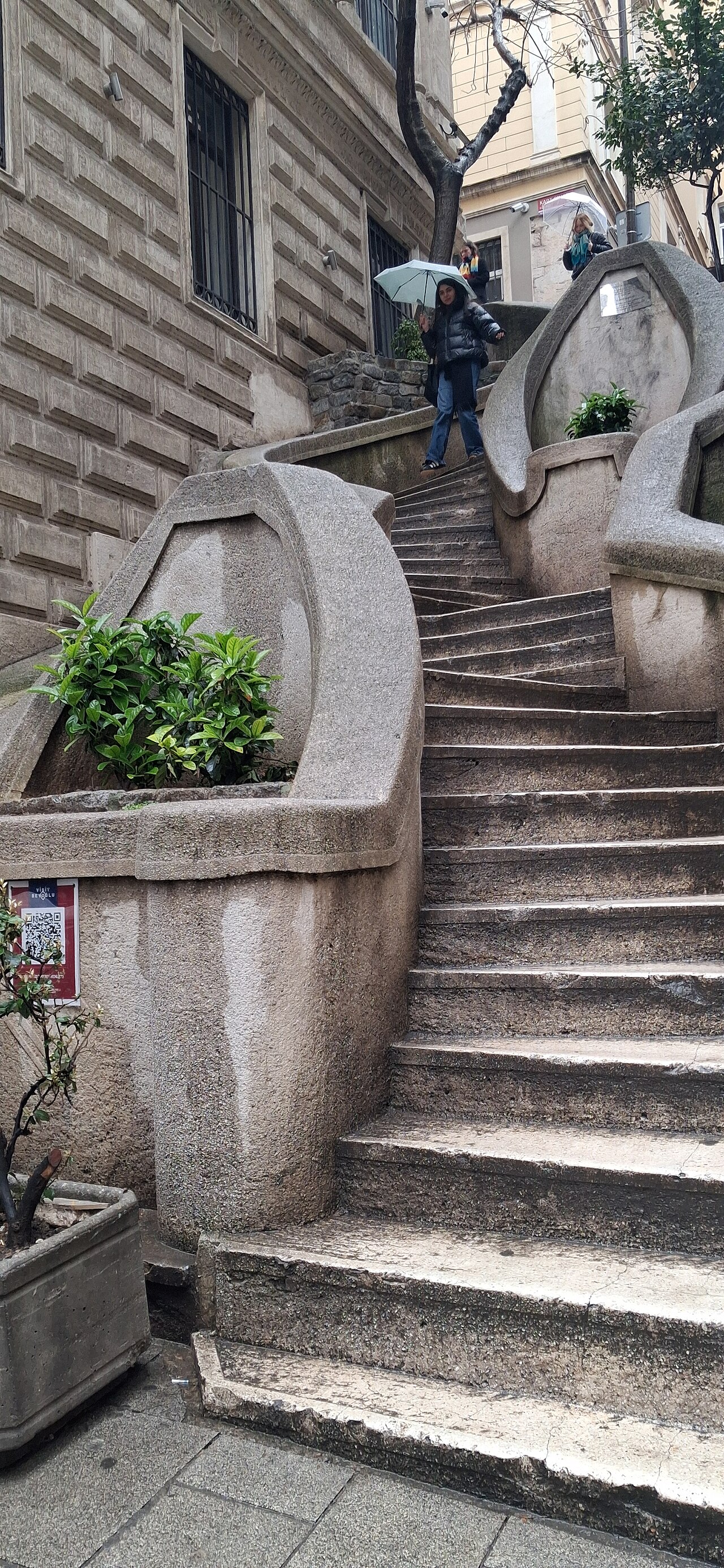
Looking up from Bankalar Street, the Camondo Stairs do not look like a straight slope. The steps divide into two flights, turn and meet again. Akdoğan Özkan likens this two-way climb to the figure eight. In the guide, the lower end is placed on Bankalar Street, formerly called Voyvoda, and the upper connection on Kart Çınar Sokağı. To understand the shape of the stairs, it is enough to look at the difference in height between the two streets. [1]
Anyone looking for the year the stairs were built comes across different dates. A study published by the Tourism Branch Directorate of Istanbul Metropolitan Municipality compares old drawings and plans and places the structure between the late 1870s and the 1880s. It points to no definite record naming the architect. This is why an old plan, which tells what could be seen here and when, is as valuable as a single architect's name. [2]
A century later a photographer looks at the same spot. Ali Öz's black-and-white negative in SALT Research is dated to the 1980s. The archive record gives both the Bankalar and the Voyvoda names. Thanks to these two names, someone who reads of Voyvoda Street in an old source can find the same place in the photograph and on today's map. [3]
Related pages
Source: Galata HUB’s own text, based on: [1] Akdoğan Özkan, A Traveler’s Guide to Galata, 2016, pp. 128–129 · [2] Istanbul Metropolitan Municipality, Tourism Branch Directorate, One of Istanbul’s Historical Treasures: The Kamondo Stairs · [3] Ali Öz, Kamondo Merdivenleri, 1980s, SALT Research, AOZHIST0100
Last updated:
Spotted a mistake or something missing on this page? Suggest a correction