Why Did Italians Settle in Istanbul?
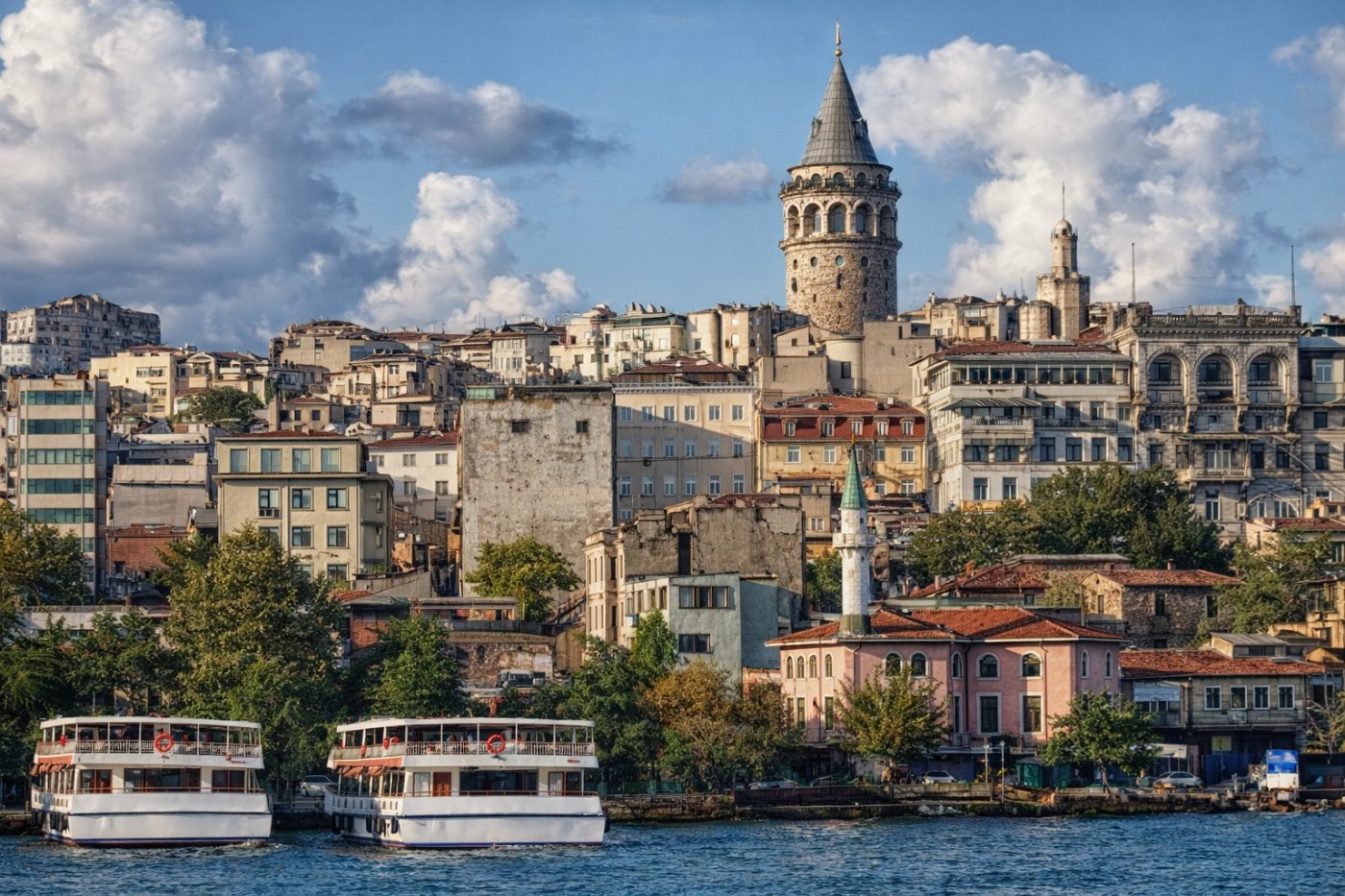
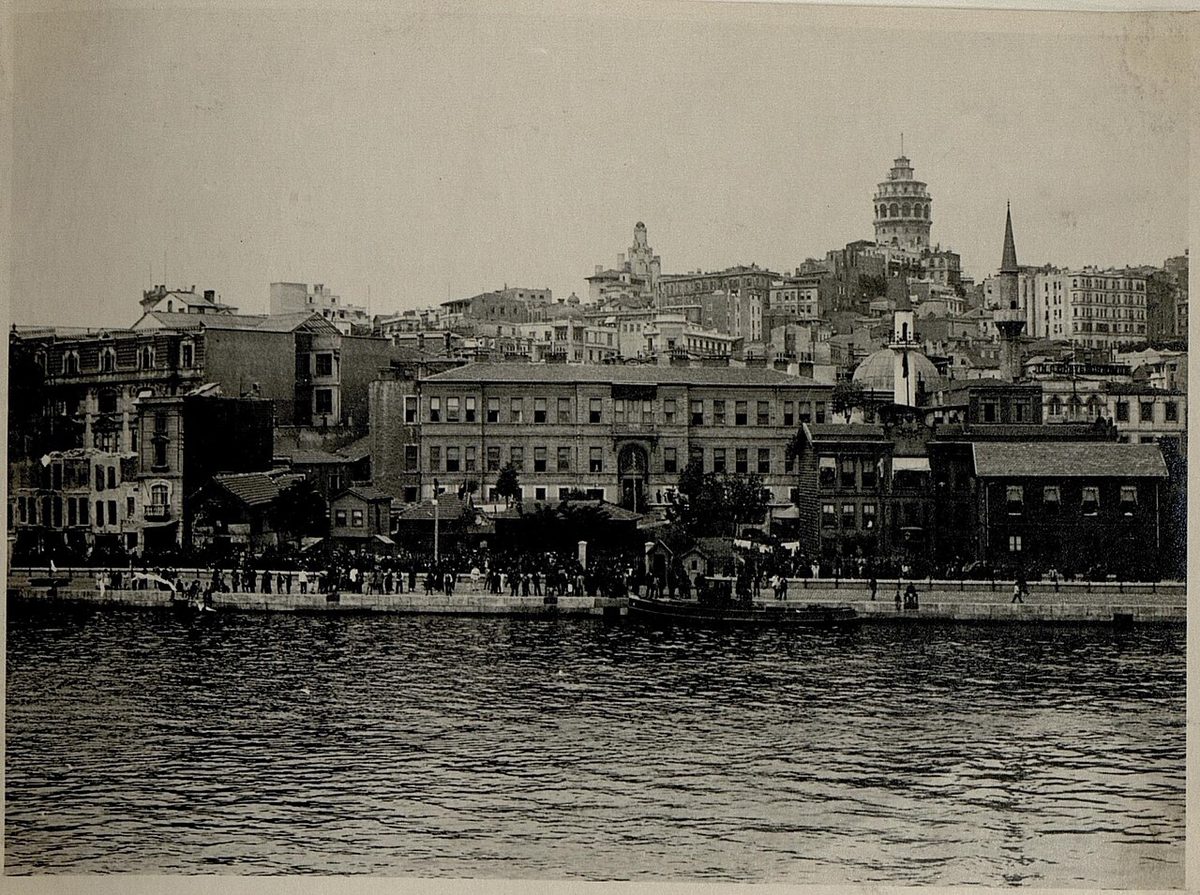
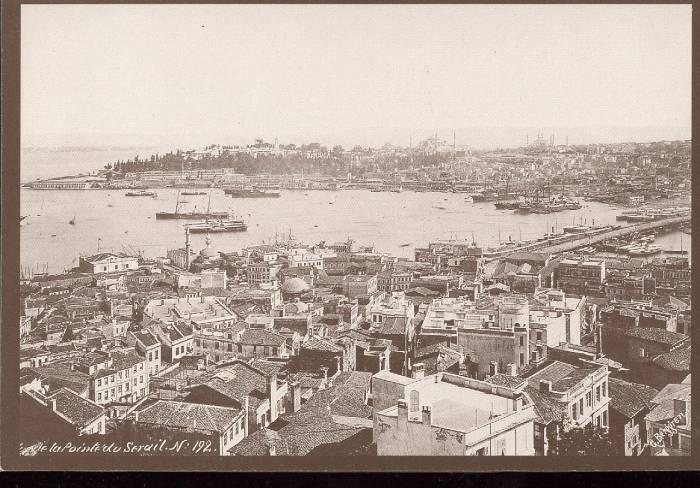
From early on, Galata was one of the most important outer districts and ports of Constantinople. Because of its strategic location next to the natural harbor of Golden Horn in the junction of seaways, it became a trade hub since the ancient times.
When many from seafarer Italian city-states (Amalfians, Pisans, Genoese and Venetians) set out in the Middle Age to build colonies in the Mediterranean, Constantinople came out to be one of the most suitable settlement options: it was the consumption center of the Byzantine Empire, and it was in great need of tradesmen because wealthy Byzantine aristocrats were investing in land rather than engaging in trade.
† Galata, which had become a settlement of European merchants as early as the Middle Ages, kept its commercial importance after the conquest. According to Evliya Çelebi, in the 17th century Galata had 1,160 streets and 3,080 shops. Listing its people by trade, he puts the seamen first, then the merchants, craftsmen of every kind, and the caulkers and carpenters; most of the people, he notes, were azaps (marines) dressed in the Algerian fashion, and there were rich captains among them. The Greeks, he adds, kept the taverns and the Armenians were master pastırma makers.
† Another understandable reason why Italian seamen and merchants made Galata their home was that Italy had already become a Byzantine province in the reign of Justinian I (527–565). Weakened by the separation of its military and civil administrations, Italy could be held by the Byzantines for only 14 years; they then lost the north of the peninsula and held on only in the south.
Also, losing their position to Muslims in the Mediterranean, the Italians pinned their hopes to Byzantine lands to be able to undertake the transit trade to Central and Western Europe. Thus, they could transport the spices and quality textiles of the Far East to Europe, or have access to Middle Eastern markets to sell European products.
The seafarer city-states of Italy signed treaties with the Byzantine Empire and gained important rights and privileges not only in terms of trade but also in administrative and legislative issues concerning themselves. Equipped with such rights and privileges, they spread from Constantinople to establish colonies in other important port cities. By the end of the 12th century all trade throughout the Empire was dominated by Italians.
† French and German merchants are also known to have been present in 12th-century Constantinople, with docks and shops of their own, but neither the extent of their privileges nor their commercial activity ever reached the level of the Italians.
From Amalfians to Venetians: Trade in Istanbul
Even before Venetians and Genoese, Amalfians were the first merchants to transport goods from Constantinople to Italy. As they were Catholics, Byzantium allocated them a church dedicated to Virgin Mary (Deiparae seu Mariae Amalphitarum de Latina), and a monastery. When they grew in number and their representation before the Byzantine Empire became necessary, Pantaleone, the leader of the Amalfian community, was granted with the titles of Patrice and Consul in 1066. The Amalfian community was established in the region between Zindankapı and Balıkpazarı gates in today’s Eminönü.
† They also had a dock close to where the City Lines ferries berth today.
The Venetians were natural merchants out of geographical necessity. They first gained the right to exercise commerce in the Byzantine territory with a treaty between Emperor Basil II and Doge Pietro Orseleo II in 992. The treaty was granting them lower taxes for crossing the Dardanelles Strait. With improved relations, the Venetian population in Constantinople grew. Amalfians lost their dominance to Venetians by the end of 11th century.
In return for support against Normans in Italy, the Byzantine Emperor Alexios I Komnenos (1081-1118) had to grant Venetians, in 1082, further privileges that would enable them to penetrate more into the Levant. Now the Venetian subjects had the right to exercise commerce without having to pay customs levy and sales tax (kommerkion). A dock and warehouses were allocated to them at Praktika, on the southern coastline of the Golden Horn, and they were allowed to hold their own courts to resolve intercommunity disputes.
Pisans and Genoese followed the example of Venetians. In 1112, Alexios I Komnenos granted some privileges to Pisans. Established around Bahçekapı, the Pisan colony had a dock near the place where Yeni Cami (New Mosque) is located today, and a cemetery just inland from the dock. Venetians, however, were the fastest growing colony among others.
The Genoese Settle in Bahçekapı
Arriving at Istanbul at the end of 11th century, the Genoese had to wait until 1142 to be able to acquire trade privileges that the Venetians, their archrival, had since 992. A comprehensive treaty with more meaningful privileges was signed in 1155. Still, the rights they acquired were lagging behind the Venetians, almost at the same level with the Pisans.
In 1162, the Genoese population in the capital had reached to 300. They inhabited mostly within the Eminönü region, in the neighborhood called “Embolum de Sancta Cruce”. However, they came under attack by the rival Pisans, backed by the Byzantines and Venetians, and their properties were looted and smashed.
The Genoese who stayed and didn’t flee settled near the Pisan neighborhood around Bahçekapı (Porta Neori). They acquired new rights from the Emperor with a treaty dated November 1169. To prevent disputes between Italian colonies, Galata was shown to Genoese as a more suitable place to settle outside the walled city. The Genoese objected, as Galata was not considered a developed commercial district at the time. Eventually, at the insistence of the Genoese envoy Amico de Murta, emperor Manuel I Komnenos agreed in 1170 to allocate a neighborhood in the Coparion district within the city, close to the Pisan quarter.
† Under the 1169 treaty, the customs duty the Genoese paid in Constantinople was left at its former rate of 4 per cent, while elsewhere they would pay the same rate as other Latins. It was also decided that the dock, church and trading quarter (emporium) to be allocated to the Genoese colony in the capital would be in a suitable place outside the city.
† The place and the trading rights the Genoese had gained in the Byzantine capital did not please the Venetians, and the Genoese were often subjected to looting and harassment.
In 1190, the Republic of Genoa abolished the title of Consul and instead decided to appoint an impartial professional who would act both as a kind of mayor and as military commander and magistrate in the colonies, bearing the new title of Podesta. From then on, the Galata colony would be administered by a podesta, and the customs revenue would be collected by him on behalf of the Republic of Genoa.
† As the permanent envoy of Genoa to the Byzantine Empire, the podesta would also take part in the ceremonies of the Byzantine court under this title.
The Genoese Move to Galata
Just when the future was looking rosier for the Genoese, Constantinople was invaded by the armies of the Fourth Crusade in 1204. The city, full of treasures of classic and middle ages, suffered from wide scale looting and arson. The crusaders also put a halt to the Byzantine Empire and founded the Catholic state of Latin Empire, which would last 57 years. With the Latin invasion, Genoese were banished from Istanbul.
† The Fourth Crusade had set out from Venice in 1202, and the Crusaders called the state they founded Romania.
In July 1261, Byzantines recaptured the city and ended the Latin Empire. Thus, the trade dominance enjoyed by the Venetians since the treaty of 1082, was lost to Genoese who supported the Byzantines during the Latin era. Genoese maintained their control over trade until the Ottoman conquest in 1453.
In 1267, an agreement signed with the Genoese envoy De Camilla, and Galata was designated to the Genoese as an additional settlement place. In fact, the Genoese had acquired the right to settle in the region around 1160. Not favored at the time for remaining outside the city walls, Galata would definitely transform into a Genoese neighborhood after 1267, having its best times under the Genoese.
† As Alfons Maria Schneider (1896–1952), one of the versatile scholars of his time who shed light on Istanbul’s history, pointed out, Galata’s most brilliant period began after the Genoese settled here. The 1272 treaty regulating relations between the Byzantine Empire and the Genoese colony of Galata confirmed the area’s new status.
Galata: Europe in Byzantium
As the hillside of Galata was occupied by a Byzantine garrison, the Genoese first inhabited the skirts of the hill, but soon they transformed the region into an autonomous, fortified area. With its trading and cultural strengths, Galata was quickly developing, turning into “Europe in Byzantium” with the foreigners who chose to settle here.
The Genoese-Byzantine friendship was sometimes rocky, but the advantageous position of the Genoa over other Italian states persisted. They built other colonies in other important port cities such as Chios, Phocaea (Foça), and Amastris (Amasra), as well as in the Prince Islands. Wherever they go, they were implementing new practices to differentiate themselves from Venetians who were hated by the Byzantines.
† They also held on in the Crimea. Rather than ruling these places through a central structure, the Genoese tried to take root by establishing local lordships, which brought them great advantages that outlasted Byzantium.
According to a research published in 1946 by Fr. Benedetto Palazzo, the prior of Saint Peter’s Church in Galata, the boundaries of the Genoese prerogative were, based on the treaty of 1304, extending from today’s SALT Galata building (Bankalar Caddesi, former Ottoman Bank headquarters) in the east to today’s Kartopu Sokağı (150m above Kalafat Caddesi around Azapkapı) in the west. (Translator’s note: Cadde/Caddesi = larger, main road; Sokak/Sokağı = narrower side street.)
† At first the Genoese held land stretching from the curving shoreline between Kalafat and Karaköy up the slope as far as the line of Voyvoda Street (today’s Bankalar Caddesi) and Yanıkkapı Sokağı.
Genoese Galata: A State Within the State!
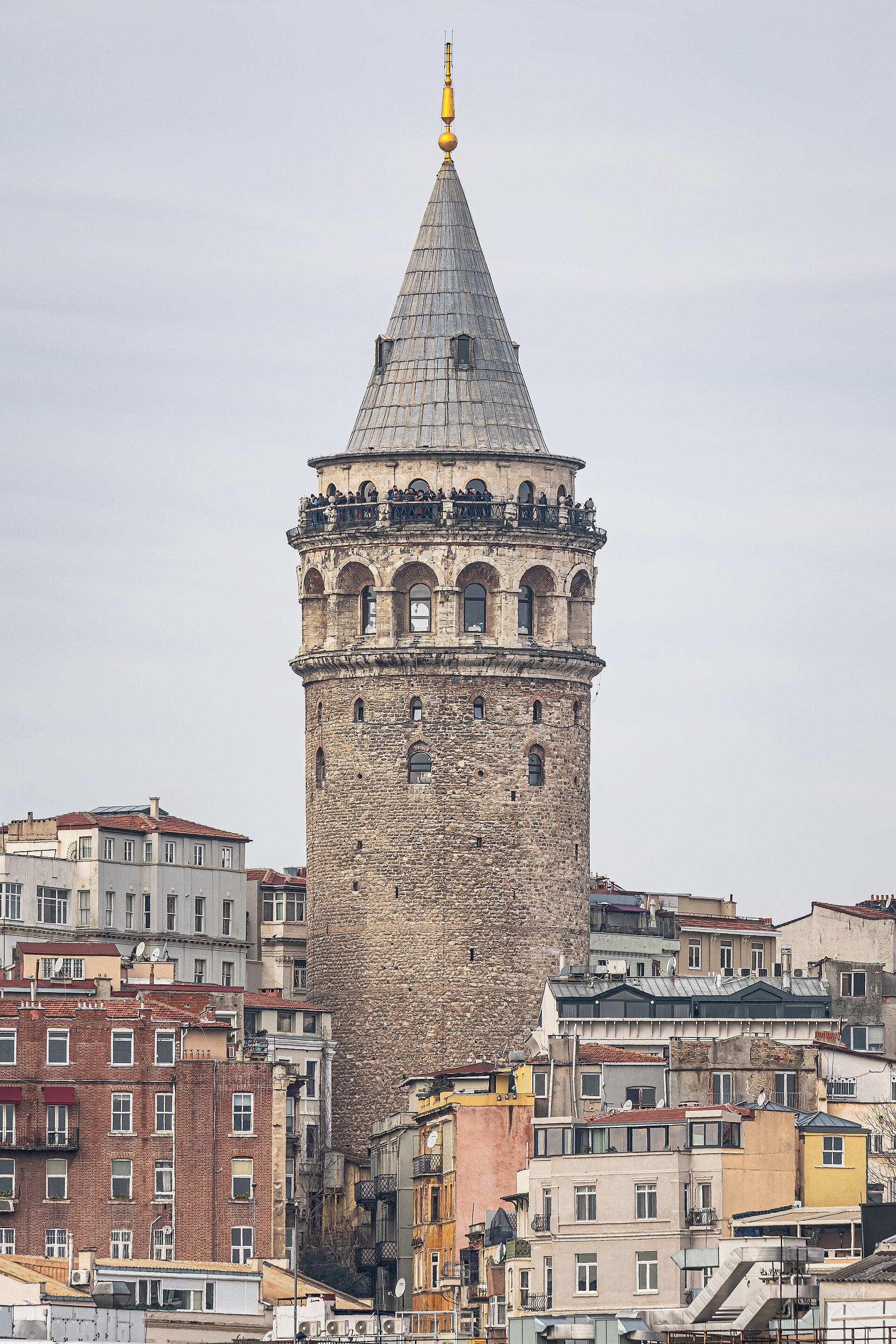
Empowered with revenues from customs levies, and in line with the political decline of the Byzantium, Genoese gradually expanded their boundaries and fortifications as far as Azapkapı, Şişhane, Kule, and Tophane. They built a tower from which a large chain can be pulled across to block the entrance to the Golden Horn (i.e. the port). The Genoese colony in Galata was turning into a “state within a state” as the Empire was losing power.
British historian Edward Gibbon (1737-1794) observes the competitive prowess of the Genoese: “The Empire might soon have sunk into a province of Genoa, if the Republic had not been checked by the ruin of her freedom and naval power.”
Ibn Battuta, one of the greatest travelers of Middle Age, visited Galata in 1334. The Berber traveler writes the following about Galatans: “These infidels are of different kinds, including Genoese, Venetians, Romans and people of France. (...) They are all men of commerce and their harbor is one of the largest in the world. I saw there about a hundred large galleys, and the small ships were too many to be counted. The bazaars are rich and colorful but filthy, and a small and very dirty, sewage-like river runs through them.”
So, what were the dealings of these “men of commerce” of Ibn Battuta? According to the historical sources, crops such as wheat and barley, spices and exotic produce, as well as seafood such as salt dried fish and caviar were being transported to the Genoa Republic. The slave trade from the Black Sea region – especially from Crimea where slaves were captured through raiding parties, known as “harvesting the steppe” – to Europe was also being carried out via Galata. Galata had become an administrative center from where eastern Genoese colonies, except Chios, were ruled.
† Among the goods shipped to Genoa from the Genoese trading houses and warehouses on the shore were carob, mastic, ginger, cloves, pepper and nutmeg. Ruy González de Clavijo, who stopped in Galata in 1403 on his way to Timur in Samarkand as an envoy, praised its prosperous appearance and fine houses; in 1433 Bertrandon de la Broquière, counsellor to Philip the Good, Duke of Burgundy, praised the excellent harbour and quay of the colony of Pera.
Galata After the Conquest
When Constantinople was under siege by the Ottomans, the Genoese understood that they cannot cope with such a large army and its cannons, and remained impartial. Upon the fall of the city, they relinquished the key of Galata to Ottomans, and in June 1st 1453, they signed a pact with Zağanos Pasha, the grand vizier to Sultan Mehmed II the Conqueror. Penned in Greek and bearing the Sultan’s seal, the pact was leaving the ownership of Galata to Ottomans, but securing the safety and trading rights of the Genoese. Mehmed II had some of the fortification walls of Galata demolished. Genoa sent two envoys to Ottomans to gain the return of Galata to Genoa and to secure permission for the repair the walls, but their pleas have never been answered. One of Galata’s largest churches (the Church of San Paolo e San Domenico) was converted to a mosque by Mehmed II. Yet, the Sultan understood the crucial importance of Galata for the Ottoman economy, and always supported the merchants here.
† The two envoys Genoa sent in 1454 were Luciano Spinola and Baldassare Maruffo.
† Once, Mehmed II even ordered his fleet to intervene on Chios to protect the interests of Francesco de Draperio, an influential Galata merchant who held the alum reserves of Chios and could not collect a considerable debt of 40,000 gold ducats from the Christian Chiots.
The community of Latin-rite Christian subjects of the sultan was called Perots after Pera, the name often used by Europeans for Galata. After 1453, things didn’t work out as well as Perots wanted, especially in terms of judiciary autonomy. Many of the Latin-rite inhabitants of Istanbul had fled both before and after its fall, but a core group of Genoese families, known as the Magnifica Comunita di Pera, had remained in Galata. It was overseen by a council of 12 officials, who replaced the pre-conquest Genoese podesta (mayor) and met regularly at the cathedral of San Francesco.
† Known in Turkish as the Cemaat-i Muazzama, this community under the Catholic church continued its activities until 1682.
Unlike other non-Muslim subject millets, or religious communities (Ottoman Greeks, Armenians, Jews), the Magnifica Comunita was not accorded legal or political rights, but rather was under the civil governance of a voivode who was changed in March every year. Judicial administration was carried out by a high-rank qadi (judge) of the Ottoman judiciary. The jurisdiction of Galata qadiship was covering 300 villages and 44 sub-districts from Yeniköy to Kasımpaşa, from Marmara Island to Erdek and Bandırma. Peace and security of Galata was in the hands of the Admiral in Chief, and the marines were acting as the police force. Beyoğlu, being close to Tophane (lit. “Cannonry”), was left to the control of artillerymen. The seat of qadiship was Galata Court, around today’s Hırdavatçılar Çarşısı (Hardware Bazaar). Though this court is a thing of past, its name lives on as a street where it was once located.
† The qadi of Galata held the highest rank in the Ottoman judiciary, that of the “500-akçe qadi.” The marines were stationed in guardhouses known as kolluk – hence the name Kalyoncu Kolluğu (the Marines’ Guardhouse).
Although Galata preserved its cosmopolitan character until recent times, some Turkification started just after the conquest. A 1478-dated document from Topkapı Palace archives tells us that Galata had 535 Muslim houses versus 592 Greek, 332 European and 62 Armenian houses in those years.
† The number of shops in the district is given as 260. A mixed society required everyone to behave more carefully and according to the rules; the voivodes were therefore responsible for keeping relations between tradesmen and subjects in order and for protecting public morals and order. They also made sure that the conduct of tradesmen in the markets did not disturb the public.
† According to one notable document in the qadi registers, some tradesmen in the Galata market had extended the roofs of their shops over the street, which greatly annoyed people on rainy days; they also set their stalls on the pavements, making it hard for people to use the road. As complaints grew, the qadi wrote to the voivode of Galata ordering that the roofs extended over the street be removed, that tradesmen not be allowed to leave stalls or goods on the pavements that belonged to the people, and that shopkeepers who did not comply be dealt with.
† According to another document, at one point some galleon soldiers began to rent houses in Galata “for the purpose of debauchery.” An order was then written to the voivode of Galata to warn the neighbourhood imams and the people not to rent houses to galleon soldiers.
† In some neighbourhoods Galata kept its Genoese character until the 1940s and 1950s.
The Christians were gradually retreating from the districts that lie between the coastline and the Galata Tower towards the plain and the Pera Vineyards behind the town. A new city with Levantine character was emerging around the embassies that started to take up residence here. Among the vineyards, there were only two Turkish buildings: The Mawlawi Dervish Lodge of Galata and the Imperial School of Galatasaray.
† Since this was an area dominated mainly by Catholic Christians, many churches and monasteries had been built within the walls from the Middle Ages onward; over the years the places of worship of the Jewish and Armenian communities and of a small number of Greek Orthodox were added to them.
In 1581, a report by Bishop Pietro Cedulini estimates, with a possible degree of exaggeration, 500 free Ottoman-Catholic subjects in Galata. He also counted 2000 slaves, 500 manumitted slaves, 500 to 600 foreign merchants (mostly from Spain, Italy and Sicily), and 100 persons attached to embassies.
However another report from 1600 estimates the number of Perot families as few as 17 to 28. A subsequent report was adding 150 Protestant families to the Christian population of the city.
† In 1622 an ecclesiastical visitor recorded the number of Catholics in Galata, merchants included, as 590.
Shrinking in number, the Catholic community had long resisted assimilation into the Greek Orthodox or Muslim population, but after some time they started to adopt Greek customs while still observing the rules of Catholic faith. Visitors of Pera would now call them Genoese Greeks. In the 17th century, Greek became the daily language of the community.
In the 17th century, during Evliya Çelebi’s time, Christian residences were no longer seen around the main fortress (Başhisar). On the other hand, Jesuit Father P. Tarillon reports that Galata then held a Latin population of 300 to 400 Genoese, about 3 thousands of embassy personnel and merchants, and 4 to 5 thousands of galley slaves.
† Father Tarillon’s report is dated 1714.
Galata Regains Its European Character
Populated by bank and office buildings as the finance center of the Ottoman Empire in the 19th century, as well as pioneering the apartment-type dwellings, the region regained a new European character. Modern city planning practices were first implemented here.
In 1854-1855, the street names were officially registered; in 1857 the streets were lit with gas, and in 1858 the houses were being numbered. In 1864, municipal services (Şehremaneti) were established in Istanbul, 6th Municipal Department being responsible for the Galata-Beyoğlu region. Galata also witnessed the other face of modernization: the municipality demolished the fortifications and closed the historical moats. Once 2800m in length, only a few ruined short strips and the Galata Tower remained of the historic fortresses. Not much remained from the Genoese era buildings in Galata. The Piazetta and the Bourse – near the Karaköy end of the Tunnel (underground funicular) – simply disappeared. The Palazzo del Commune, known to be constructed after the fire of 1315, is still standing with its missing front facade (see Bereket Han).
The Chain Between Constantinople and Galata
Although created in 1493, Hartmann Schedel’s engraving is a depiction of Constantinople in the Byzantine era, and it is the first printed and second oldest image of the city in Western sources. This stylized illustration depicts the city as seen from the Marmara Sea, also showing the defensive chain placed at the mouth of Golden Horn (Haliç) between the walled city of Constantinople and the Galata-Pera district. One end of this great chain was fastened to the Kentenarian Tower at Sirkeci, and the other end to the cellar floor of a tower known as “Tor de Galathas” at Karaköy, where Yeraltı Mosque (or Kurşunlu Mahzen Mosque) is located today. Some part of this chain is now on display at Istanbul Archeology Museums, located under Oya A. Şirinöz’s 1994-dated painting, which she based on the 1493-dated engraving by Hartmann Schedel.
Source: Akdoğan Özkan, A Traveler’s Guide to Galata (Nar Turizm, 2016), translated by Volkan Ersoy. Obvious misprints in the printed edition have been corrected. Paragraphs marked † appear only in the 2017 Turkish edition of the book (Galata Gezi Rehberi) and were translated for this site.
From recent research
Galata’s rooftop church through the eyes of a pilgrim in 1887
Koptev, who stopped in Istanbul on his way to Jerusalem in 1887, tells of visiting the Panteleimon church, one of the three rooftop churches in Galata. Fatih Ünal’s study reports that pilgrims could lodge on the lower floors of these buildings.
Source: Fatih Ünal (2015), Kudüs Yolcusu A. Koptev’in İstanbul Hatıraları (1887), pp. 185–187, esp. pp. 186–187.
Last updated:
Spotted a mistake or something missing on this page? Suggest a correction