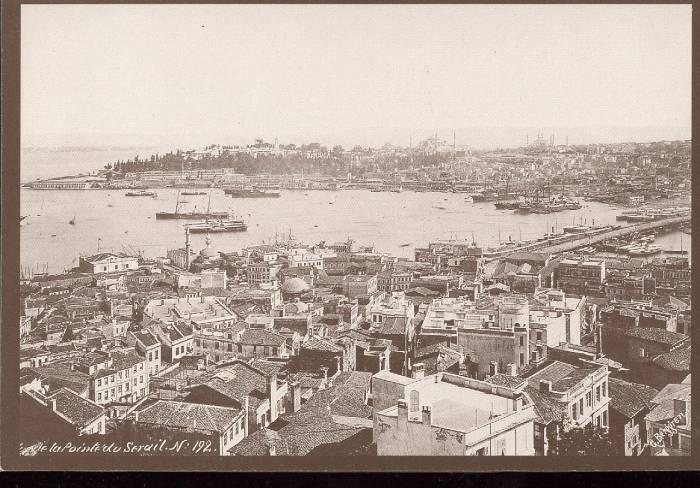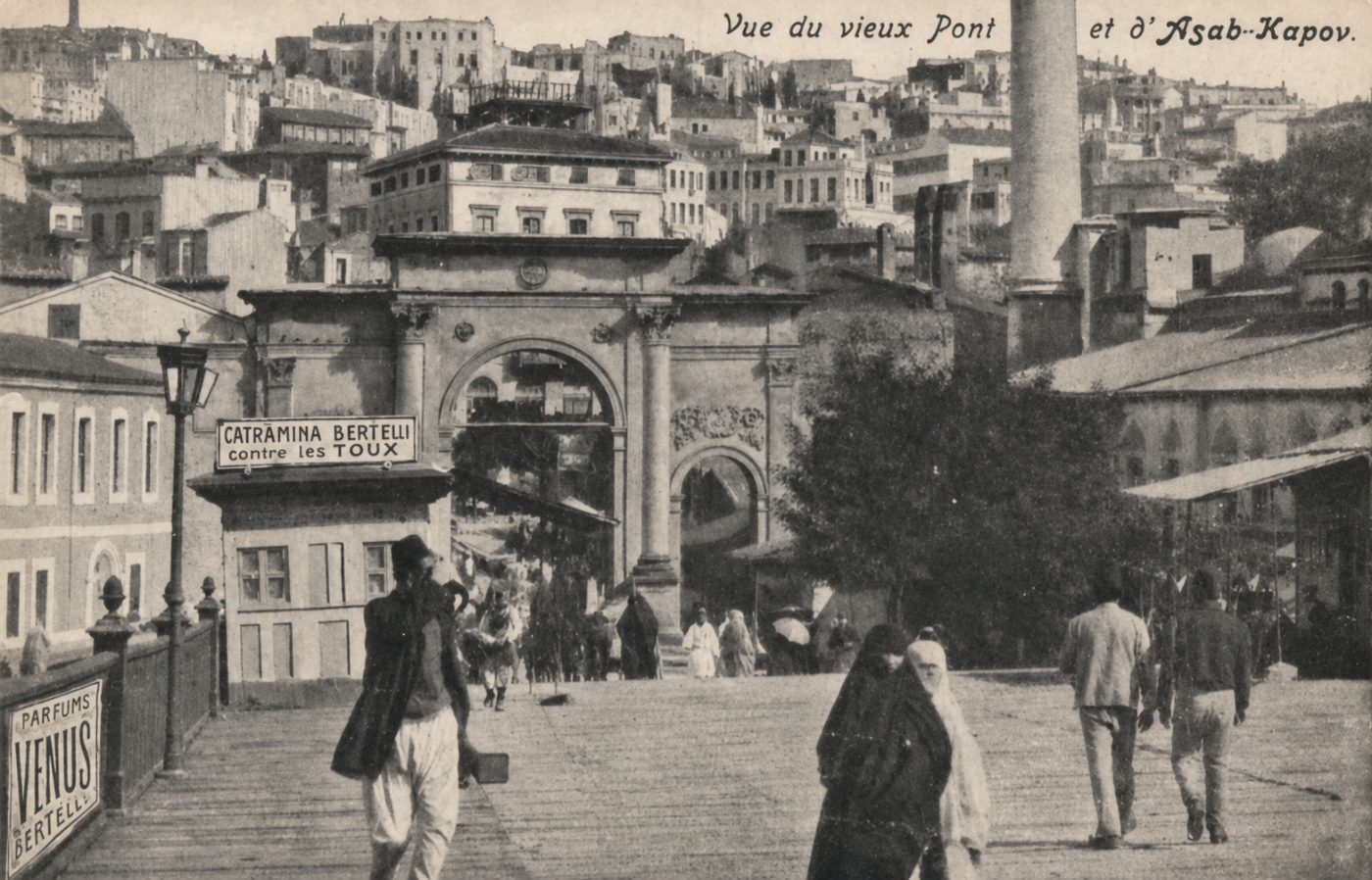
Today the walls of Galata can only be found in fragments: beside a metro exit, between two buildings, in the wall of a mosque. Yet in the middle of the 19th century most of the walls were still standing. Thanks to the research of Esra Okur Coşkunçay, based on Ottoman archive documents and old maps, we can follow step by step what happened in the hundred and fifty years in between.
Before the Demolition: Repaired Gates and a Gatekeeper Out of Work
The walls had long since lost their defensive role, but they were part of everyday life. In the 19th century the gates were still closed at night and opened in the daytime, with gatekeepers posted at them. The archive documents show that in this period the walls were repaired more often than they were pulled down.
After the great earthquake of 1766, when the upper parts of the bastions between the Kürkçü Gate and the Azap Gate and the shops built on top of the wall became a danger, the chief architect (mimarbaşı) Mehmet Tahir was charged with identifying these places and demolishing them; a payment of 300 kuruş was set for the work. For the repair of the Karaköy Gate there is more than one file in the archive. In one of them, an urgent repair is requested for the gate arch damaged in a fire, on the grounds that the gate stood in a busy place and on the route used by the sultan.
Around 1860 the order of things began to change. The residents of the Bayezid quarter asked for a new gate to be opened in the wall for a carriage road about 6.5 metres wide, to run from Galata to Beyoğlu; three pipe-makers’ shops standing in the moat in front of the gate would have to be demolished. The Karaköy Gate itself was demolished around 1858. Mehmet, who had been its gatekeeper for years, explains in a petition of 1860 that the 200 kuruş of compensation on offer is not enough to live on, and asks either for a post at the new gate to be built or for a salary.
1863: The Walls Go Up for Sale
The Sixth Municipal District (Altıncı Daire-i Belediye), founded in 1857, wanted to make Galata and Pera resemble European cities, but it was struggling to find the money to do so. The walls were caught in the middle of this search.
According to correspondence of 1863, most of the walls were hemmed in, inside and out, by hans and houses. Some property owners had demolished the wall without permission and incorporated it into their own buildings. It was first decided to collect a price for the land from them. Of the owners summoned before the commission, some wanted to buy the section of wall adjoining their property, others to open a door in it. The Supreme Council (Meclis-i Vâlâ) then took the matter a step further: the wall no longer served any purpose; if it were demolished and its land and stone sold, the treasury would gain and the streets would be widened. On 12 December 1863 the sultan approved the demolition of the walls under the supervision of the commission and the sale of their land and stone.
Carrying out the decision was not without its difficulties. The story of the tradesmen of Haraççı Sokağı is a good example. The street was only 1–1.5 metres wide. To widen it, the municipality had added half of the shops, in some cases more, to the street; in return it had turned a blind eye to the tradesmen pulling down the wall behind them and adding it to their shops. When the commission later demanded a price for these plots, it became clear that the tradesmen would be wronged. In the end the price was reduced, and the matter was closed by an imperial decree (ferman) in February 1864.
Launay’s Last Look
As the demolition began, Marie de Launay, who worked at the Sixth District, mapped the walls, and in December 1864 published a three-part article in the newspaper Journal de Constantinople. The measurements given there show the size of a structure that was about to disappear: the walls were about 2.25 metres thick. The main wall encircling the city was about 2,800 metres long. The total length of the walls still standing in 1864 was at least 3,569 metres. The demolition would open up an area of about 9,000 square metres, or ten dönüms.
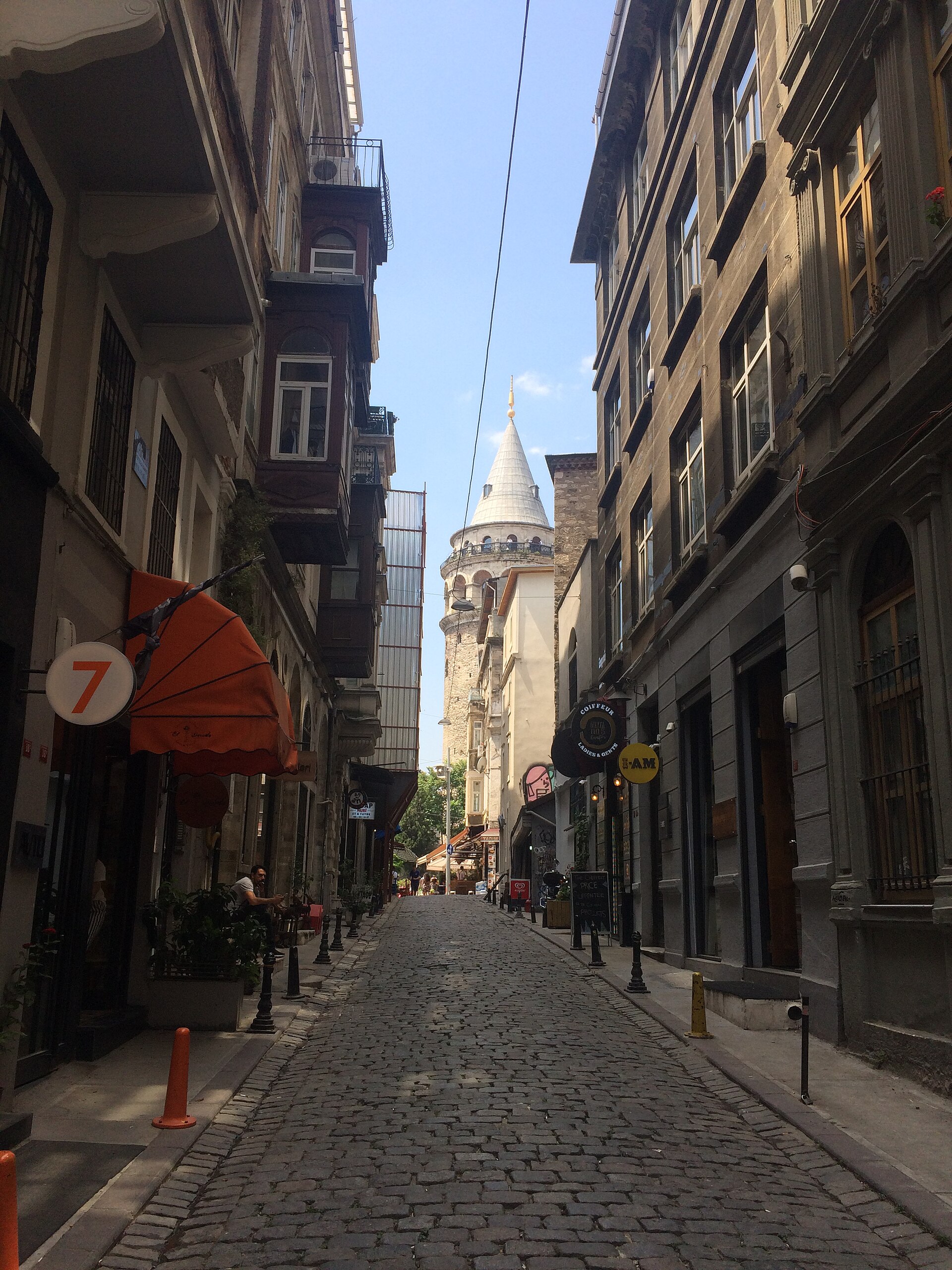
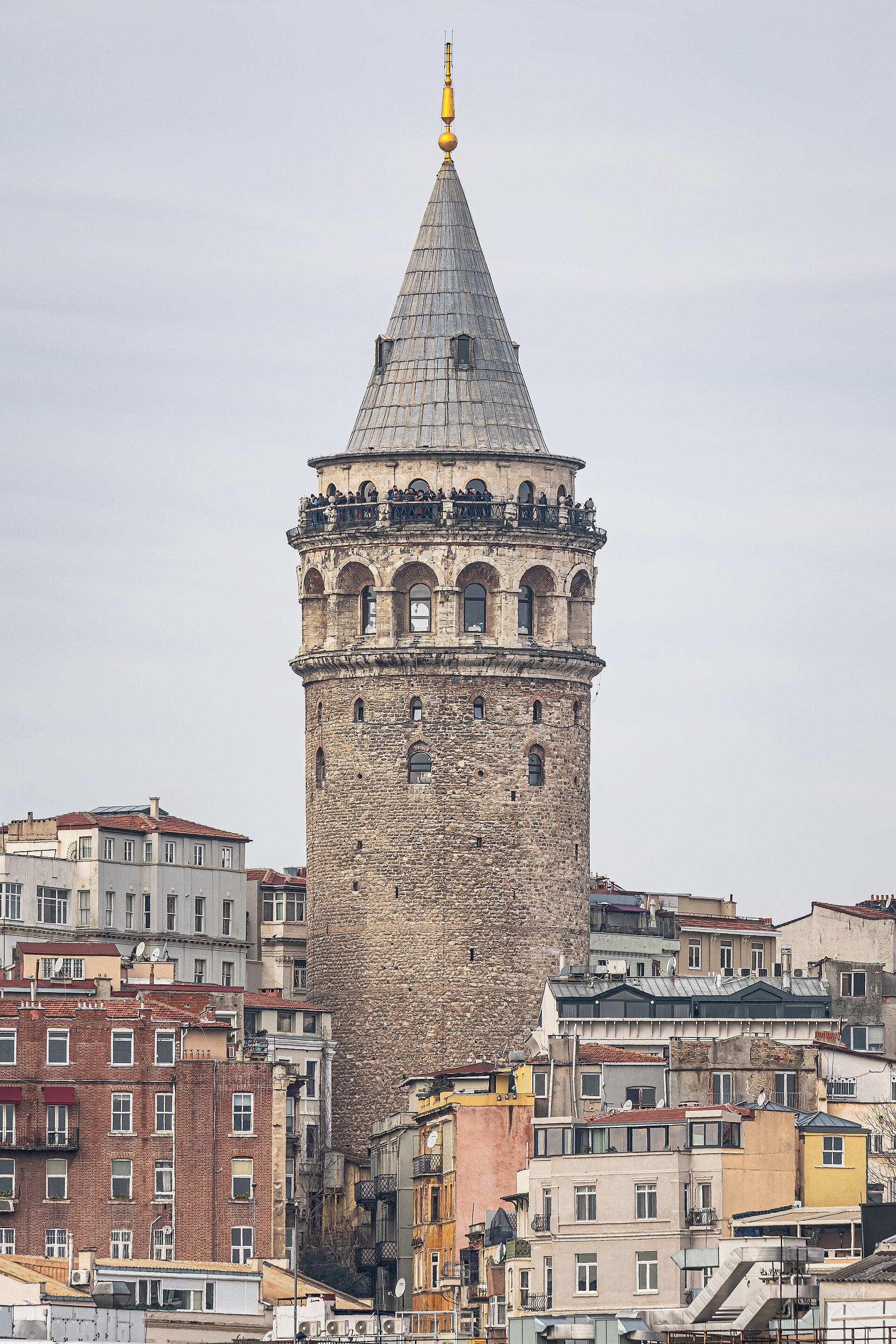
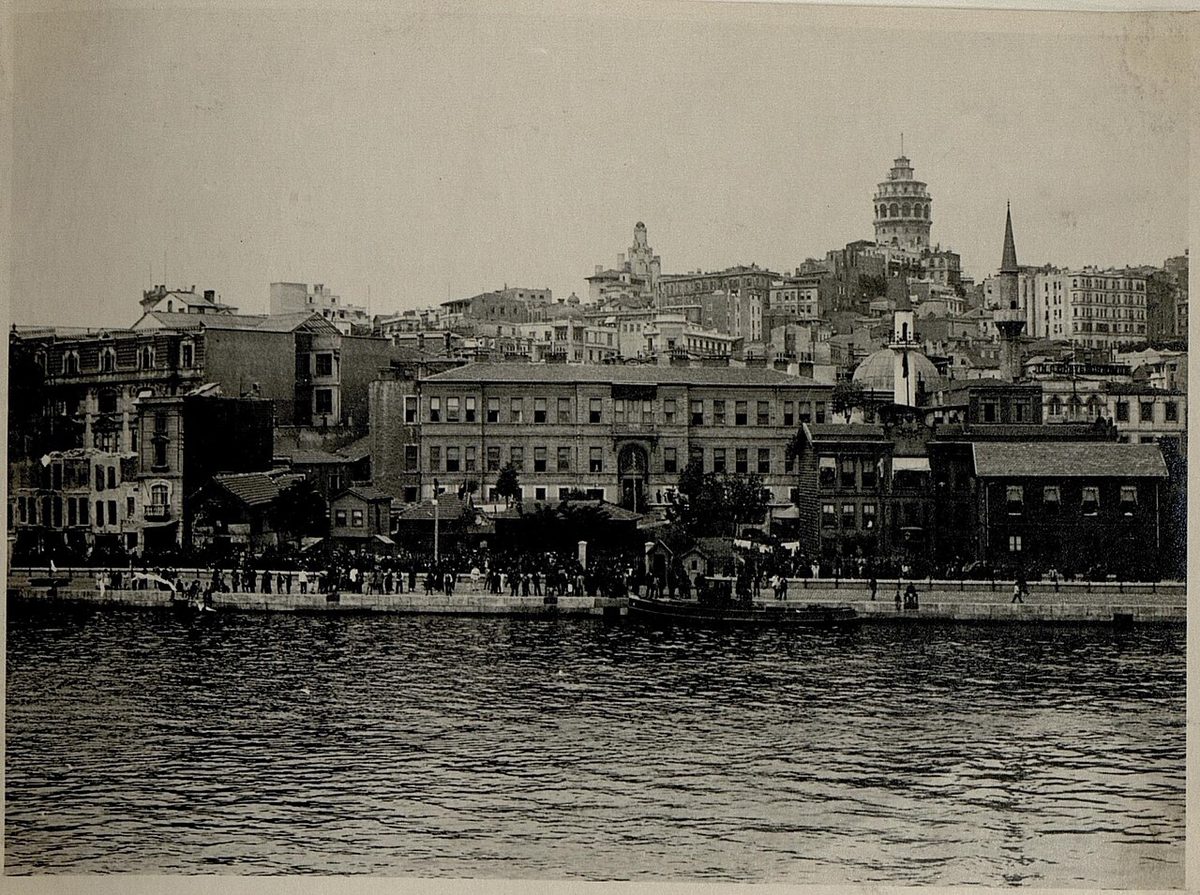
Launay lists the benefits of the demolition: dead-end streets would be opened, fighting fires would become easier, and trade between the harbour and the upper quarters would flourish. But there is also a concern: together with the walls, the inscriptions on them and the traces of history would be lost. Launay therefore welcomes the request of Server Efendi, the head of the Sixth District, that the inscriptions be collected and kept. In Launay’s view, once the demolitions were over, the only thing left of the walls would be the Galata Tower.
Thirty Years Later: An “Ancient Monument”
The demolition was not finished in a year or two, nor did it go unopposed. In 1876, when the French Embassy heard that the wall and tower at Perşembe Pazarı were to be demolished and put up for auction, it intervened: the monastery of the Dominican friars had leaned against these walls for centuries, and the embassy asked for the work to be postponed until architects had examined whether the building would be damaged.
By 1892 the state’s view had changed. In the correspondence of that year the walls of Istanbul and Galata are referred to as “âsâr-ı atîka”, that is, ancient monuments; it is requested that the plan to demolish and sell them be abandoned and that they be preserved, with repairs where necessary. But there is no money to repair the ruined sections. The compromise reached is this: those about to collapse will be demolished, and those still sound will be preserved. To this end, a sketch plan of the walls is ordered again and again. The municipality does not do the work, citing the lack of engineers, the cost and even the weather. That sketch plan has not been found in the archive.
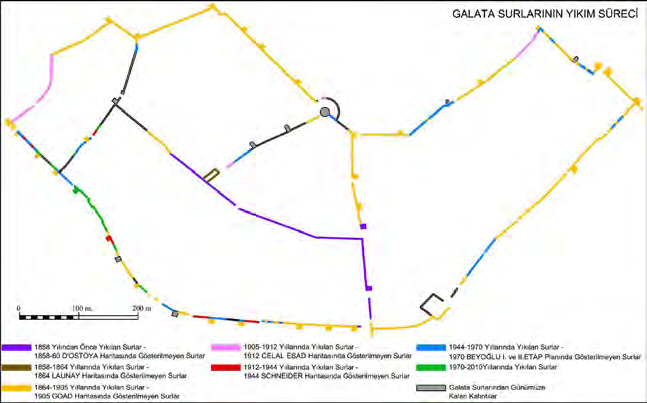
For Galata, the decision had come too late in any case. According to the register submitted by the municipality in 1892, all of the land of the walls and the moat in Galata had been sold, leaving only a ruined section between two properties. The maps tell the same story: on the D’Ostoya map of 1858–1860 and on Launay’s map of 1864 almost all of the outer walls are in place. On the Goad map of 1905, almost none of the outer walls remain.
The 20th Century: An Avenue and a Metro
Very little of the walls survived into the Republican period, and what remained was affected by two major development projects. In the 1950s, when Kemeraltı Street was widened, a bastion bearing an inscription dated 1445 was brought down to the level of its foundations. Its remains are today at the corner of the street and Hisar Sokak.
The second was the Golden Horn metro bridge. When some buildings in the Emekyemez and Arap Camii quarters were expropriated and demolished for the project, walls that had been hidden behind them came to light: a 150-metre stretch of wall with a tower and a gate on it, a 44-metre wall lined with arches, and a 28-metre wall bearing an inscription. At first there was talk of moving the sections on the line elsewhere; then this was abandoned, and it was decided to prepare a restoration project. Yet the line opened in 2014 before the restoration was completed; the tunnel entrance damaged the northern part of the longest surviving section of the wall.
What Remains Today?
According to the researcher’s survey of 2011, these were the remains of the walls:
- In the Emekyemez quarter, a stretch of wall about 150 metres long, a tower and a gate
- In the Arap Camii quarter, a 44-metre wall lined with arches, a 28-metre wall with an inscription, fragments squeezed between buildings, and a tower with a square plan
- In the Bereketzade quarter, a stretch of wall about 200 metres long with two bastions, broken in places
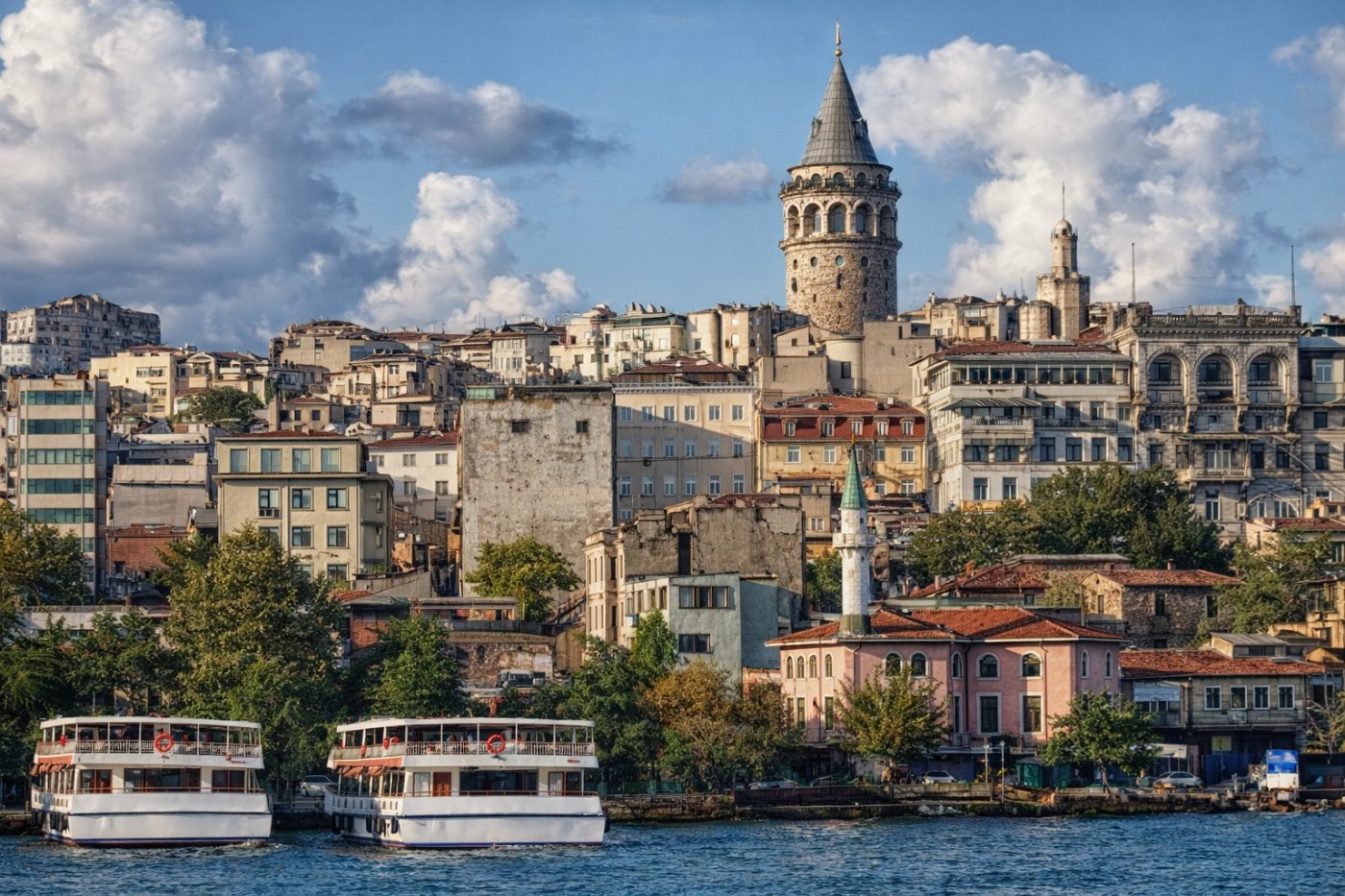
- The Galata Tower and most of its enclosing walls
- In the Müeyyedzade quarter, a bastion
- In the Hacı Mimi quarter, the foundations of a tower beside Kemeraltı Street
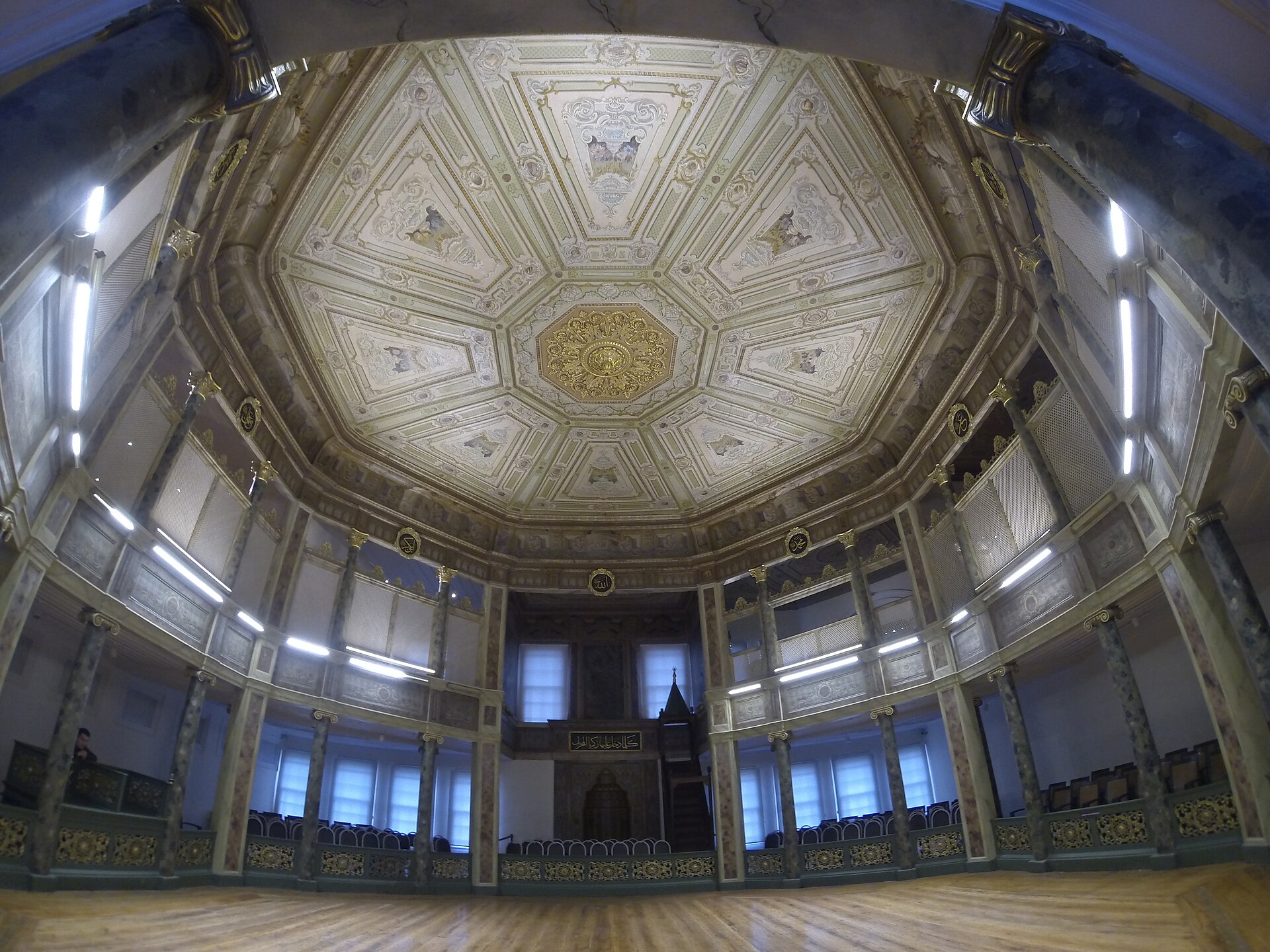
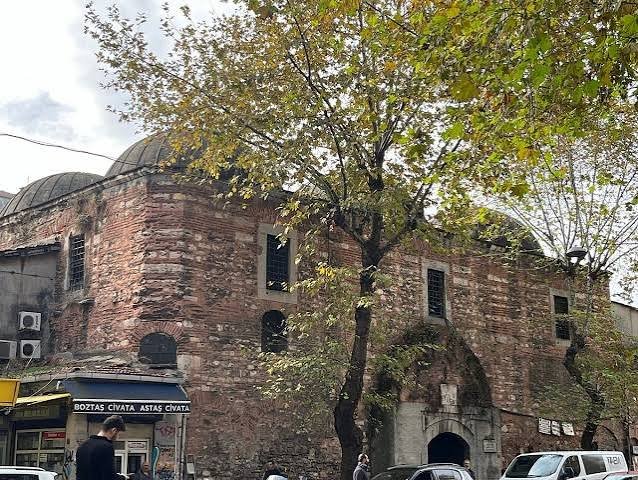
- In the Kemankeş Kara Mustafa Paşa quarter, the wall enclosing the Underground Mosque
Launay had thought that only a single tower would remain. A hundred and fifty years later, more is left than Launay predicted; but each piece is a reminder that the story is not yet over.
Related Pages
- Walls of Galata: how the walls were built, and their gates
- Harup Gate
- Wall Ruins near the Harup Gate
- Wall Ruins Leading to Inner Azap Gate
- Genoese Tower and the Walls
- Galata Tower
- Lüleci Hendek Street
- Büyük and Küçük Hendek Streets
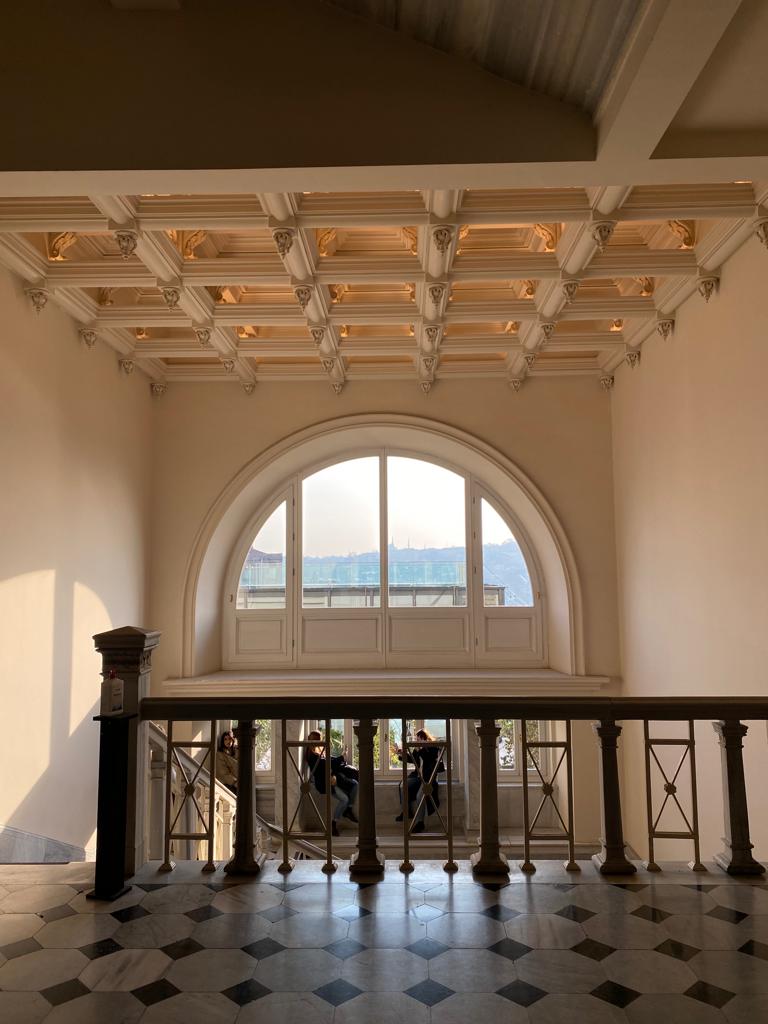
- Former 6th Municipal Department
- Kemeraltı Street
- Kurşunlu Mahzen (Underground) Mosque
- Saint Pierre and Saint Paul Church
Source: Esra Okur Coşkunçay, “Galata Surları’nın Yıkım Süreci” (The Demolition Process of the Galata Walls), Tasarım + Kuram, no. 25 (May 2018), pp. 33–58. https://doi.org/10.23835/tasarimkuram.534679
Last updated:
Spotted a mistake or something missing on this page? Suggest a correction