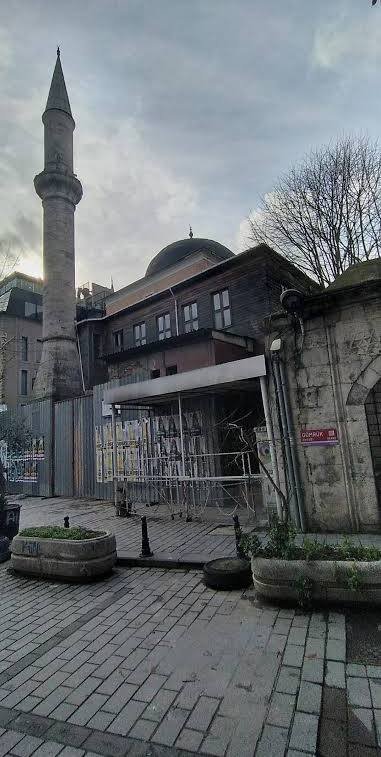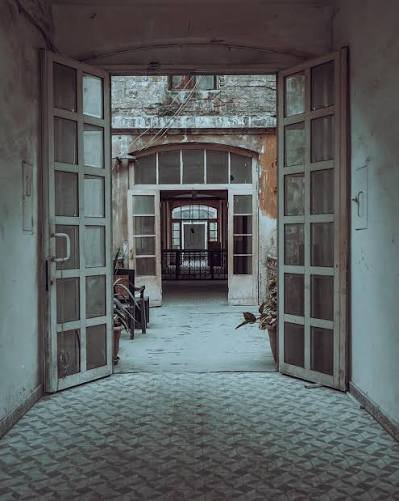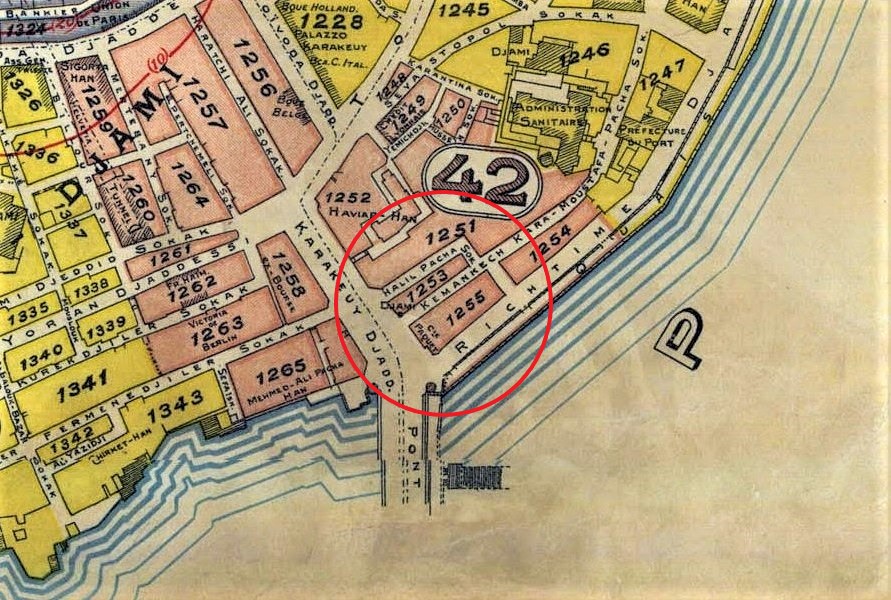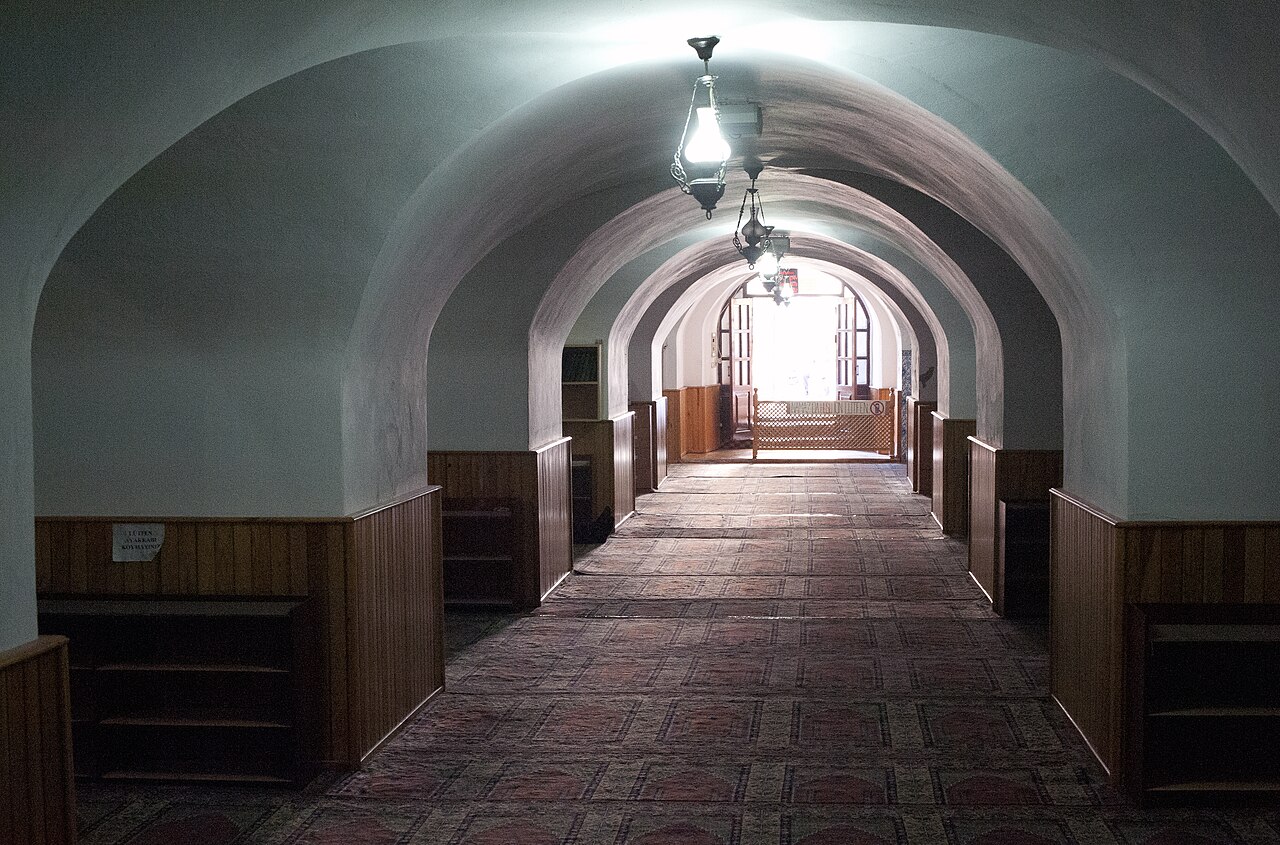
Located near the Karaköy ferry terminal, this mosque has an entrance accessed by a few steps down, in contrast to other mosques. Actually, these few steps are not enough for it to be called as “Yeraltı” (meaning “underground”), so it is believed that the name comes from its having a dark interior. The mosque is composed of vaults and has two main entrances: one on the seaside and the other on the landside. The landward door is accessed down the stairs, while seaward door is at ground level.
The building was originally built on Galata walls as a watchtower to monitor the coastline, but only its lower part – which is used as mosque – remains today. According to the Byzantine manuscripts on the history of Constantinople (Patria of Constantinople), the tower was built during the reign of Emperor Tiberius II (578-582). Also, the Chronicles of Theophanes (717 AD), which details the history of the Byzantium from 602 to 813 AD, mentions that a chain was pulled across from this tower – then known as the “Tower of Galata Neighborhood” – to the Kentenarian Tower (Tower of Eugenius) at Sirkeci, in order to keep access to the Golden Horn under control. In other words, the chain, which forced Mehmed I to carry his fleet over land, was kept under this tower.
This strategic tower would mark the fate of the city throughout the history. It remained under Byzantine control until 1352, and then handed over to Genoese with an agreement signed in the Blakharnea Palace.
In 1203, the tower fell into the hands of the armies of the Fourth Crusade, just before Constantinople was captured and pillaged by them. Geoffroi de Villehardouin (1160-1212), a knight and the chronicler of the crusade, mentioned about the tower as “Tor de Galathas” (Galata Tower), which caused it to be confused by future readers with the Galata Tower up the hill. Later sources name it as Kastellon Tower.
The tower collapsed in time. Reportedly, it was used as a cellar (“mahzen,” in Turkish) for a long period after the Conquest.
Kurşunlu Mahzen Kiosk, one of the nicest examples of the Turkish civilian architecture, was built on this structure. During the 1750s, the low-ceilinged basement of the structure was converted to a mosque by the Grand Vizier Çorlulu Köse Bahir Mustafa Pasha. It is still open to worship as Yeraltı Mosque.
The interior of the mosque receives natural light only through its seaward windows. The mosque has 54 squat pillars with a low vaulted ceiling. The vaults are in semi-dome shape. Its tower-shaped single-balcony minaret was rebuilt by Sultan Mahmud I after an earthquake.
The mosque also contains what is claimed to be the burials of the prophet Muhammed’s companions. Reportedly, the burials of Vehb bin Huşeyre and Amr bin As, who were killed by the Byzantines during Constantinople’s siege by the Umayyad commander Mesleme Bin Abdülmelik, and the burial of Süfyân bin Uyeyne, were found here.
Part of these themes: Ottoman Galata: Tophane and Azapkapı
Source: Akdoğan Özkan, A Traveler’s Guide to Galata (Nar Turizm, 2016), translated by Volkan Ersoy.
Last updated: · Last checked: (map position)
Spotted a mistake or something missing on this page? Suggest a correction