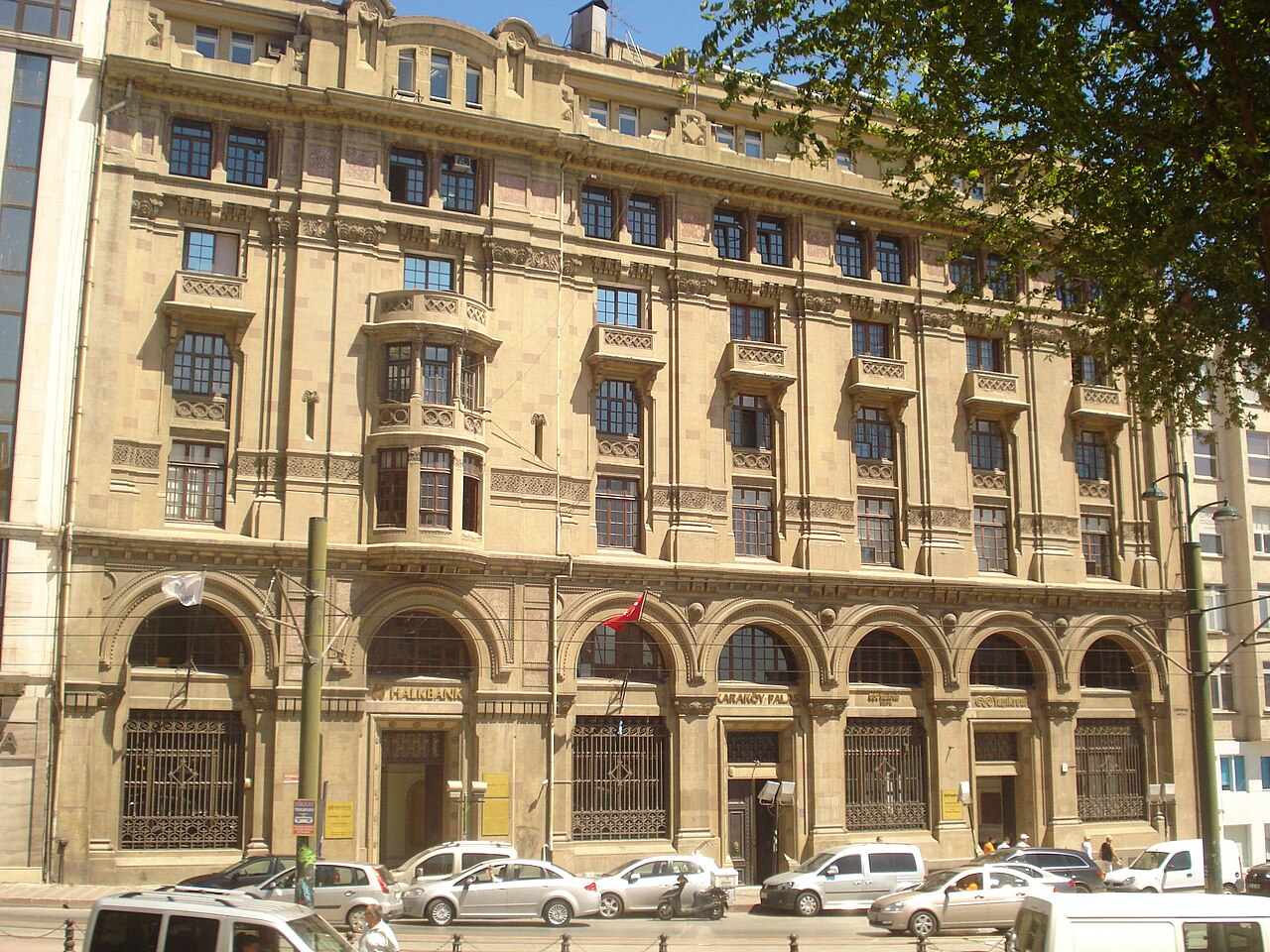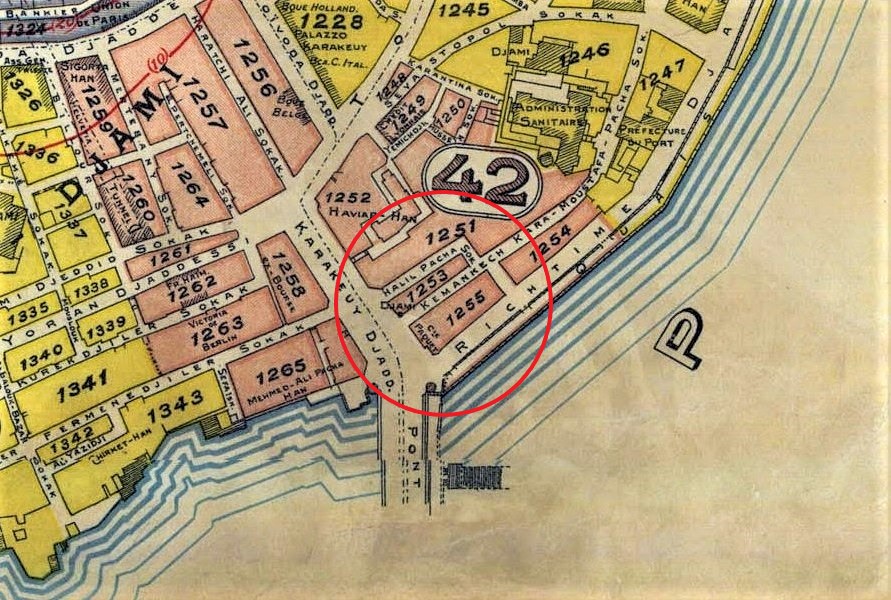
During the World War I, German and Austrian-Hungarian banks extended their activities in Galata. Germany-based Wiener Bank Verein acquired a big building, which was situated on the street that lies from Galata Bridge to Karaköy, and which formerly belonged to Credit Lyonnais Bank of France. The bank had it rebuilt between 1910 and 1912. In 1944, this building was handed over to Ziraat Bank (established in 1888 under state guarantee, with the function of supporting farmers and agricultural institutions as the first agricultural bank of the country). It is still being used by the bank.
† The turning point in Galata’s financial history was the period of National Economy (1908-1918), shaped by the efforts and incentives of the Committee of Union and Progress to strengthen national capital and a national bourgeoisie and to create new businessmen. Of the 24 banks founded in this period, 17 were founded by Turks. The Evrak-ı Nakdiye law of 1915, regarded as a kind of turning point, banned money-changing and speculation under heavy penalties. In the same period a national bank was sought that would issue bonds, lend to national industry and provide capital to agricultural institutions. The Ottoman Bank, with its British and French capital, had lost its status as the state bank, because the Galata Bourse’s relations with the London and Paris bourses had officially ended and the bank branches of the Allied Powers remained closed throughout the war.
The building has an eclectic architecture. Four high-reliefs adorn the upper parts of its southwest (front) and seaward façades, two of which feature an eagle on the bow of a wooden vessel. One interesting detail about the statues on the building is the claim that they are Masonic symbols. On the left corner of the seaward terrace (Galata bridge side) is a statue of a woman with two crouching children on both sides. On the right corner of the terrace is a statue of a man dressed in a long tunic, holding a hammer and a chisel in his hands. Some claim that the statue of the man is of “Hiram the Master Mason,” and that the statue of the woman is of “the Widow,” his mother, as described in the Hebrew Bible.
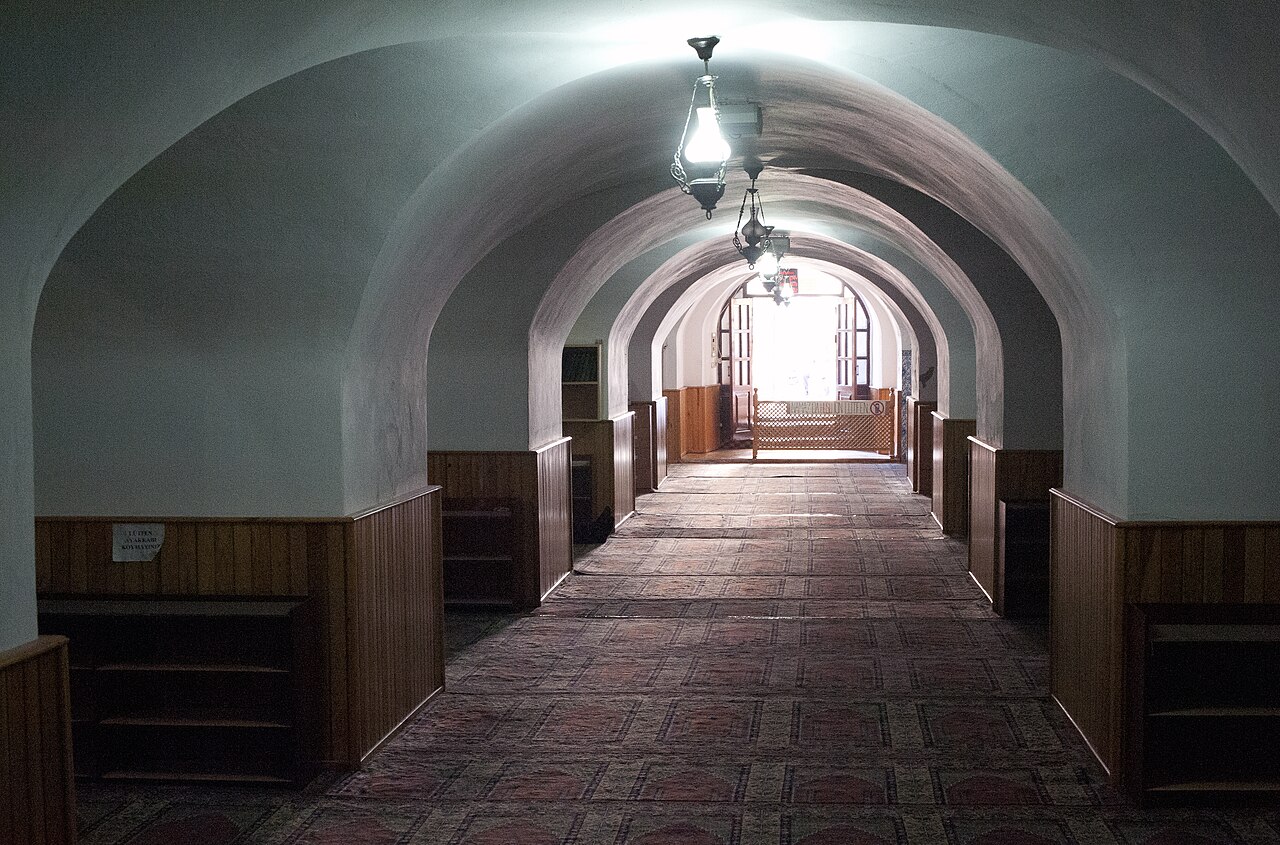
† Just behind the building there once stood the Merzifonlu Kara Mustafa Pasha Mosque. It was demolished in 1958, during the square-widening works of the Adnan Menderes period. The plan had actually been to dismantle it and rebuild it on Kınalıada, carried there by ship. But it was announced that the ship had keeled over on the way to Kınalıada and the pieces had sunk into the waters of the Bosphorus. Of the two pieces of marble left from the mosque, one is said to lie in the courtyard of the present Kınalıada Mosque, and the other to have been used like a brick in building a wall of the same mosque.
Part of these themes: Banks and hans
Source: Akdoğan Özkan, A Traveler’s Guide to Galata (Nar Turizm, 2016), translated by Volkan Ersoy. Obvious misprints in the printed edition have been corrected. Paragraphs marked † appear only in the 2017 Turkish edition of the book (Galata Gezi Rehberi) and were translated for this site.
Last updated: · Last checked: (address and map position)
Spotted a mistake or something missing on this page? Suggest a correction