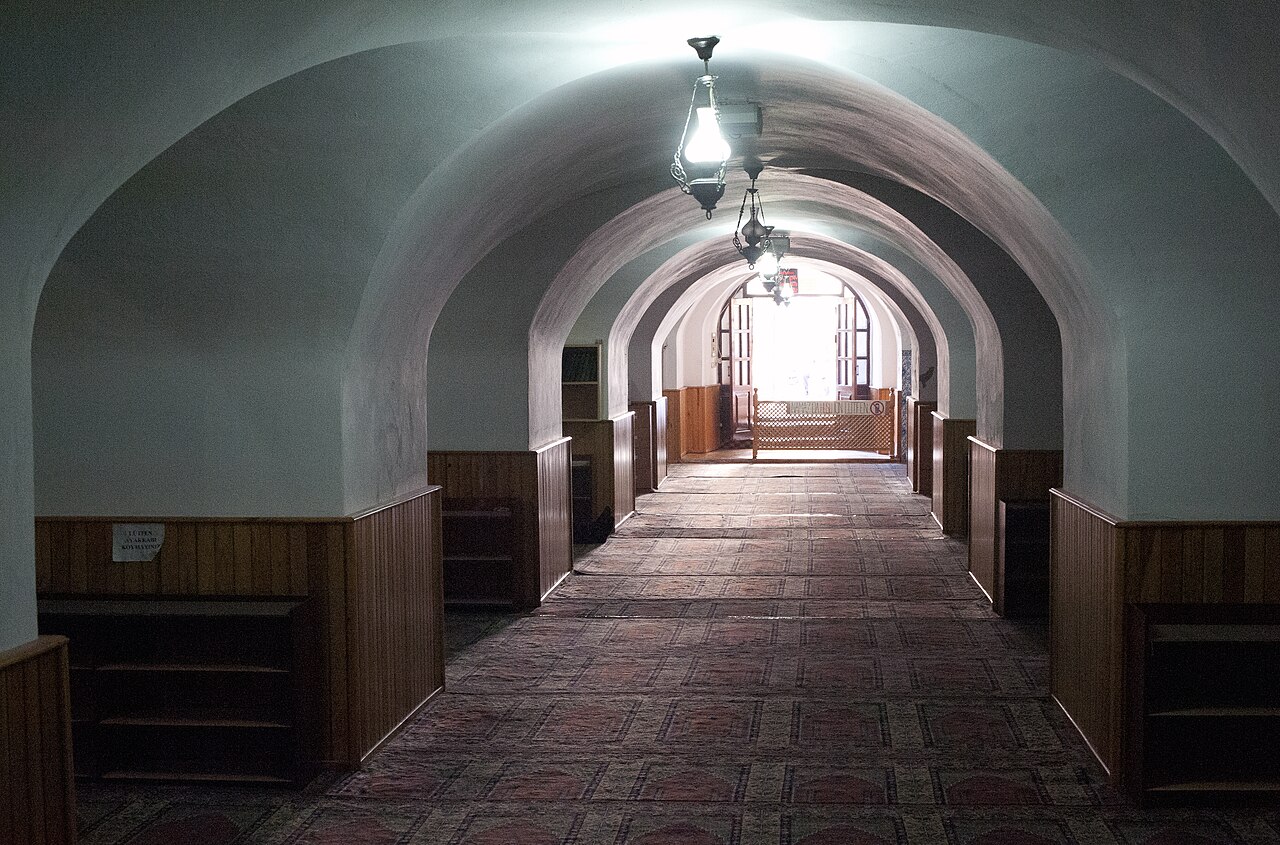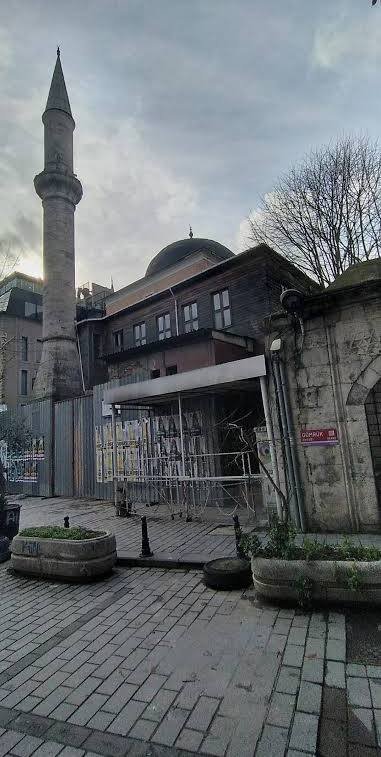
Kemankeş Kara Mustafa Pasha Mosque was once a church within the seaward walls of Galata, close to the now-vanished Kastellon Tower. Rumor has it that inappropriate things went on during some liturgies during the reign of Sultan İbrahim. Thereupon the Grand Vizier Kara Mustafa Pasha evicted the priests in1642 and converted the church into a mosque.
On both sides of the stairs to the entrance are the seals of Solomon (six pointed stars). This symbol of Judaism was also being used on some Ottoman works.
The mosque was built on a 220sqm plot, and it has a single dome with semi-domes on four sides. The pulpit is made of wood.
Next to the courtyard gate is a fountain which, was built in 1732 on behalf of Reisülküttab (Ottoman equivalent of the secretary of foreign affairs) İsmail Efendi. The inscription above the entrance informs that the mosque was renovated in 1766.
Kara Mustafa Pasha, the founder of the mosque, held the post of grand vizier for five years during the last years of the reign of Sultan Murad IV. His mastery in archery earned him the moniker “Kemankeş” (lit. “archer”). He was executed by hanging by the order of the Sultan and buried to a tomb next to his medrese (theological school), which used to be located between Bayezid Mosque and Çorlulu Ali Pasha Mosque. His tomb and medrese were demolished during roadworks.
Part of these themes: Ottoman Galata: Tophane and Azapkapı
Source: Akdoğan Özkan, A Traveler’s Guide to Galata (Nar Turizm, 2016), translated by Volkan Ersoy.
Last updated: · Last checked: (address and map position)
Spotted a mistake or something missing on this page? Suggest a correction