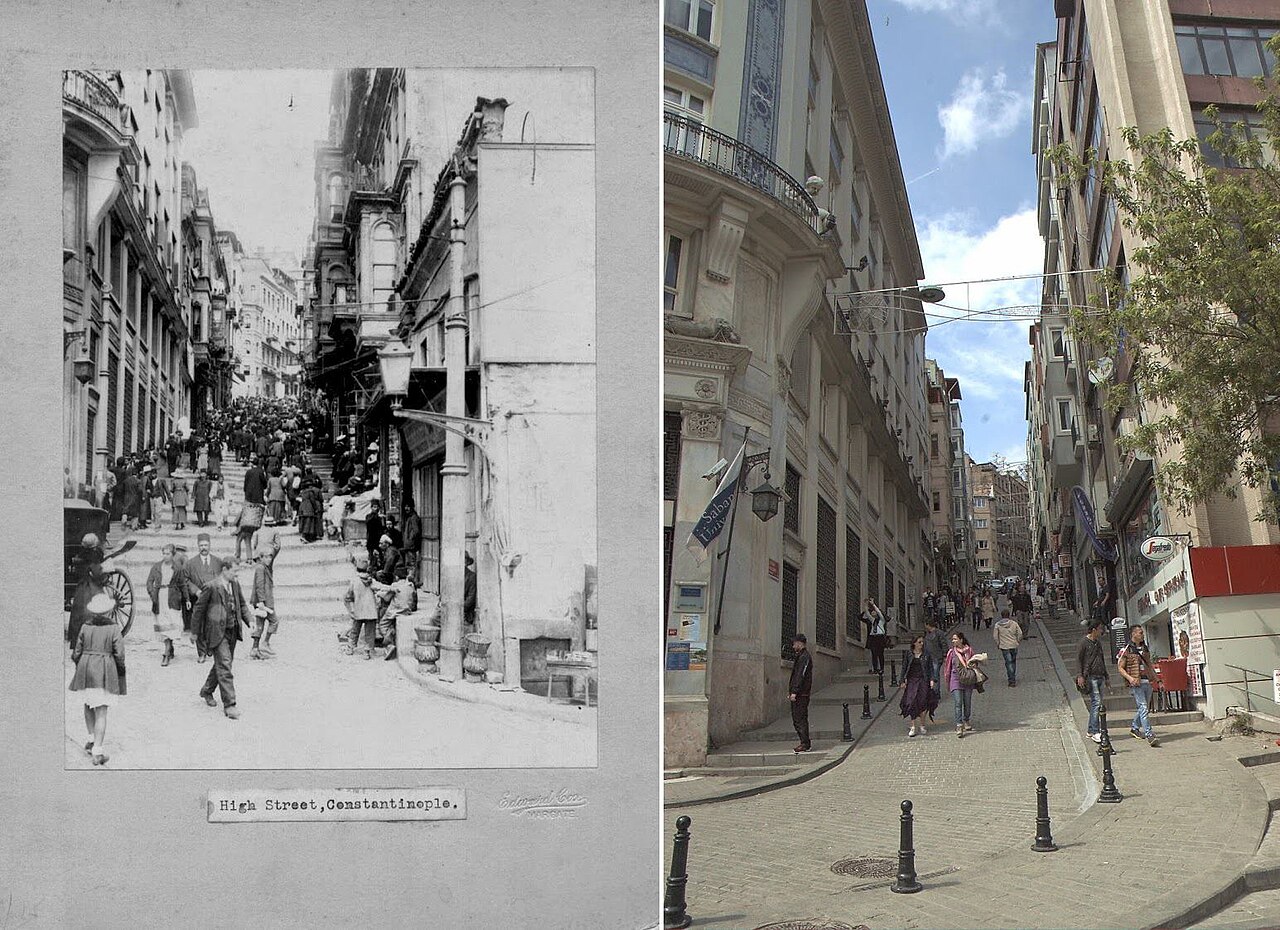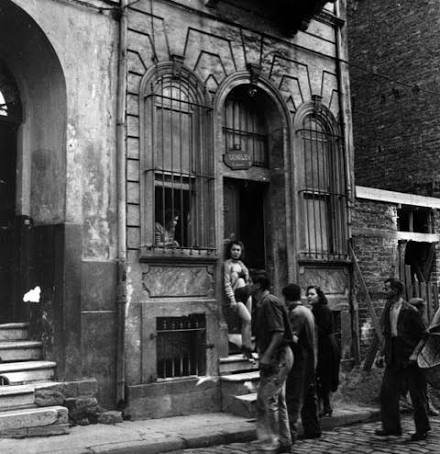
As mentioned before, Lüleci Hendek Street – like Büyük Hendek and Küçük Hendek Streets – marks the location of where a line of deep moats used to be. The Genoese had dug deep moats around the Galata walls just like the Byzantines had done for Istanbul walls.
One of the first actions of the 6th Municipal Department after its establishment during the mid-19th century was filling these moats and opening up the reclaimed land for development.
Today lying parallel to the Kemeraltı Street, Lüleci Hendek Street is one of those neighborhoods that were built on land reclaimed from the old moats. The street took its name from the nearby Lüleciler Arastası (Lüle Makers’ Bazaar) where the shops of the “lüle” makers used to be located (lüle is the clay tobacco bowl of the pipes and water pipes). Although there are no remaining lüle makers in the area, the bazaar’s name lives on in the name of a nearby street.
Lüleciler Bazaar used to be located in Tophane, extending from the right side of the Kılıç Ali Pasha Mosque up to the mouth of Kumbaracılar Slope. The shops in the bazaar were producing pipe and water pipe bowls, tobacco bowls, coffee cups, as well as inkpots, and coffee and sugar boxes. According to Musahipzâde Celal, there was only one shop remaining in the bazaar by the first quarter of the 20th century.
There was a pit – like a lime pit – in the basement of each lüle maker’s shop. A coral red clay, called as “lüleci çamuru” (pipe clay), was beaten in this pit to the consistency of a chewing gum. The craftsman would skillfully shape this clay into a bowl form, and decorate it with gold gilt motifs, ready to be fired.
Thus, it can be said that the well-known “water pipe cafés” in today’s Tophane have some connection with the distant past.
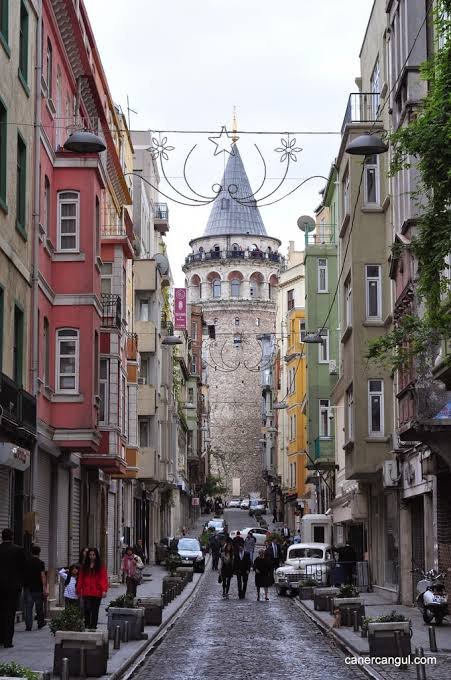
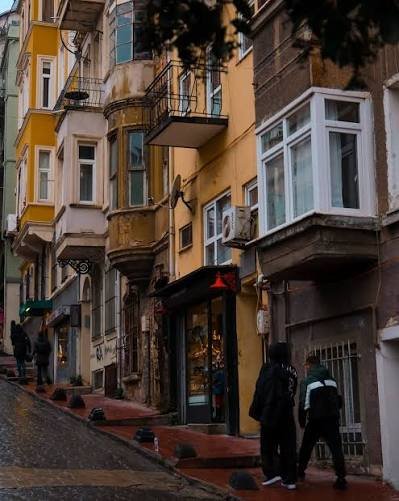
The “lüleci” past of the Lüleci Hendek Street has long been erased. Today, it is one of the most rapidly developing, trendiest streets in Galata with new stores, boutiques, and cafés – like the nearby Serdar-ı Ekrem Street.
† Muhitin Caddesi, which was once also home to the Tophane Tayfun Sports Club, has been transformed in recent years by galleries such as 311 Artworks, BAP and Depo – the last of which stands on the site of the old tobacco factory – and by inventive cafés and restaurants such as Kulinata, Cloud Nine and Hoşaf.
One of the oldest buildings in the neighborhood is a 1907-dated Art Nouveau building called as the Papadopoulos Brothers Apartment. Opposite to it is a concept store, called as Atelier, which showcases paintings by the famous Turkish painter İsmail Acar. The other historic apartments in the street include Mimicopoulo, Capozzi, and Casaretto apartments.
At the intersection of Kumbaracı Yokuşu (Kumbaracı Slope) and Lüleci Hendek Street is an 18th century fountain, standing in contrast to the new-found trendiness of the area. It is in a desolated state with its missing tap and basin, and covered with graffiti by the youngsters. Built in 1796-97 on behalf of Haznedar Bilâl Ağa (haznedar, meaning treasurer), the marble face of the fountain was decorated in a mixture of rococo and empire styles (empire style was the official style of the empire during the Tanzimât Reformation era). On both sides of its inscription are star-and-crescent reliefs on raised medallions. The fountain used to mark the north eastern corner of the Galata walls. The historical maps show that there used to be a tower at this point.
† Exactly 200 m west of this point, at the corner where Lüleci Hendek Street meets Revani Sokağı, a tower surviving from the Genoese walls can be seen at the back of the grounds of the St. Benoit High School, together with a high line of wall running down towards the sea. This must be the tower that Celal Esad Arseven mentions in a study he wrote about a hundred years ago. Arseven described it as follows: “The tower behind St. Benoit still exists, though a building has been raised on top of it and it has been turned into a room.”
Part of these themes: Genoese Galata
Source: Akdoğan Özkan, A Traveler’s Guide to Galata (Nar Turizm, 2016), translated by Volkan Ersoy. Paragraphs marked † appear only in the 2017 Turkish edition of the book (Galata Gezi Rehberi) and were translated for this site.
Last updated: · Last checked: (address and map position)
Spotted a mistake or something missing on this page? Suggest a correction