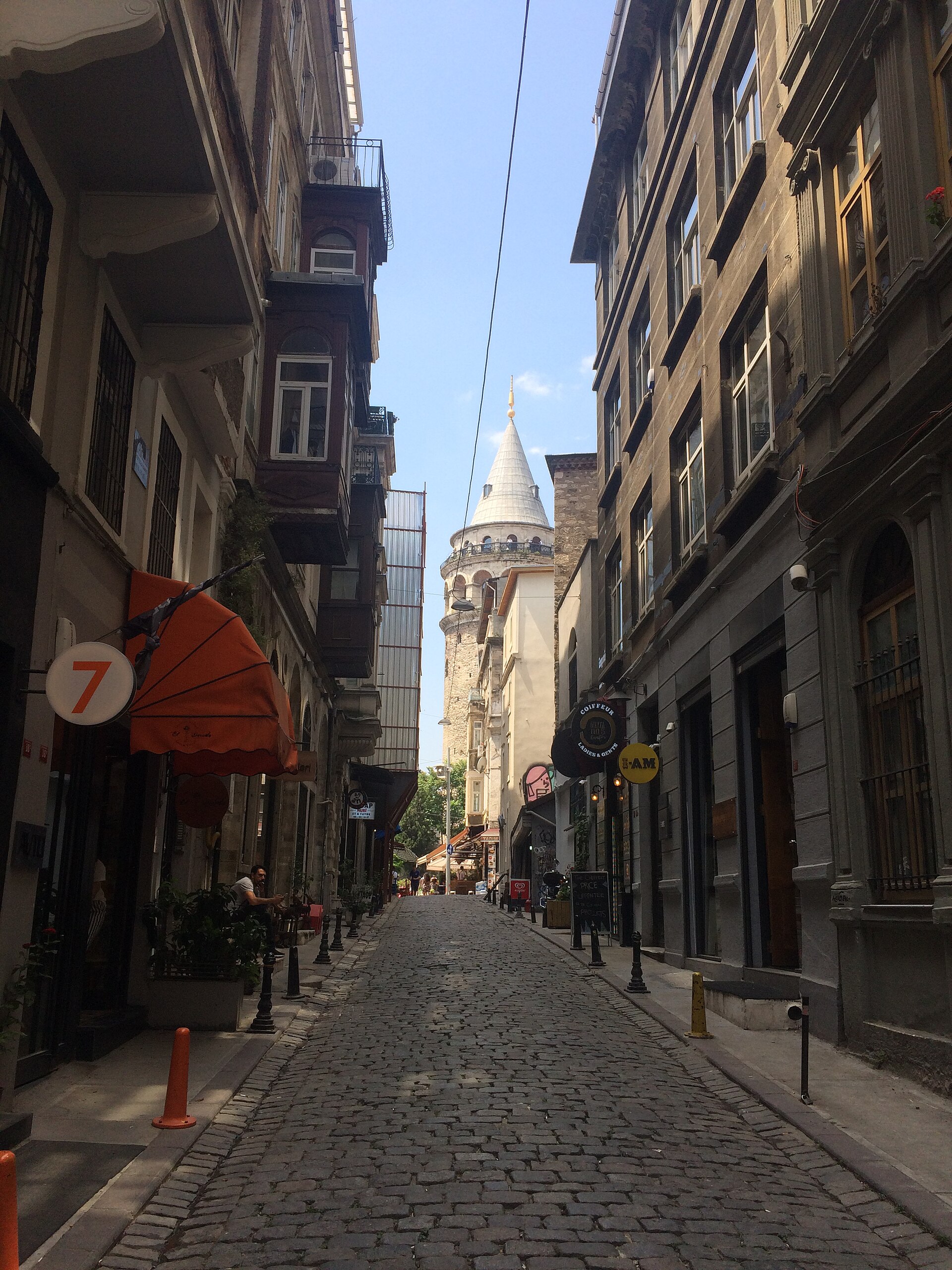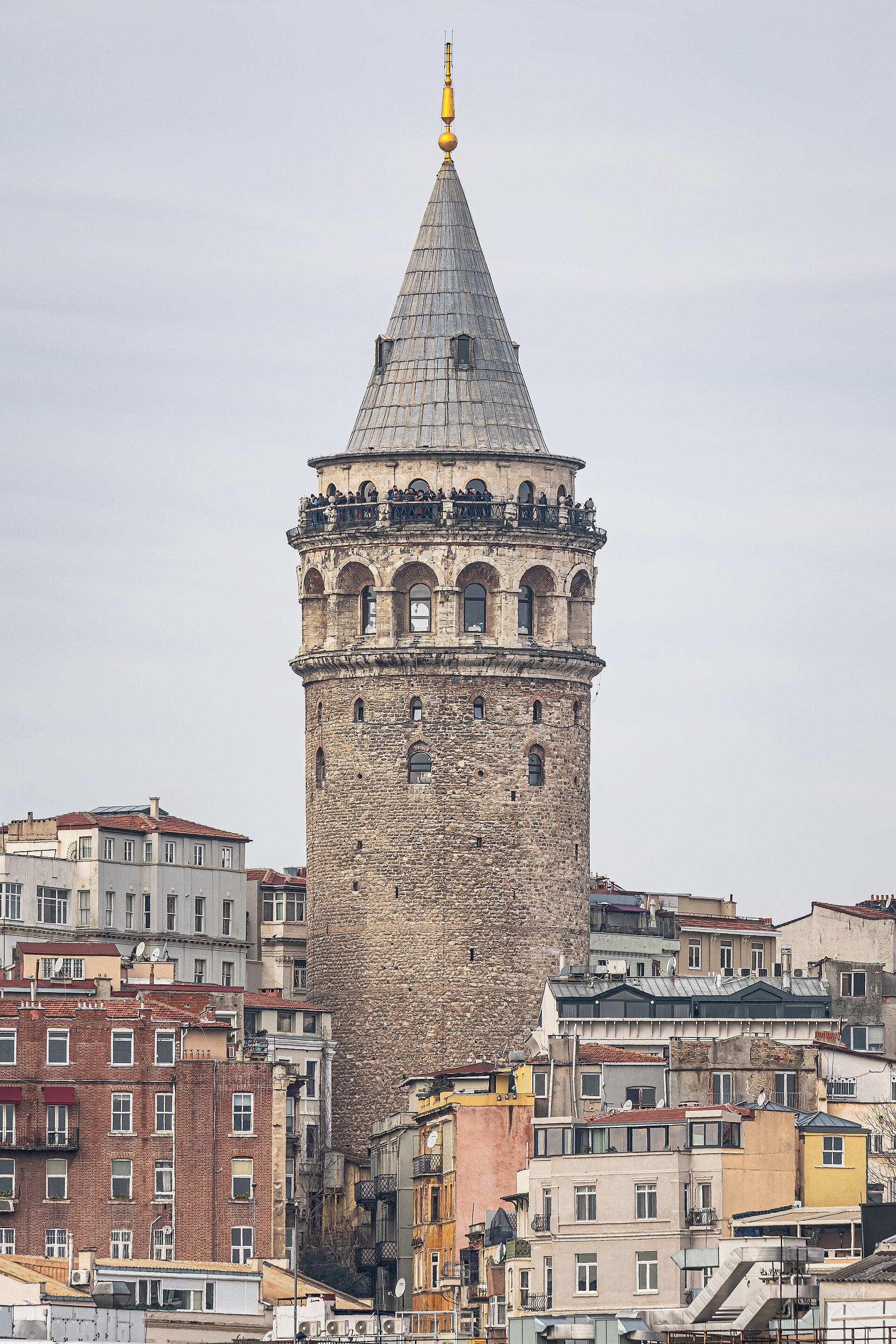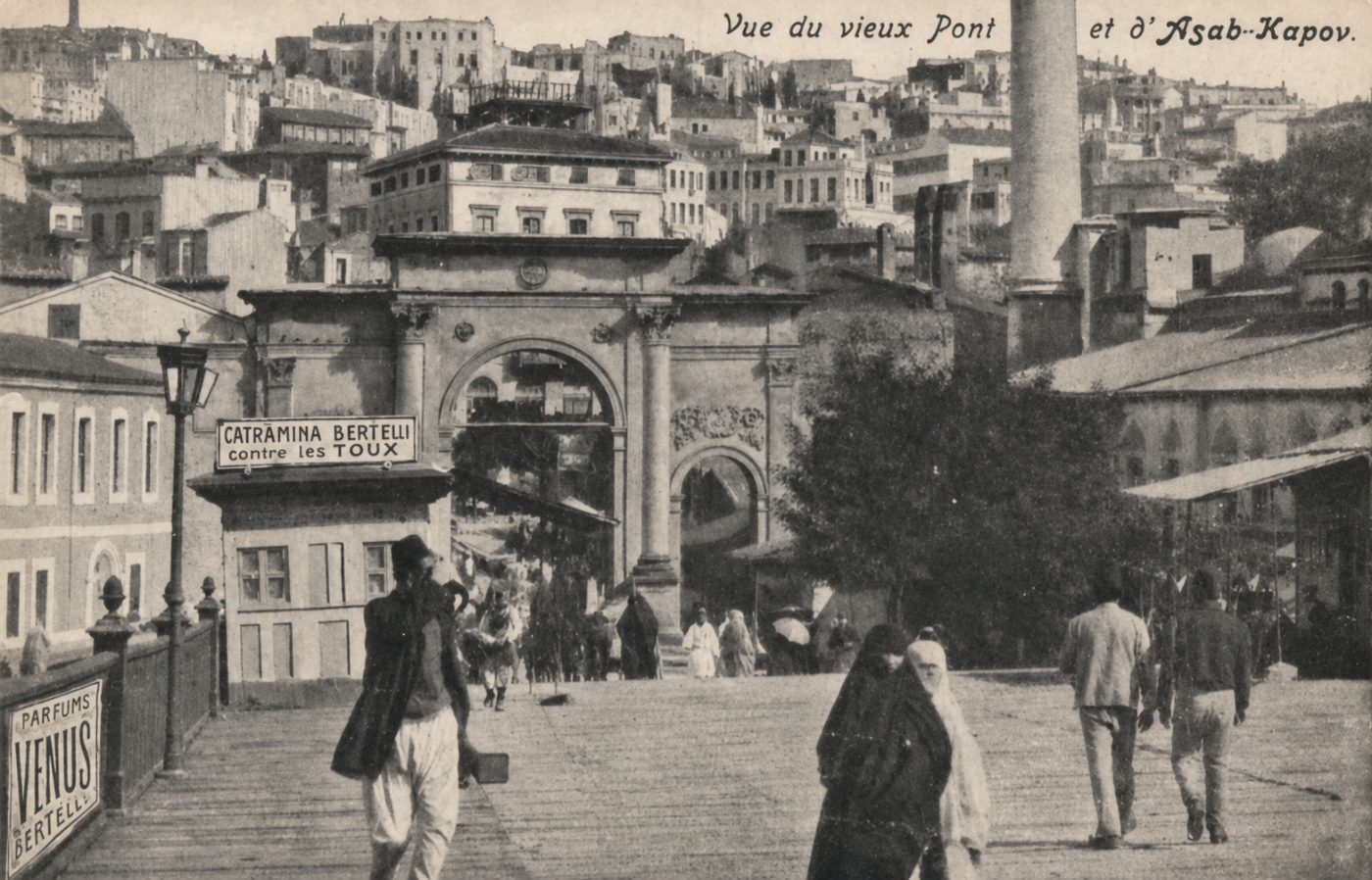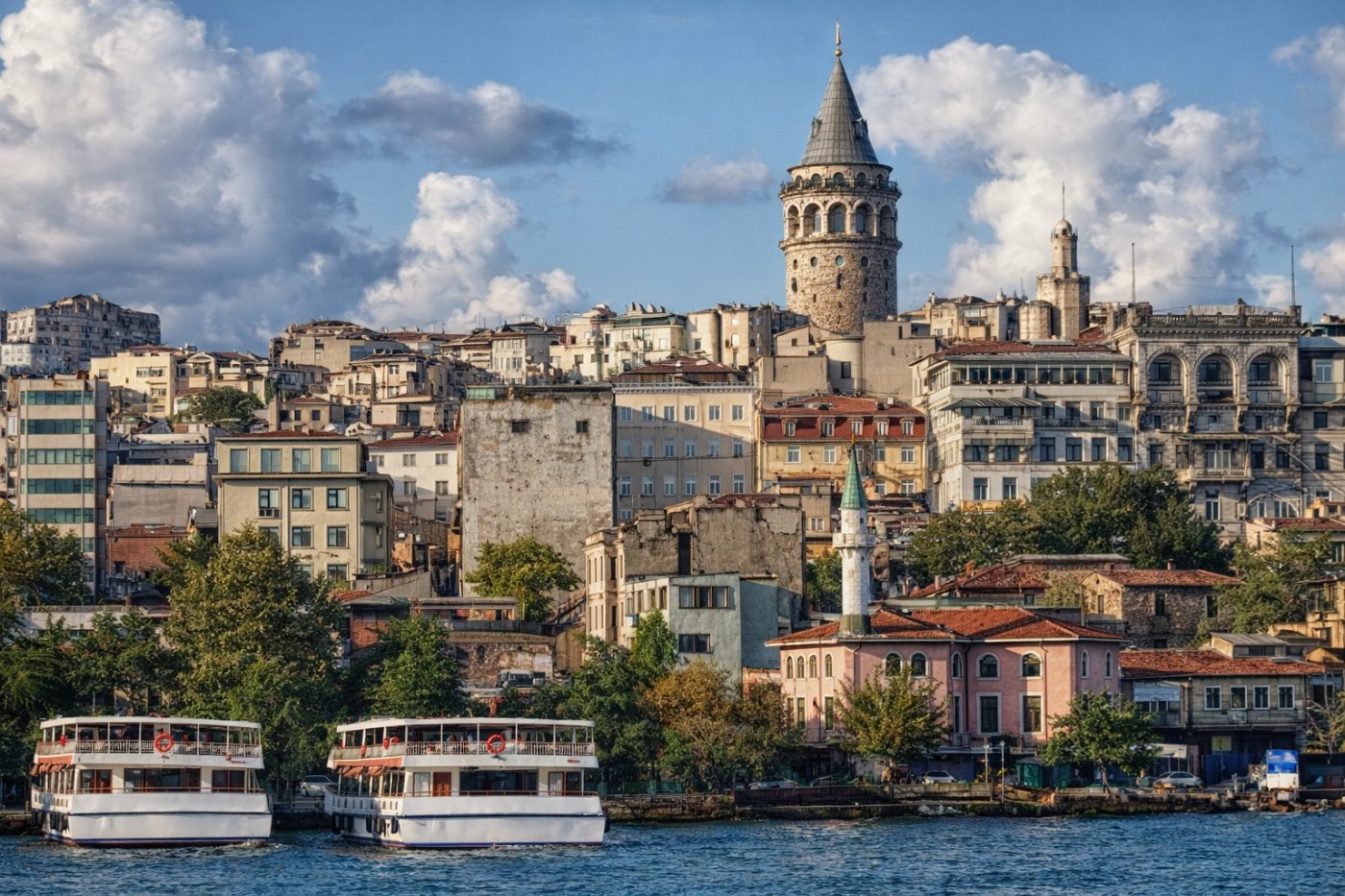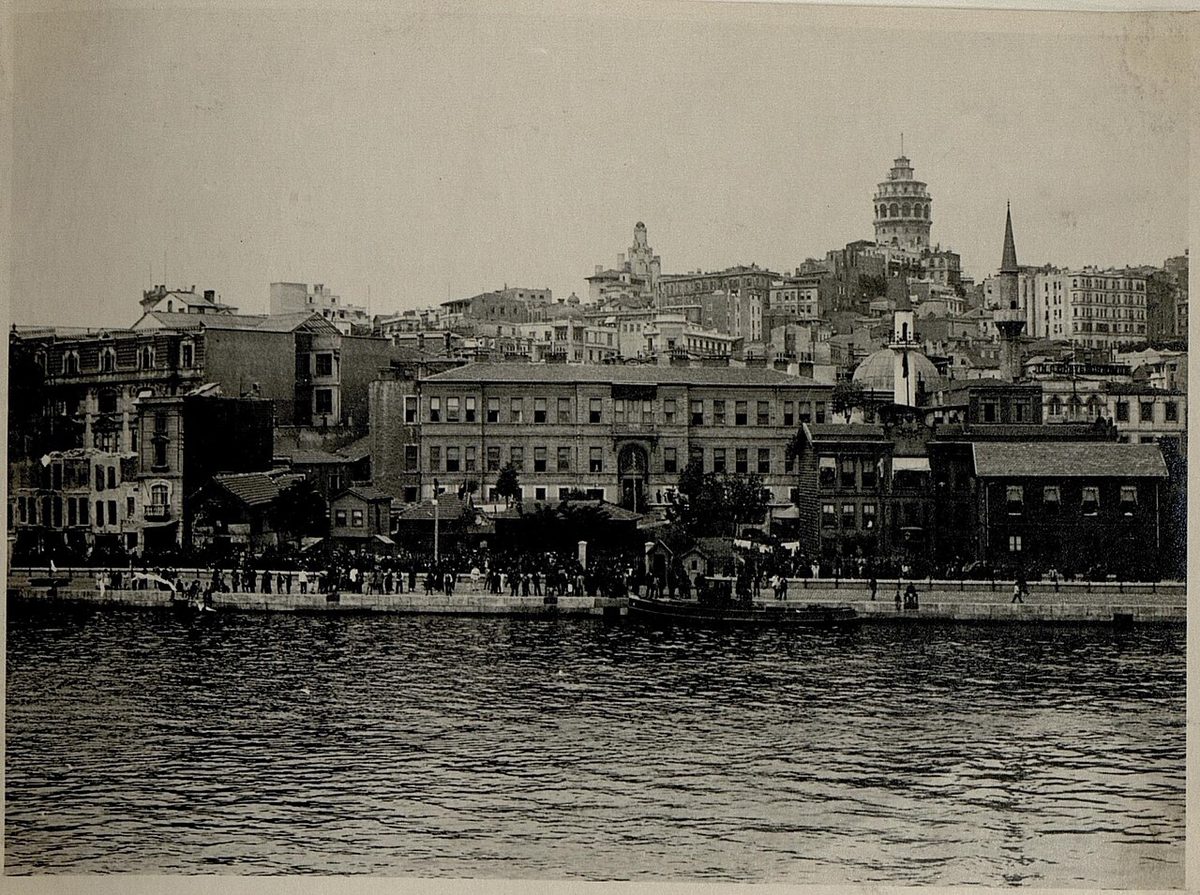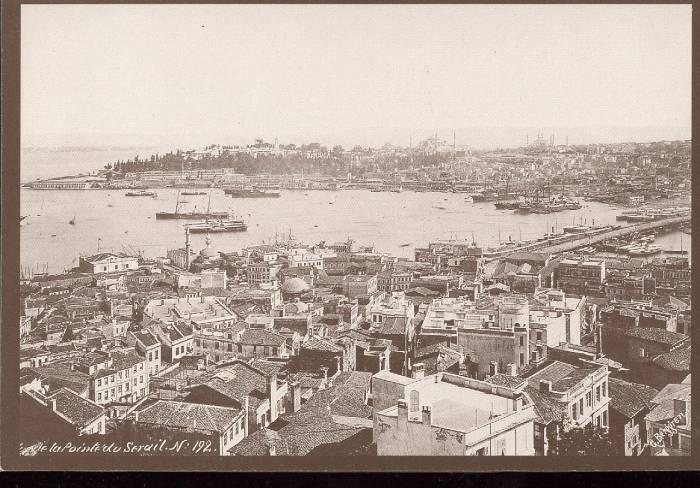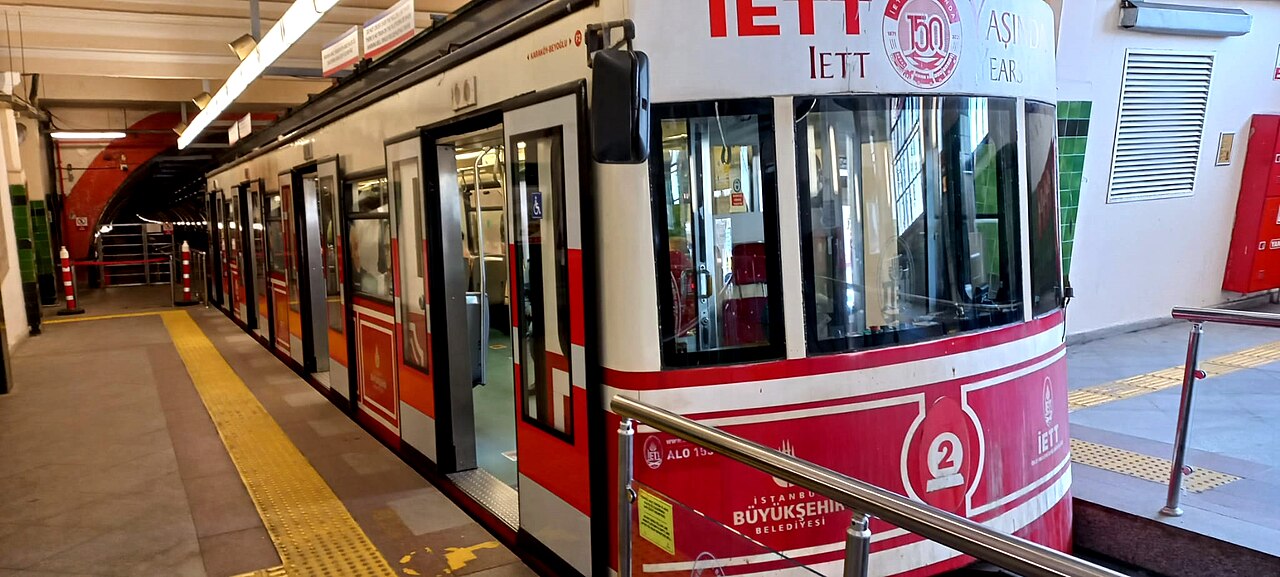
In the past, vineyards and forestlands were stretching to the north of Galata walls, i.e. behind the Galata Tower. The region that we know today as Beyoğlu was once Pera Vineyards. The Tünel Square is named so because the upper station of the short underground railway line (the Tunnel) is located here, but in the 16th century this place was a vineyard surrounded by graveyards.
This part of Pera was first inhabited by the embassies of the foreign states rather than by Turks. As foreign states were not allowed to build embassies in the historic peninsula, they were inhabited in Galata, but to be able to stay away from the frequent plagues and fires, they started to build chalets in Pera that, at the time, was known with its fresh air. Then they turned these resorts into permanent residences around the end of 16th century. Moreover, foreign diplomats had more freedom here. For instance, Venetian bailos could easily tour around in Pera and help slaves and captives escape to their homelands, while the gates of Galata were being kept closed during the night. The French, first pioneers of the region, had established their first embassy in 1535 around the inner parts of Galata. After 1540s, they rented a property in Pera where the French Palace is located today. During late 16th century, they bought this property to build their permanent residence, which was rebuilt during 1840s in its current form after the fire of 1831.
The British used to be inhabited around where Mimar Sinan University is located today. However the Muslims in the vicinity complained about them drinking and making noise, so they moved to their current residence in Galatasaray.
The Prussian Embassy was one of the latecomers in the area, because the Prussian-Ottoman relations took off only after the 1761 Amity Treaty between the two countries. The first residence of the Prussians was a small rented house around the small graveyard in Pera. Until the second half of the 19th century, relations between the two countries saw a roller-coaster ride. Hence, the Prussians didn’t acquire their own property for an embassy until that time, after which a rapid progress followed. In 1864, Count Brassier de Simon, the Prussian ambassador of the time, saw and liked a 3,700 sqm lot on the Yazıcı Street of Pera, and took it as an opportunity to rid the embassy of its small, rented residence.
Following the approval of Bismarck, the lot was bought in 1865 – together with the water wells and the 2-storey Mahmut Pasha Mansion in it. However, the lot didn’t come into the Prussians’ possession until a relevant edict was issued by the Sultan in 1868, only after which the embassy finally moved into its new residence. Actually, the Prussians had wanted to have a new and modern embassy residency built by the architect Huber Goebbels on the lot, but von Radowitz, the new Prussian ambassador of the time, bought another lot in Ayazpaşa, and the new embassy building was constructed there between 1874 and 1877. That building is near the Taksim Square and nowadays it is being used as the Istanbul Consulate General of Germany.
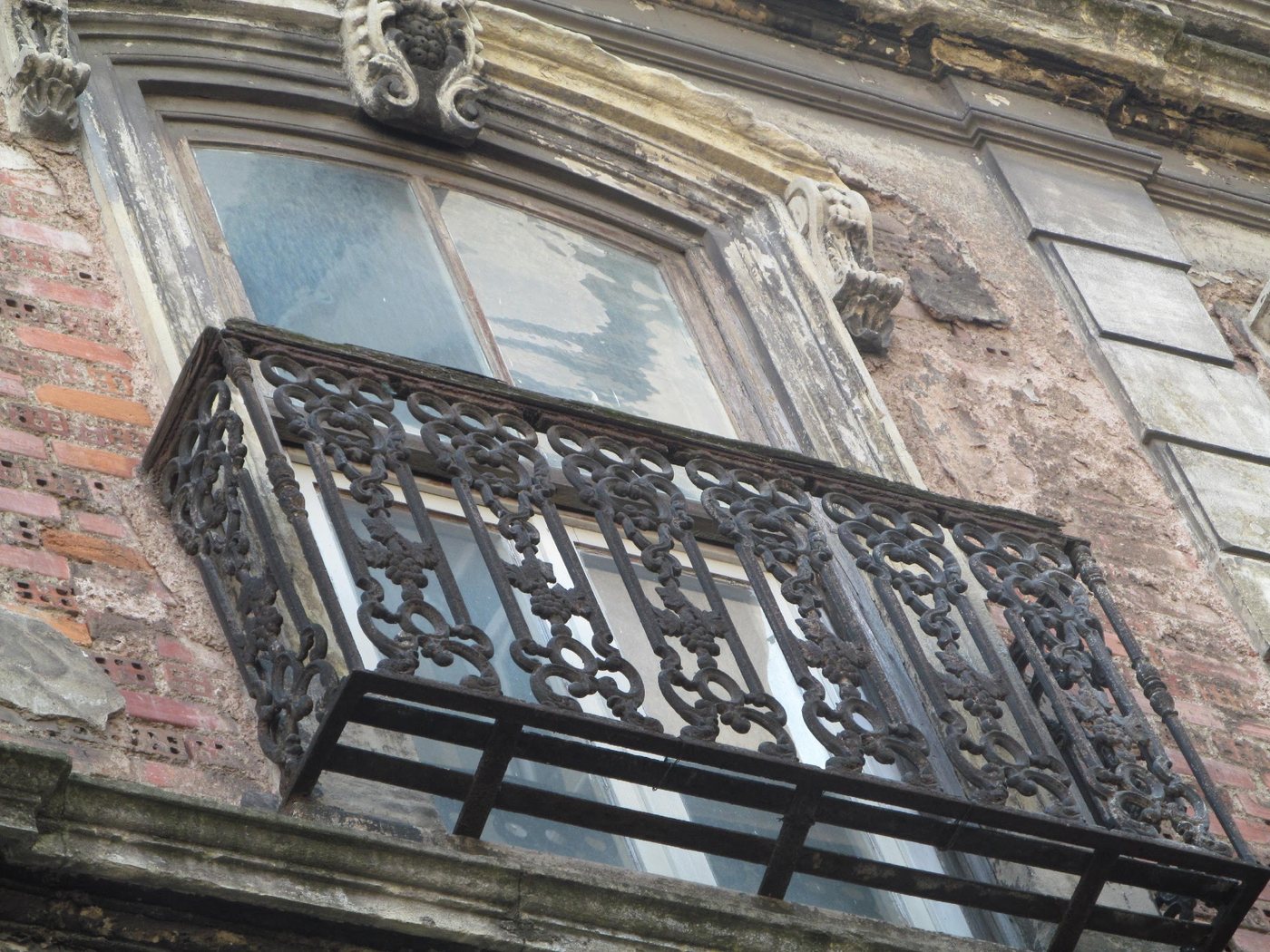
The urbanization movement in Pera was not limited to the construction of new embassy buildings. After the establishment of 6th Municipal Department in 1864, Galata underwent a big expansion towards the Pera Vineyards. Land reclaimed through demolished city walls and covered moats –similar, in a way, to the “urban transformation” we witness today – were used for building masonry houses for the Levantines, Jews and Greeks.
By mid-19th century, as sea and railroad transportation was increasingly becoming popular, many hotels have also been built in the region for Europeans who visit the city for business or touristic purposes. Among these luxurious and comfortable hotels, built in the architectural style of the era, were:
Hotel D’Angleterre (1841), Hotel de Pera (1843), Hotel de Belle Vue (1845), Hotel de Petit Champs (1846), Hotel de l’Europe (1847), Hotel de Russie (1847), Grand Hotel d’Orient (1849), Hotel de Byzance (1849), Hotel de la Mediterranee (1850), Hotel de la Tour de Leandre (1854), Hotel des Ambassadeurs (1855), Hotel de Londre (1855), Hotel de Luxembourg (1879), Hotel Pera Palas (1895), Hotel Français Continental (1891), Hotel de Constantinople Hotel Anatolie, Granda Hotel National, Hotel de la Grande Bretagne, Maison Lebon.
From 1849, the streets of Pera were lit by gas lanterns fueled by city gas, and other buildings were added to hotels in the course of time. Big stores begun to show up in the region, selling the new products of the Industrial Age. These included: Maison Romani, Magasin de Nouveautes, Maison Zizinia, Grand Bazaar Parisien, Bon Ton, Bourcier et Villan, Grand Barbulowitz, Grand Magasin de Gros, Maison Grombach (Ulmann), Bon Marche (1854), Velasti Freres, Vartan Bijouterie, Bazar Allemand, Bazar İndien.
Our picture of Pera of the time would be lacking if we exclude the entertainment and meeting places with their contribution to the improvement of social life. Pera took its share from cafés, brasseries and charcuteries that reflect the Western eating and drinking habits of the time. With its theaters (attracting people from many different segments of the society) and reading halls (which were popular especially between 1840 and 1855), Pera was not much different from any European city. Especially Naum Theater, Concordia, Palais de Cristal, Teutonia, Petit Champs Theater and the Italian Opera were among the well-known venues that served the entertainment needs of the era.
From 1840s to the beginning of the Balkan Wars in the 1910s, Pera inadvertently transformed into a center of culture and art, like Paris. Researcher Seza Sinanlar confirmed that between 1844 and 1916 more than 200 artists lived in Pera, and that hundreds of artworks were showcased in 95 exhibitions with contribution from 63 artist’s studios.
Pera “was not a Paris,” but it was “the Paris of the Orient”- at least for a while!
Source: Akdoğan Özkan, A Traveler’s Guide to Galata (Nar Turizm, 2016), translated by Volkan Ersoy.
Last updated:
Spotted a mistake or something missing on this page? Suggest a correction