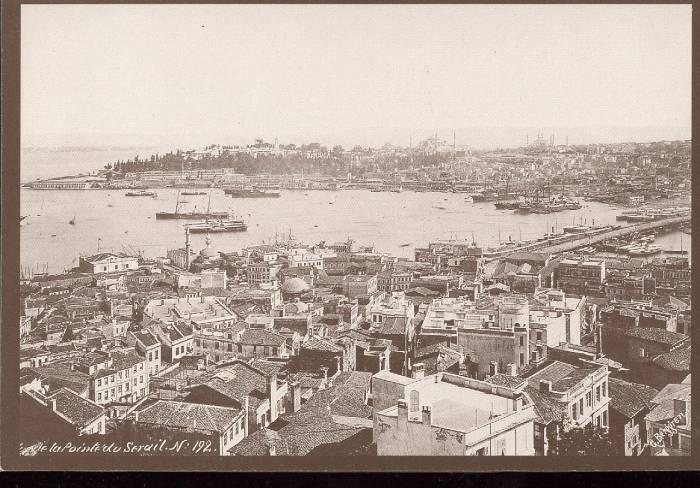
Zellichs were a Croatian family who made a reputation in the Ottoman Empire with their lithograph postcards. Antonio Zellich (1820-1890) of Brela was one of many Dalmatians who left his homeland in pursuit of a better life in 1840, and set out to the Ottoman imperial capital – Istanbul.
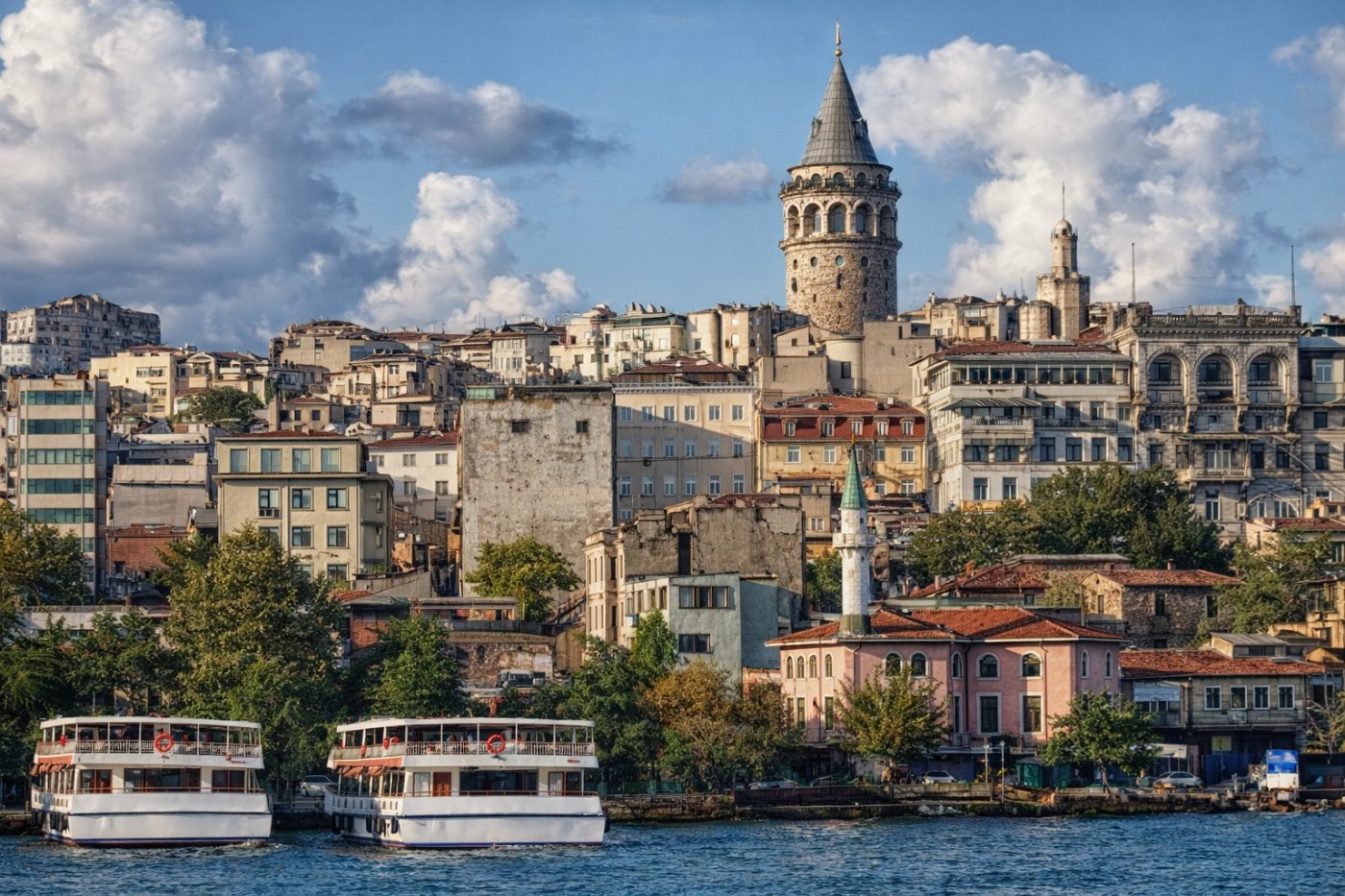
Upon arrival in the city, Antonio Zellich found employment at the lithographic print house of French-born Henri Caillol in Galata. He was lucky because Henri Caillol was the best person in the world to learn this job from. Caillol came to Istanbul with his nephew Jacques in 1831, when he was 26 years old, and decided to stay. After finding a teacher and learning Turkish in a short time, he went to visit the Ottoman statesmen to talk them into the advantages of lithography. Ultimately, when he convinced Serasker Koca Hüsrev Pasha (Serasker: vizier who command the Ottoman Army) that the authentic beauty of the Ottoman calligraphic art can be preserved with the lithography technique, he was granted with the permission he demanded. He was allowed to establish a lithography workshop to meet the printing needs of Harbiye Nezâreti (Ottoman Ministry of War). There, he set up a press in 1831, and became the pioneer of lithography in the Ottoman Empire. He first started by printing the field manuals for the training of the Army that was formed after the abolition of the janissary system. After completing this task successfully, Sultan Mahmud II granted him with a house, 500-kuruş monthly salary, and an additional subsistence allowance. In addition to the documents on military training, his lithography workshop printed many poetry books, folktale books and dictionaries using Armenian, Ottoman and Greek typefaces. He also trained many lithograph artisans for the Empire. In 1836, he founded his own print house in Beyoğlu, near the Galata Dervish Lodge, with the permission of Mahmud II.
By being an apprentice to Henri Caillol, Antonio Zellich mastered the art of lithography, and in 1852, he contributed to the printing of a periodical named as “Journal Asiatique de Constantinople.”
The print house was run by the Caillols until Henri Caillol’s death in 1871, and then it was passed on to Antonio Zellich. Now, “A. Zellich et Fils” (Zellich and Sons) is the most well-known name in Istanbul’s lithography scene. The collective works of Vartan Pasha, the author of the first Armeno-Turkish (Turkish in Armenian alphabet) novel named Akabi’s Story (1851), were also printed by Antonio Zellich in two volumes.
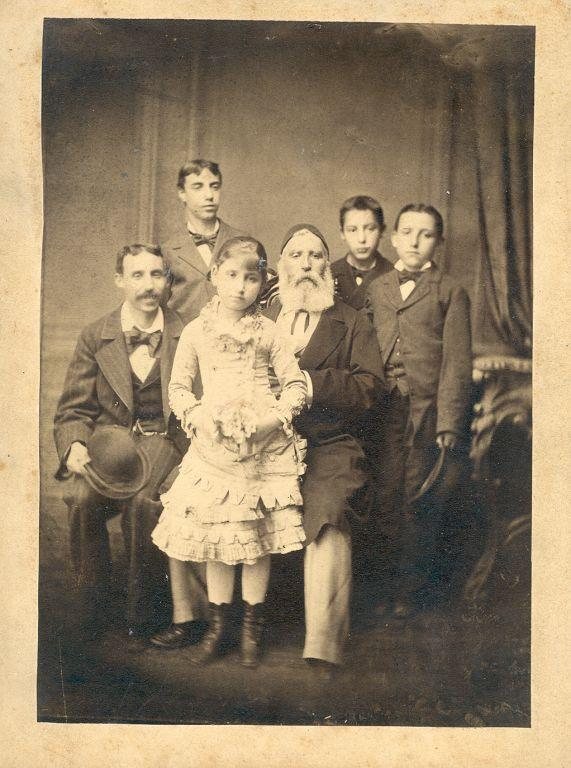
Antonio Zellich married and had six children including Michele (1851-1900), Gregoire (1853-1932), Nicholas (1859 -1922), and Henri (1866-1932). In time, Gregoire became the right hand of his father. Antonio Zellich died in 1890 and buried to the Feriköy Catholic Cemetery. After his death, Gregoire took over the print house, while his siblings assumed different responsibilities in the company. Now the name of their company is “Zellich Frères” (Zellich Brothers).
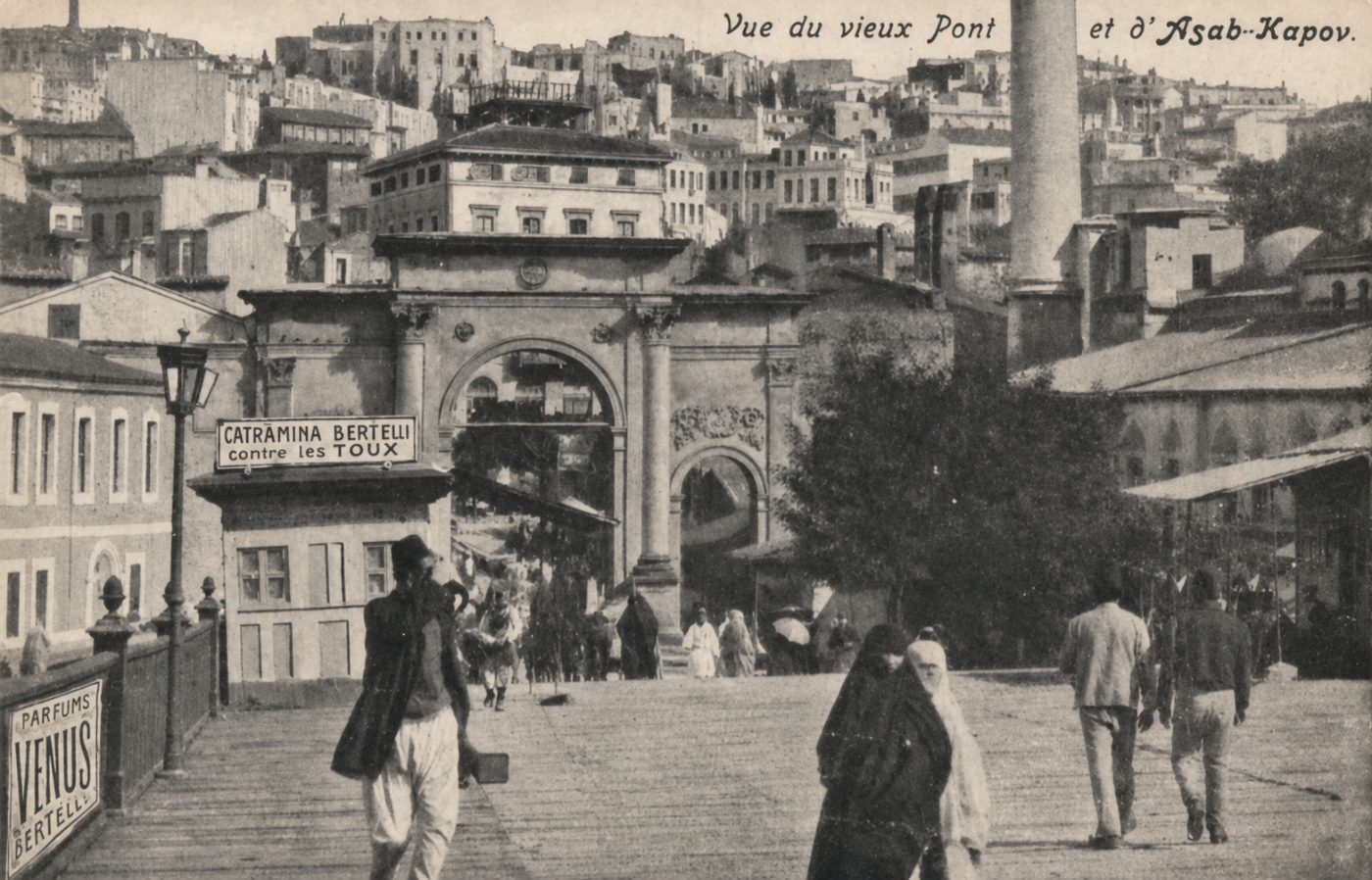
“Zellich Frères” earned an empire-wide reputation with the postcards and posters they printed in their print house on Serdar-ı Ekrem Street (former Yazıcı Street). One of their biggest achievements was to print the Ottoman banknotes in 1914. With their work, Zellich Brothers have also won international awards and recognitions including the Order of St. Sylvester from Pope Leo XIII, and the Order of St. Sava from the Serbian King Alexander Obrenovic. They were also awarded with a medal by the Persian King Mozaffar ad-Din for printing Prince Mirza Reza Khan’s book for 1889 Hague Peace Conference.
Besides their print house at Serdar-ı Ekrem Street, Zellich Brothers had branch offices at 351 İstiklal Street (opposite the Bon Marche store), and 21 Mahmudiye Street. The print house of the Zellich Brothers saw the 20th century, but the last record of it is from 1928.
In 2011, The Croatian State TV broadcasted a 27-minute documentary on Antonio Zellich, directed by Srdjan Segaric.
Source: Akdoğan Özkan, A Traveler’s Guide to Galata (Nar Turizm, 2016), translated by Volkan Ersoy. Obvious misprints in the printed edition have been corrected.
Last updated:
Spotted a mistake or something missing on this page? Suggest a correction