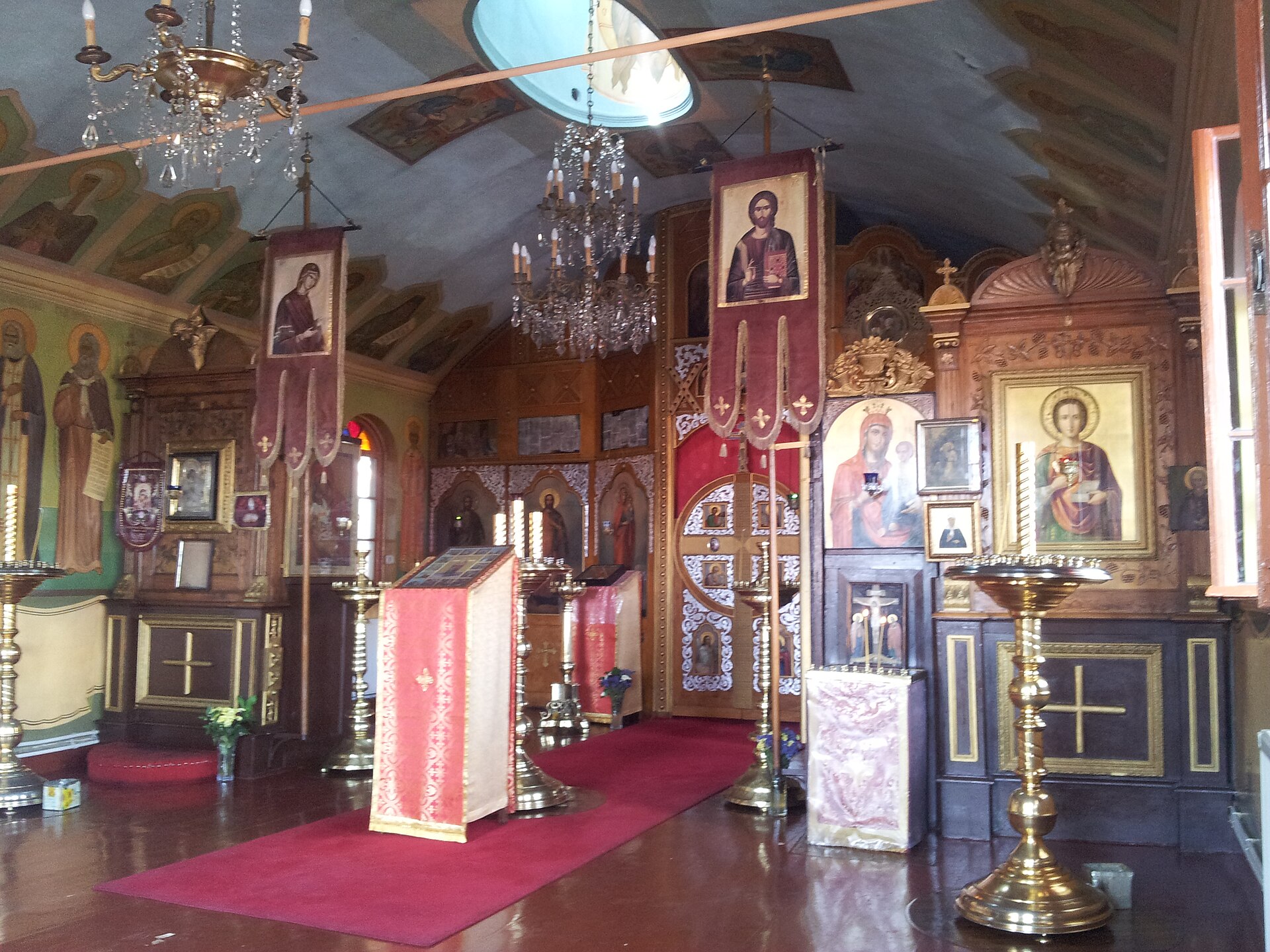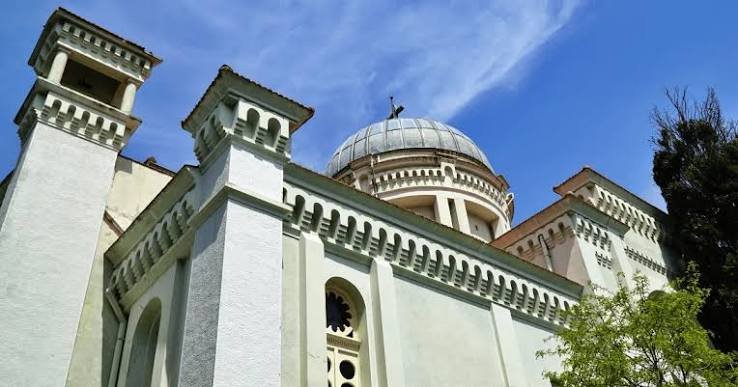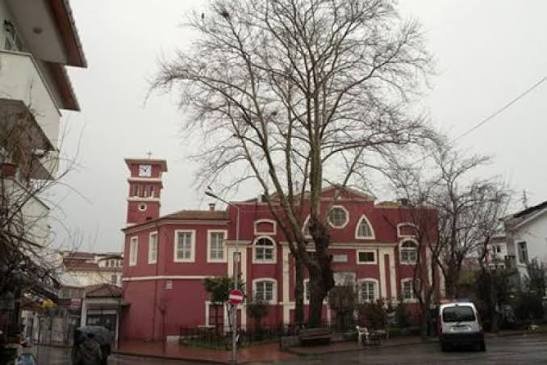
This church is dedicated Agios Nikolaos (St. Nicholas), patron saint of seamen. He was the Bishop of Myra (or, Demre in modern-day Turkey) in Lycia. As the church was frequented mostly by the Cephalonian Greek sailors, it also contains an icon of Agios Gerasimos, patron saint of Cephalonians.
The church was erected on the ruins of a church, which was dedicated to Agios Antonios during the Byzantine era. In fact, the ayazma (holy spring), accessed via stairs down from the southeast of the narthex, is named after Agios Antonios.
The church has frequently fallen victim to fires, and it was rebuilt many times. According to Timotheos Sophianos, it was rebuilt in 1773, following the fire of 1771, with money contributed by sailors, fermene (embroidered vest) makers, broadcloth makers, and furriers. It fell victim to another fire in 1796, and reopened in 1804 after extensive repair work. It fell into ruin in 1821, and rebuilt from foundations up in 1834. In 1887 another renovation took place.
The church was built in the form of a basilica with three naves, in the traditional architecture style of Greek churches in 1830s. Covered with a gable roof, the building is 30.2m in length, 15.5 m in width, and 13.3 m in height. It has three inscription plates, and they document the years of restorations/reconstructions. Its wooden iconostasis catches the eye with its craftsmanship.
† Cephalonian sailors who once came ashore at Galata’s Wine Wharf would first take down the sails of their ships and leave them in the women’s gallery of this church, for luck and plenty.
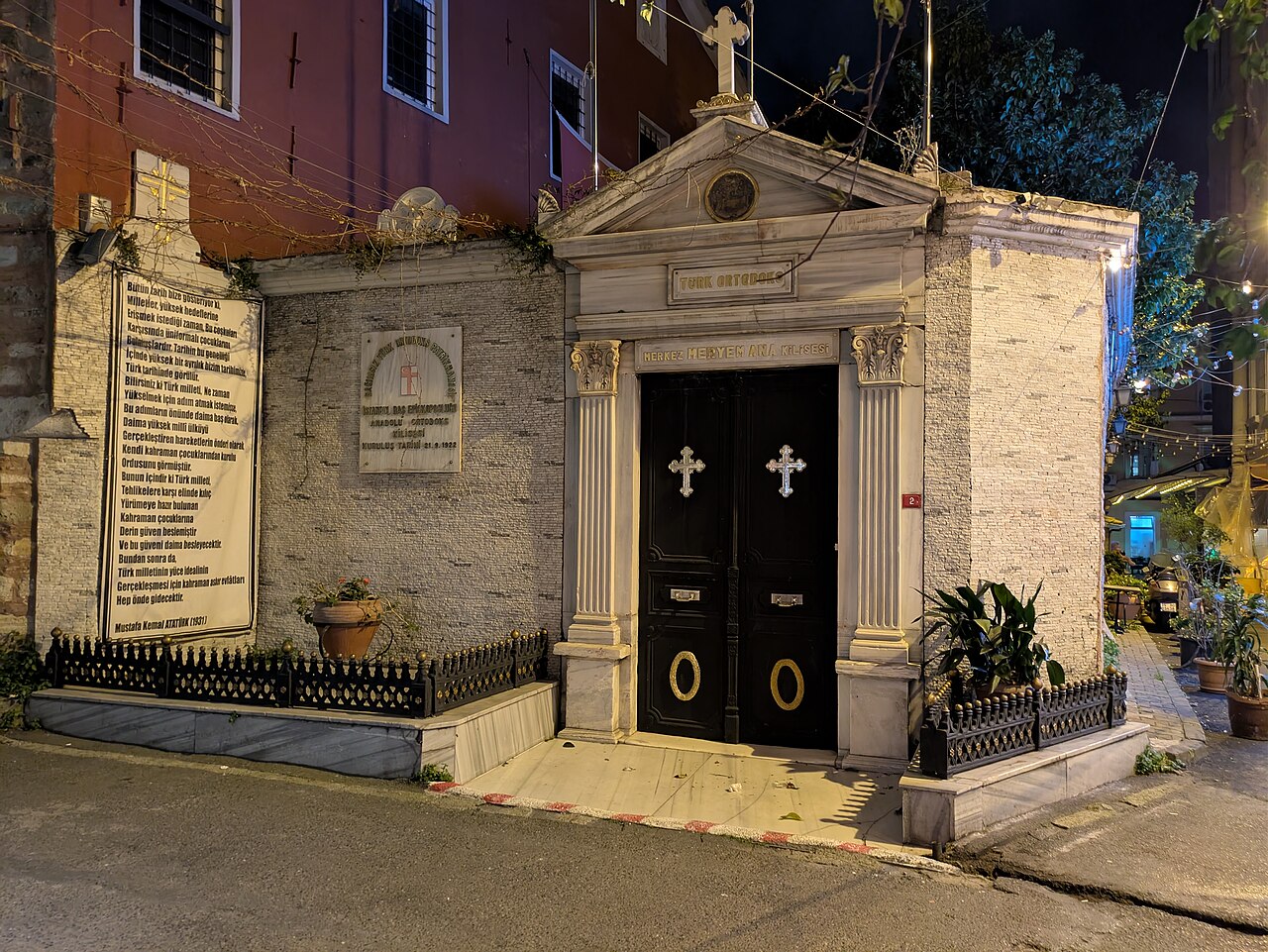
The church suffered damages during the 6-7 September 1955 events, and passed to the Turkish Orthodox Patriarchate in 1965, at a time when Turkish- Greek relations were clouded over the Cyprus dispute.
Part of these themes: Galata's communities
Source: Akdoğan Özkan, A Traveler’s Guide to Galata (Nar Turizm, 2016), translated by Volkan Ersoy. Obvious misprints in the printed edition have been corrected. Paragraphs marked † appear only in the 2017 Turkish edition of the book (Galata Gezi Rehberi) and were translated for this site.
Last updated: · Last checked: (address and map position)
Spotted a mistake or something missing on this page? Suggest a correction