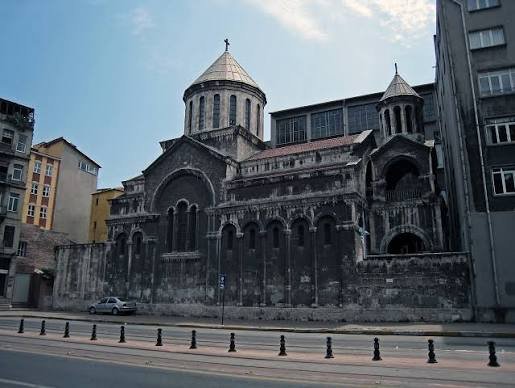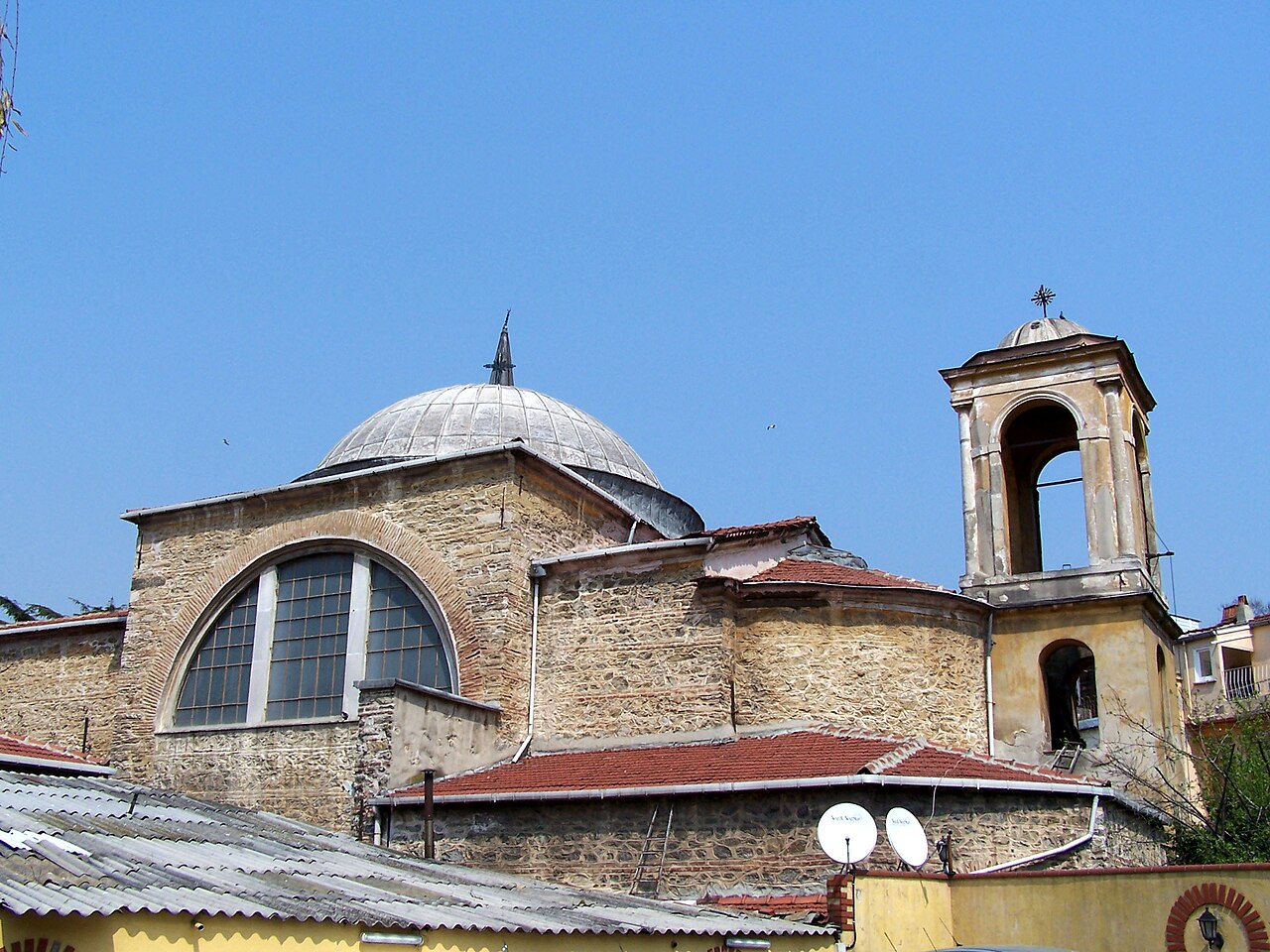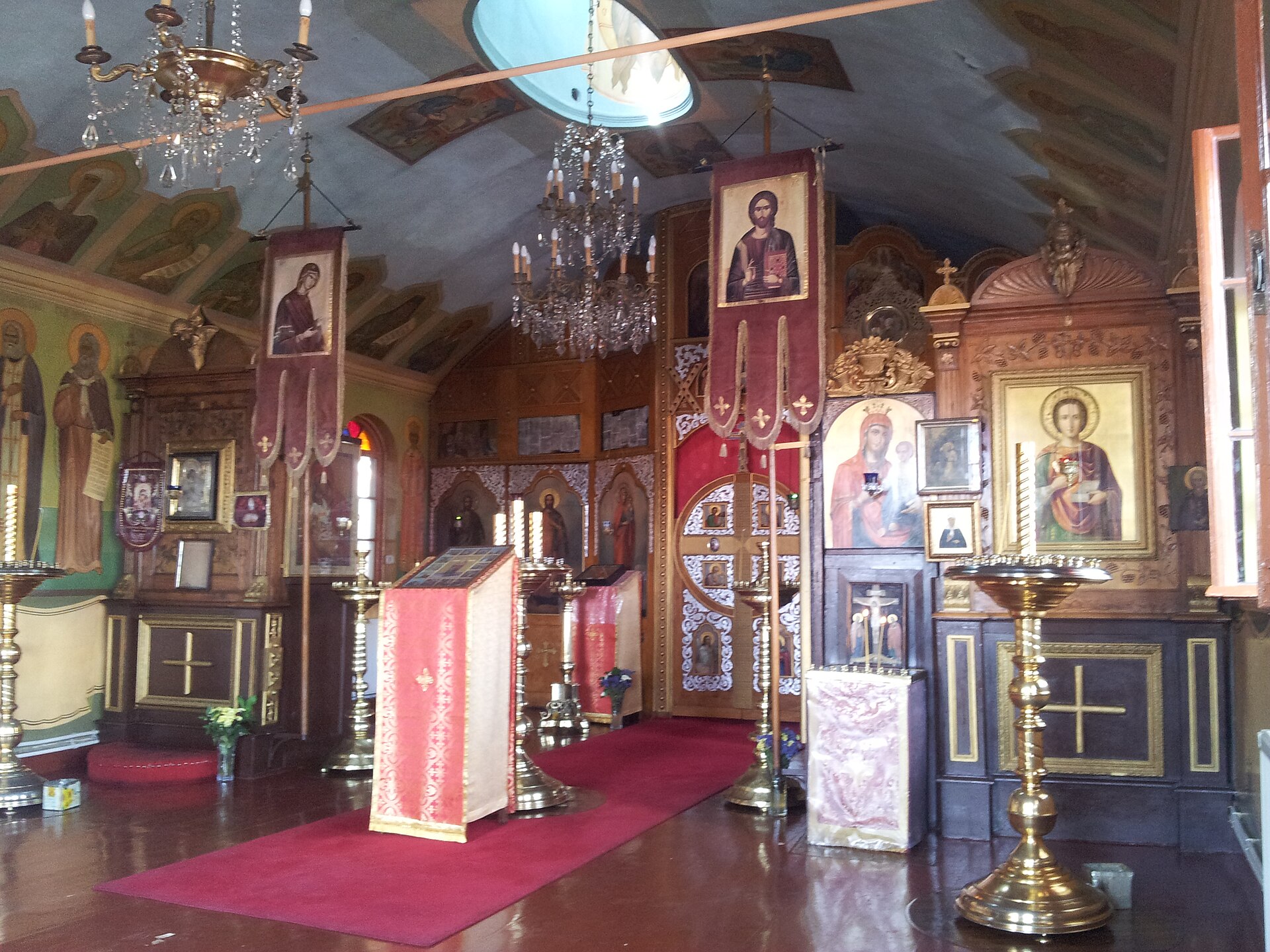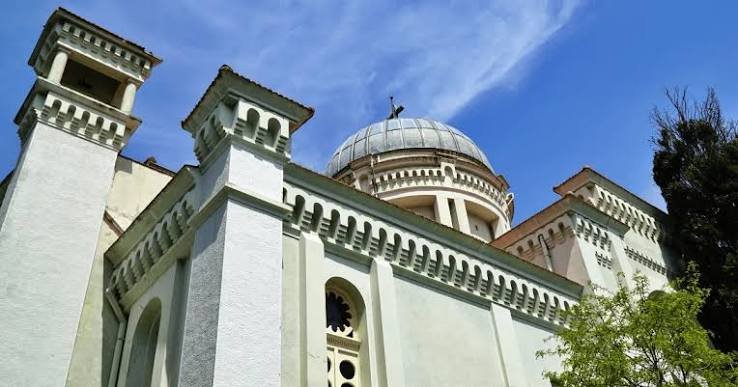
This church dedicated to and named after John the Baptist (Aya Yani), is located in the middle of a courtyard surrounded by high walls. Although the exact construction date is unknown, its name is referred to in records from 1583. Also, an archive record dated 1585 mentions about a Galata neighborhood named as Aya Yani (Agios Ioannis), probably named after the church.
† In a work prepared in the second half of the 17th century by the historian Charles du Fresne (1610-1688), the church is referred to as “S. Ioannis Combusit Kameno.”
The church has frequently fallen victim to fires. After a fire in 1696, the renovation took place only after the Greeks of Chios obtained a firman (edict) from the Sultan that it could be rebuilt from the foundations up – hence, it was also once known as Sakızlı Kilise (lit. “Chiotian Church”). The churchyard contains the graves of Chiotian Greeks, dating from 1842 to 1863.
Above the entrance, which is coaxial to the naos, is the church’s white marble inscription. The inscription is divided into two, each half containing lines to honor reconstructions from two different years: 1734 and 1799.
The building was renovated also in 1874, 1884, and 1894. The church contains some important holy relics of the Orthodox world, including the hand of Agios Dionysios, and the corpse of Agios Thalalaios. The iconostasis of the three-naved church features scenes from the life of Jesus.
Today, the church is under the Turkish Orthodox Patriarchate.
Part of these themes: Galata's communities
Source: Akdoğan Özkan, A Traveler’s Guide to Galata (Nar Turizm, 2016), translated by Volkan Ersoy. Paragraphs marked † appear only in the 2017 Turkish edition of the book (Galata Gezi Rehberi) and were translated for this site.
Last updated: · Last checked: (address and map position)
Spotted a mistake or something missing on this page? Suggest a correction