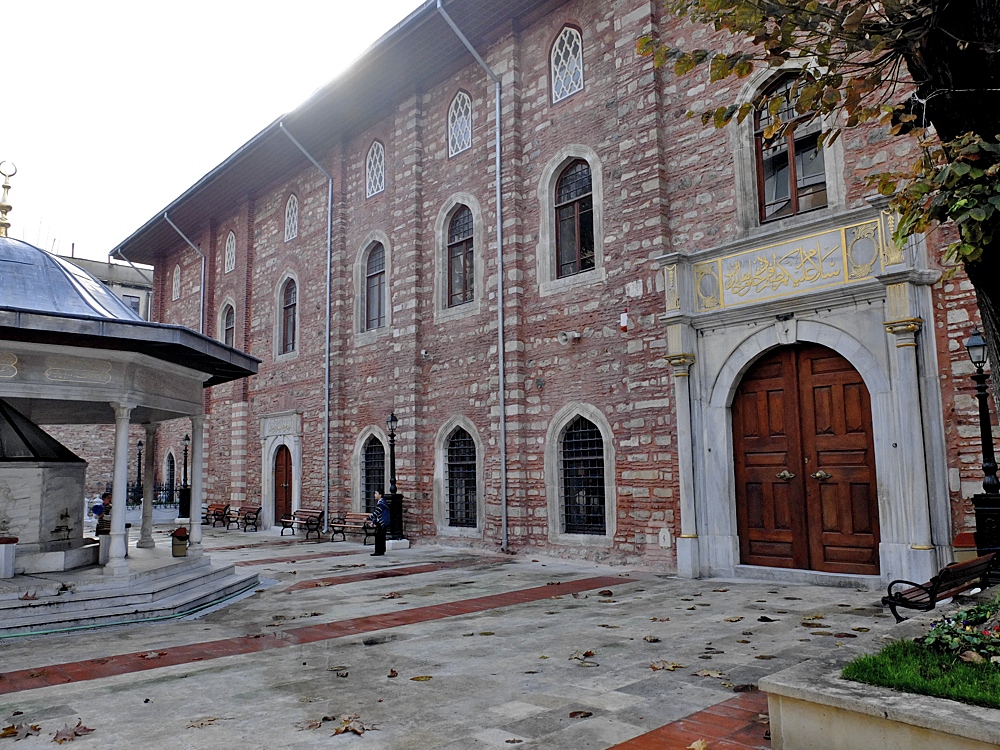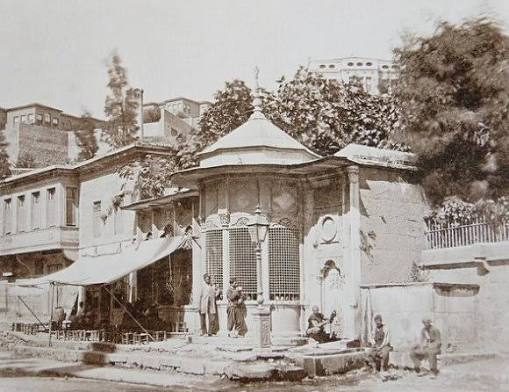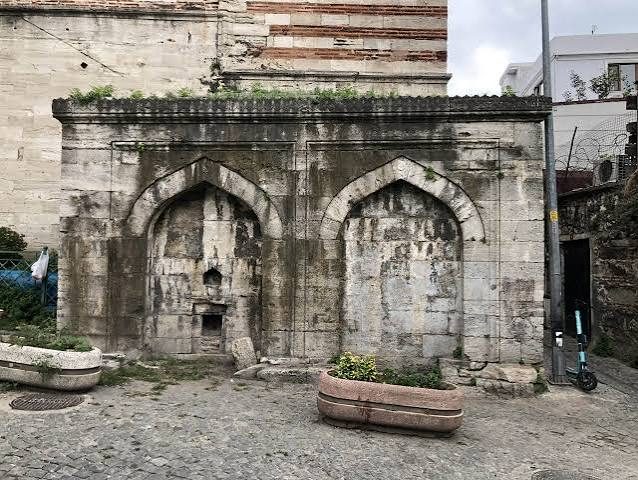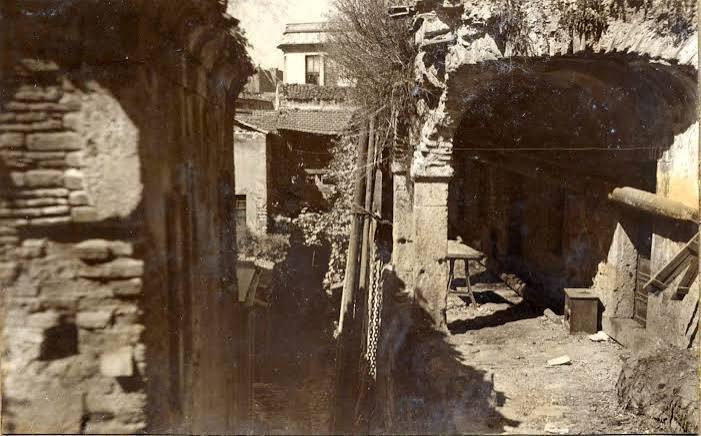
In Azapkapı, on the seaward side of Tersane Street and near Yemeniciler Sokağı, is one of the two most important buildings – except for the bedesten, or covered bazaar – of Ottoman Galata: Yelkenciler Han (han = Ottoman commercial complex/inn). As the mescid (small Muslim sanctuary) that used to be located inside was constructed by Kemankeş Mustafa Pasha, he is considered the benefactor of the han, too. Based on Mustafa Pasha’s date of death in 1647, Yelkenciler Han is seen as a 17th century building; as such, it is one of the rare hans which survived from the 17th century. It was called Yelkenciler Han (lit. yelkenciler = sailmakers) because sailcloth for boats was being made here in the 19th century.
† It is not known whether the building was raised on the foundations of an earlier structure. Some Western sources, such as General Léon Marie Eugène de Beylie (1849–1910), draw attention to the similarities between hans of this type in Istanbul and the monastery buildings of Mount Athos.
The courtyard of the han is accessed through a barrel vaulted passage. On both sides of the narrow, long courtyard, shops with arched stone masonry walls are lined. Yelkenciler Han is a two-storey building in rectangular form (44 x 15m). In the past, upper floor rooms were opening to a porch, which doesn’t exist today because of many transformations the upper floor had been subject to.
† In İhsan Oktay Anar’s first novel, “Puslu Kıtalar Atlası” (The Atlas of Misty Continents), the hero Bünyamin is described as living with his father Uzun İhsan Efendi and his uncle Arap İhsan in a house adjoining Yelkenciler Han.
Source: Akdoğan Özkan, A Traveler’s Guide to Galata (Nar Turizm, 2016), translated by Volkan Ersoy. Obvious misprints in the printed edition have been corrected. Paragraphs marked † appear only in the 2017 Turkish edition of the book (Galata Gezi Rehberi) and were translated for this site.
Last updated:
Spotted a mistake or something missing on this page? Suggest a correction