Financed by British capital, the Ottoman Bank was founded in 1863, under the name “Bank-ı Osmanî-î Şahane.” It was acting as the Imperial Central Bank and Treasurer. In 1889, Sir Edgar Vincent was assigned as the director of the Ottoman Bank. As the Ottoman Bank developed, Sir Edgar Vincent envisioned a new headquarter building to match the institution’s recently acquired power. The plans for a twin building, located on Voyvoda Street in Galata, were commissioned in 1890 to Alexandre Vallaury, a French-born Levantine and one of the most outstanding architects of the time. The twin buildings were completed within 2 years on a lot owned by the Regie Company (Tobacco Company). The new head office of the Ottoman Bank opened doors on 27th May 1892 at 11 Voyvoda Street.
The world-famous safe manufacturer Samuel Chatwood of London undertook the construction of a ‘steel fort’ housing various safe rooms that belonged to the building. The bank’s gold reserve– weighing thirteen tons – was transferred from the bank’s former vault in Saint-Pierre Han to its new location. The building’s massive structure dominated Galata, symbolizing its distinct position between East and West by employing neo-classical style on its façade, and neo-orientalist on the rear wing facing the Golden Horn.
† A report on the subject in the newspaper Sabah on 16 May 1891 read: “It has been learned that the Ottoman Bank has ordered from London a very large safe, worth thirteen thousand British pounds, to be placed in the vault of the premises it is having newly built at Perşembe Pazarı in Galata. The safe will arrive in pieces and will be installed by employees of the safe factory who will come to our city specially.”
The twin buildings were incomparably more modern than the bank’s previous buildings. One of the buildings was occupied by the Ottoman Bank, and the other by the Regie Company. One was functioning as the central bank, and the other as the revenues administration, both being administered by the representatives of foreign capital groups. These two sister companies were now closer both to the “stock market,” and to the “bridge”.
Under Sir Vincent’s management, the Ottoman Bank reached large masses by offering short-term advances and deposit banking services. During the 1890s, the Ottoman Bank’s growing commercial activity, its widening branch network and Sir Vincent’s dynamic management helped establish an unchallengeable control over the market.
The building was the head office of the Ottoman Bank until 1998, and then it became the bank’s Karaköy branch. In 2001, the Ottoman Bank merged with Garanti Bank, the main shareholder since 1996, thus putting an end to its 145 years of existence. Following the merger, the building was used for a while as the Ottoman Bank Museum and a branch office of Garanti Bank.
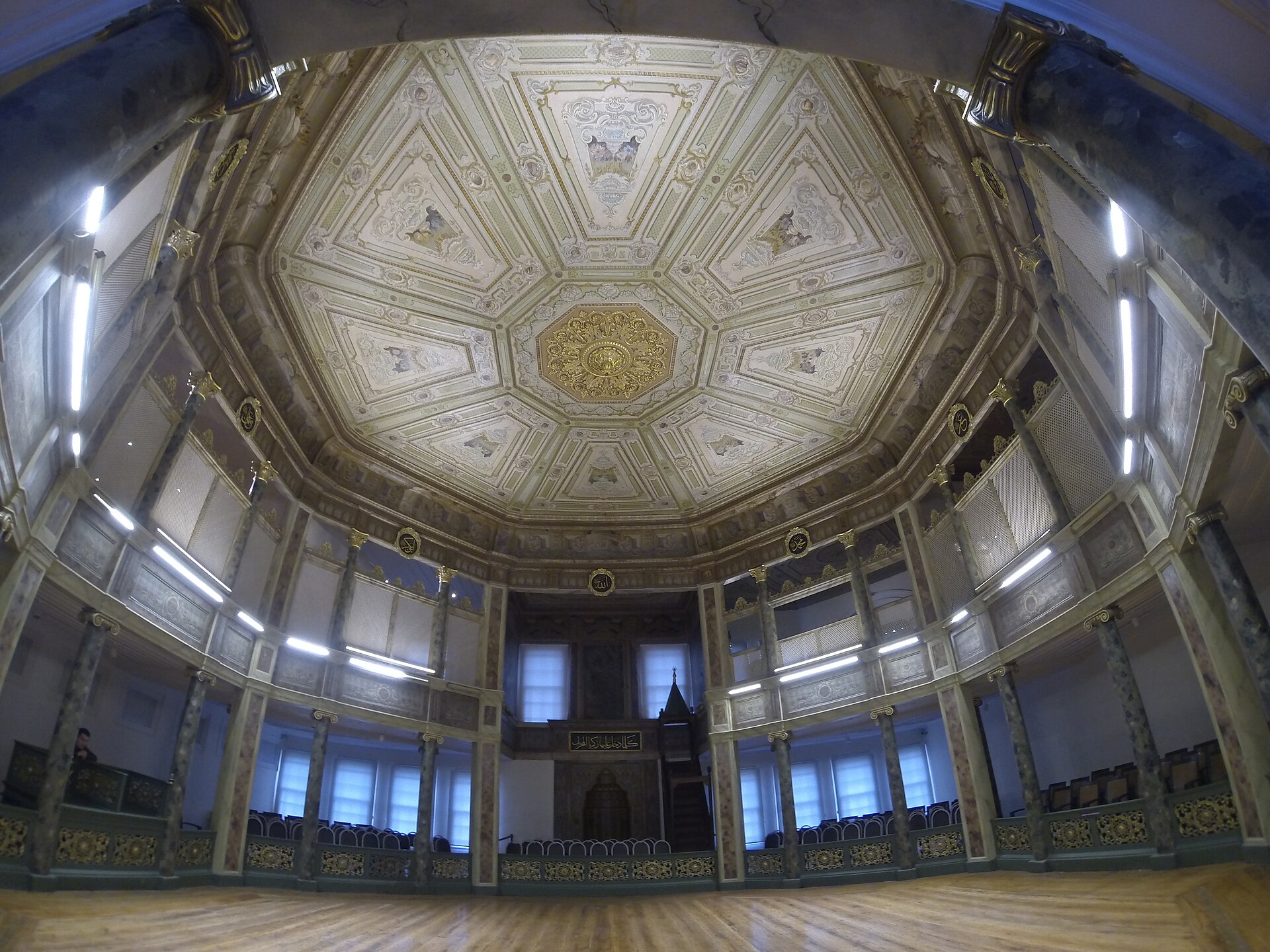
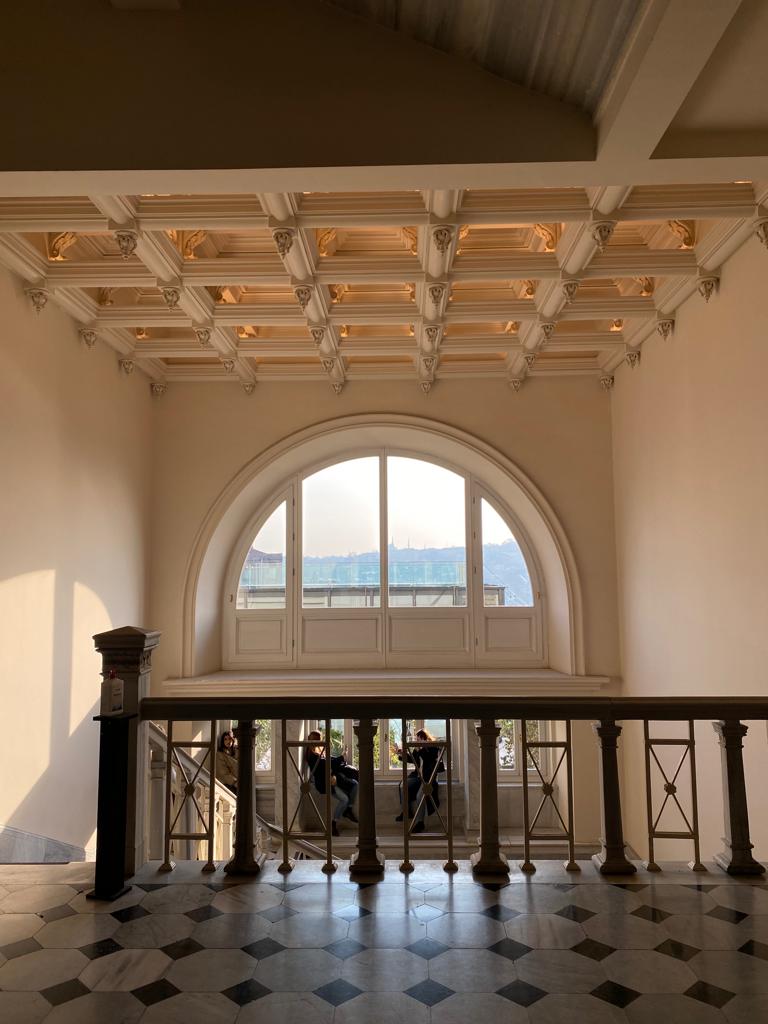
Later, the building has gone through an extensive restoration project led by Aga Han award-winner architect Han Tumertekin, and was turned into a non-profit cultural center. Named as “SALT Galata,” the cultural center opened doors in November 2011, and it holds a library and an archive for researchers, a 219-seat auditorium, the redesigned Ottoman Bank Museum, workshop spaces, and exhibition spaces. SALT Galata is closed on Sundays and Mondays, open for visits from 12:00 to 20:00 on Wednesdays, and from 10:00 to 18:00 on other days.
The other building remained in the possession of the Regie Company until 1925, when it was appropriated by the government of the Turkish Republic. In 1933, it was assigned to the Monopoly Administration, but it was sold to the Central Bank of Turkey the next year. It is still being used as the Istanbul branch of the Central Bank. The Ottoman Bank building had one of its most tragic days when a group of Armenian nationalists occupied it on 26th August 1896. During those days, Sultan Abdülhamid II was in power, and the clashes between the Muslim population of Anatolia and the Armenian nationalists – who were backed by the big states of Europe – has turned into a massacre in which 1800 Muslims and 8,000 non-Muslims lost their lives. In this climate, 26 militants of the Armenian Revolution Federation organized an armed assault in an effort to raise awareness and action by the European powers, especially by Russia. In view of its key role in the international finance, they stormed the Ottoman Bank armed with pistols, grenades and dynamite sticks, killing two bank guards and wounding two others.
The Ottoman soldiers surrounded the building and the resulting firefight left casualties from both sides. The director of the bank, Sir Edgar Vincent, who had fled at the beginning of the occupation, asked the Russian embassy to play the role of negotiator. An Armenian dragoman, named Maximov, from the Russian Embassy carried out the talks between the occupants and the Yıldız Palace. The demands of the militants, who were holding 154 of the bank employees and customers hostage, included stopping the armed blockade against the bank, putting an end to the massacres in Anatolia and Istanbul, giving written guarantees about the reforms to be carried in the Armenian provinces, and liberating all Armenian political prisoners.
Although the Palace didn’t give a positive response to these demands, a safe passage was promised for the surviving militants to go abroad, on condition that they end the occupation. After 36 hours of occupation, the 17 surviving militants gave up their demands and took shelter on board Sir Edgar Vincent’s private yacht. They were then taken to the French ship Gironde, and sent off to Marseilles.
An “Ottomanist” Banknote
The banknote that was issued on 15 July 1880 by the Ottoman Bank was rather unique for a number of reasons apart from the fact that it was the bank’s first one-lira note. First of all, although it was issued in 1880 during the fourth year of the reign of Sultan Abdülhamid II, it bore the date of 1875, and carried the tuğra (monogram) of Sultan Abdülaziz, who was dethroned in 1876. It appears that the banknote had been prepared and printed in 1875 but had been on hold since, due to the critical financial circumstances of the time. The most interesting aspect of the banknote was that it carried inscriptions in no less than five languages: Turkish and French, as usual, but also Greek, Armenian and Arabic. The date on it was in Julian calendar instead of Islamic calendar. In this form, it was very much reminiscent of the Ottomanist ideology of the time it was first designed. The issue, however, was a disaster, as the first round of 8,000 notes was returned to the bank almost immediately. The photo hereby shows a one-lira note with the stamp of Mustafa Mazhar, and the signature of Sir Edgar Vincent and E. Beauvais.
An Extraordinary Architect: Alexandre Vallaury
Alexandre Vallaury is the architect of the Ottoman Bank and Regie Company buildings on Bankalar Street. He is known to have designed at least 25 buildings, including Pera Palas Hotel, in Istanbul.
Vallaury was born in 1850 to a wealthy Levantine family in Istanbul, and graduated from Saint Joseph College in Kadıköy. After the college, he was sent to Fine Arts Academy (Ecole des Beaux-Arts) in Paris, one of the world’s best schools on architecture at the time. He attended to the Coquart Atelier in Paris between 1869 and 1878, before returning to Istanbul.
After exhibiting his relief drawings and designs at Elifba Art Club in 1880 and 1881, Vallaury became a household name in art circles. While continuing with his drawings and attending to exhibitions, he was also accepted to the School of Fine Arts (Sanayi-i Nefise Mektebi) as an instructor. He lectured in this institution between 1883 and 1908.
With their strong architectural backgrounds, Vallaury and Mongeri have a special place in Istanbul’s past. Like Giulio Mongeri (who studied at the Brera Academy in Milan), Vallaury also based his work on classic architecture while combining it with local architectural styles.
The first building designed by Vallaury is the School of Fine Arts at Fındıklı. His most known works, however, are the Ottoman Bank Building (today SALT Galata), and Pera Palas Hotel that was built with the purpose of accommodating the passengers of the Orient Express. Following the 1894 Istanbul earthquake, he was appointed to work in various commissions for city planning. He also designed mansions and residences for the upper echelons of Ottoman high officials between 1900 and 1904. Following the establishment of the second constitutional monarchy (23 July 1908), he resigned from his post at the School of Fine Arts. Vallaury died in 1921; his grave is at Feriköy Latin Catholic Cemetery. His major works in Istanbul include:
- The Union Française Building (1896) opposite Pera Palas Hotel; • Decugis House (1881, today Galata Antik Hotel) which was built next to the 6th Municipal Department as a residence for a Levantine family; • The Cercle d’Orient Building (1884), having one of the largest façades amongst the other buildings on İstiklal Street, and built of masonry construction in tune with the other buildings in the area (it also includes the former Emek Movie Theater); • Hidayet Mosque (1887), designed with an orientalist approach at Bahçekapı, Eminönü; • The main building of Istanbul Archeology Museums (1891-1907), designed with an architecture approach that a museum building should be of Neo-Greek style; • The Imperial School of Medicine (Mekteb-î Tıbbiye-î Şahane; 1893-1902) at Haydarpaşa, co-designed with Raimondo d’Aronco, representing a departure from their typical approaches (the building was used as Haydarpaşa High School between 1934 and 1984, and later, as the Haydarpaşa Campus of Marmara University); • Tokatlıyan Hotel at Beyoğlu, the interior of which was completely re-designed afterwards; • The building of the Ottoman Public Debt Administration (1897; today Istanbul High School) at Cağaloğlu, designed with an intention of capturing and reinterpreting the Ottoman architectural tradition; • Cemil Topuzlu Mansion, an example of civilian architecture with its wooden frame construction and elements borrowed from national architectural styles; • Greek Orphanage (1898-1899) at Büyükada (Prinkipo Island); • Yeni Han at Karaköy • Ömer Abid Han (1902) at Karaköy; • Afif Pasha Waterfront Residence (1910) at Yeniköy (later known as Muhayyeş Residence); • Mecid Efendi Mansion at Bağlarbaşı, designed entirely in wooden frame construction; • Café Lebon (1880), which came to be known as Café Marquise (Markiz Pastanesi) after 1940.
It’s not a coincidence that Café Lebon (today Café Marquise, or Markiz Pastanesi) in Beyoğlu was designed by Alexandre Vallaury. His sister Hellene Vallaury was married to Edward M. Lebon, who was working at her father’s patisserie on İstiklal Street (Grande Rue de Pera). After serving long years as a cook for General Horace Sebastiani, the 33rd ambassador of France to Ottoman Empire, Edward M. Lebon stayed in Istanbul and opened the famous Café Lebon at the entrance of Passage Oriental, one of the oldest passages in Beyoğlu. Therefore, this patisserie was representing a family tradition for Hellene Vallaury. The French-made chocolate dragées and bonbons at Café Lebon had been much praised in Journal de Constantinople of 14 November 1859. Following Edward’s death, Hellene opened a new patisserie in 1881, at the corner of Hristaki Passage (today “Çiçek Passage” on İstiklal Street). The pastry tradition of the Vallaury family ended when Hellene died in 1891. Café Lebon was considered as one of the three best patisseries in Pera. The original Café Lebon at Passage Oriental changed hands in 1942, and the new owner changed its name to Marquise (Markiz), taking inspiration from the famous Marquise de Sevigne chocolates of France. Café Marquise has played an important role in the social and cultural life of Istanbul.
The British Director of the Ottoman Bank: Sir Edgar Vincent
Sir Edgar Vincent (1857-1941), also came to be known as Lord D’Abernon by the end of his career, was the British general director of the Ottoman Bank between 1889 and 1897. He was known with his ambitious and dynamic character, as well as for causing crises, which were unwelcomed by the Ottomans. Haydar Kazgan, one of the leading economic historians of Turkey (1921-2009), refers to him as “the general director who left his mark in finance history as the king of tricksters.”
One of his policies was to get the Bank involved in South African mining shares on European stock exchanges. This caused a speculation craze in Constantinople where tens of thousands of people bought South African mining shares, a lot of them with money loaned from the Ottoman Bank. This led to a run on the Bank in late 1895 and then a crash in the share values, followed by an international panic and the financial ruin of many of those who invested in the shares. Vincent was heavily condemned for his role in the disaster, though he personally made a fortune from the shares.
Vincent was born to a noble family at Slinfold, West Sussex and educated at Eton College for the diplomatic service. Instead, he spent five years as a member of the Coldstream Guards before coming into the service as secretary to Lord Edmond Fitz-Maurice, Queen’s Commissioner on the East Rumelian Question.
He was also assigned as the Commissioner for the Evacuation of Thessaly (ceded to Greece by Turkey), and as the member of the Board of Ottoman Public Debt Administration, which was established in 1881. During this latter assignment, Edgar Vincent submitted reports that justify Bulgarian government’s refusal to repay its debts to the Administration, and hence he was not much liked by the Ottomans. He worked in Egypt before being assigned to his post as the director of Ottoman Bank in 1889. He married to Helen Venetia Duncom in 1890, and entered into politics after leaving Turkey.
In 1899 he was elected as Conservative Member of the Parliament from Exeter. Between 1920 and 1925 he was assigned as Britain’s ambassador to Berlin.
Behind Vincent’s assignment as a general director to the Ottoman Bank was a series of events that led to the foundation of the Regie Company to conduct the collection of all tobacco revenues in the country.
With the Rüsum-u Sitte (Six Indirect Taxes) Agreement of 1879, the tobacco monopoly in the Ottoman territories was given to a company founded by the Galatan Bankers. In time, this company was replaced by the Ottoman Public Debt Administration (Düyûn-u Umûmiye) to manage the debts of the Empire. Although this new governing body helped increase the revenues, the Ottoman government was not so happy about the situation. The government’s purpose was to limit the amount left to the Administration from the collected revenues, and take the rest for itself. Ultimately, the parties reached a reconciliation agreement that was based on sharing the profit.
However, when the tobacco taxes collected by the Administration remained low in 1881-1882, a new idea came up for establishing a separate company to do the job. The French were claiming that leaving the collection of the tobacco taxes to the Administration would not bring a new benefit as the Administration was lacking the support of a bank or another financial institution. They believed in the necessity of founding a new joint interest company, with the backing of a finance group, in order to increase the tobacco revenues. Sir Edgar Vincent was not sharing the same opinion. He argued for reducing the taxes on tobacco farmers, and better reorganizing the Regie Company, and thus increasing tobacco revenues via tax labels. The Ottoman government found the proposal of the French more favorable. Although Edgar Vincent opposed to the French proposal, he still signed for the establishment of the new company. According to Haydar Kazgan, the reason was obvious.
“Seeing that he was opposing to the proposal, they would try to convince him to join their side, and offer him to be the general director of the Ottoman Bank.”
In 1883, the Regie Company was officially founded. It was granted a 30-year monopoly over buying, processing and selling all tobacco produced within the Ottoman territories. Galatan Bankers were not amongst the founders. A revenue source that represented more than 20% of the Ottoman agriculture was now under the sole control of the Regie Company. Sir Edgar Vincent, who supported the tax labels during the foundation of the company, resigned from his board membership in the Ottoman Public Debt Administration as he was assigned as the financial advisor to the Egyptian government. However it would not last long and he would soon be assigned as the general director of the Ottoman Bank.
Part of these themes: Banks and hans · Architects and apartment buildings
Source: Akdoğan Özkan, A Traveler’s Guide to Galata (Nar Turizm, 2016), translated by Volkan Ersoy. Obvious misprints in the printed edition have been corrected. Paragraphs marked † appear only in the 2017 Turkish edition of the book (Galata Gezi Rehberi) and were translated for this site.
Last updated: · Last checked: (map position)
Spotted a mistake or something missing on this page? Suggest a correction