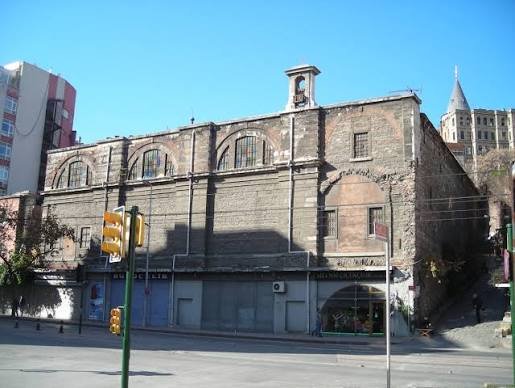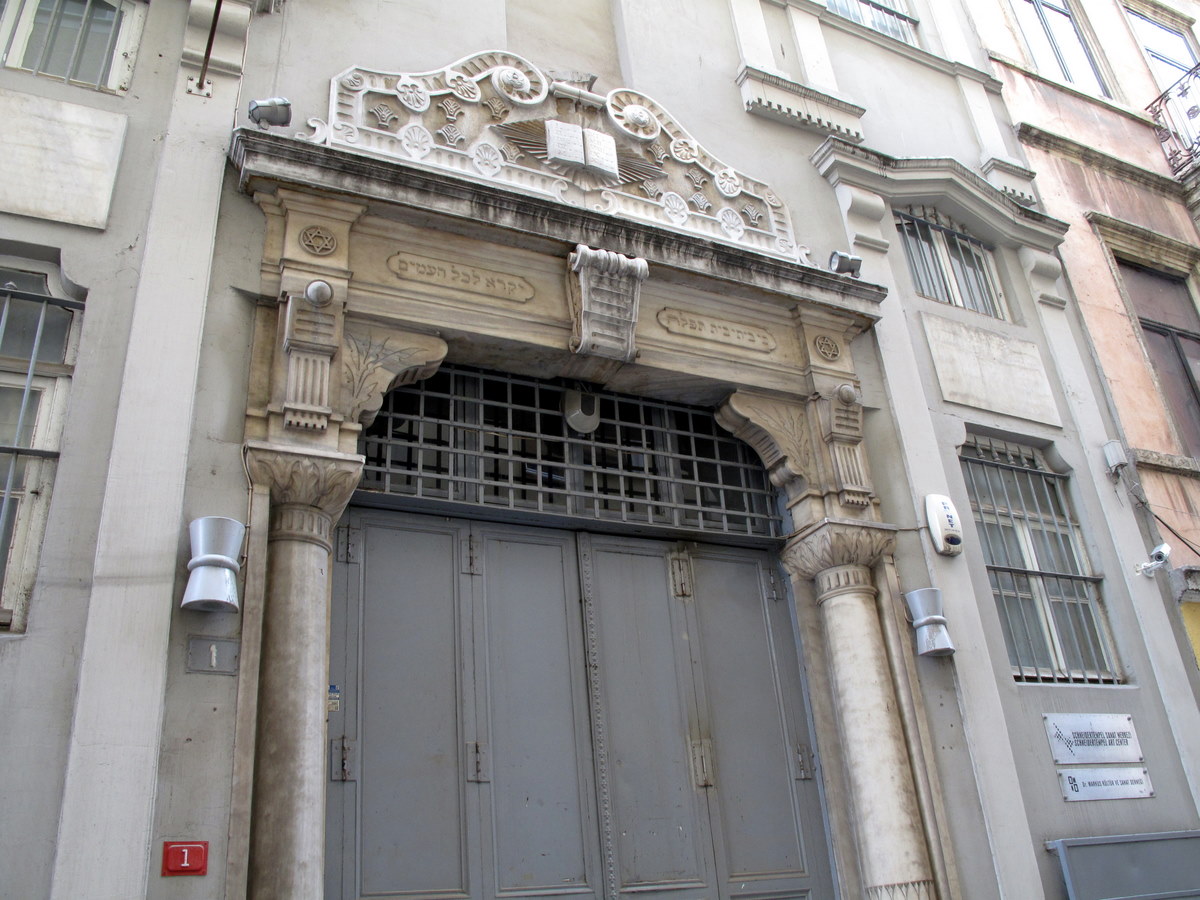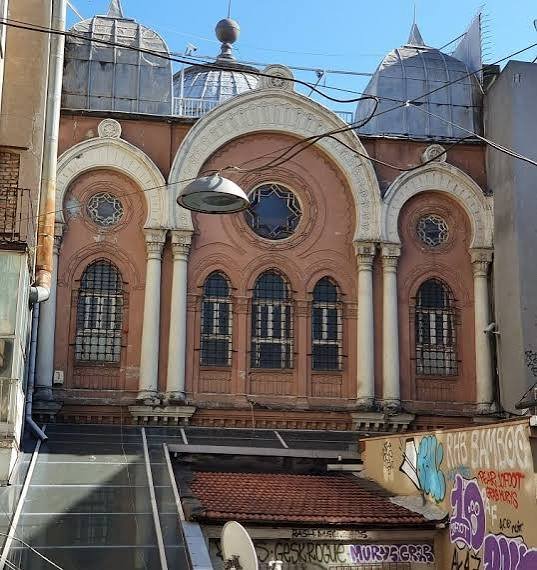
The first known Istanbul synagogue of Ashkenazi Jews, i.e. Jews of Germany, Austria and Eastern Europe origin, opened doors in 1831 in a house on Büyük Hendek Sokak. When they arrived in Ottoman territory, the Ashkenazi Jews wanted to preserve their peculiarities and orthodox practices, and did not want to blend with Sephardic Jews as they had more liberal approach to religion. This only worship place of Ashkenazi Jews was burnt down in 1866. After the fire, the Jews of Austrian origin built a wooden frame synagogue, known as “Österreich Temple,” on a lot where today Ashkenazi Synagog is situated at 37 Yüksek Kaldırım.
In 1900, with a permit granted by the edict of Sultan Abdülhamit II, they replaced this wooden frame building with a new synagogue of masonry construction. Costing 60 thousand Frank, the new synagogue was financed by the Austrian Jews, especially with a large contribution from Herman Goldenberg, a leading member of the community.
The designer of the building, which has a cathedral look, is given in some sources as the Italian architect Gabriel Tedeschi, while some others name G. J. Cornaro, a Venetian architect.
The synagogue is composed of seven floors with top two floors reserved for women. The holiest feature in any synagogue is the ehal, a niche or cabinet in the east wall where the Sefer Torahs (handwritten Torah scrolls, most sacred book within Judaism) are kept. According to Metin Delevi, the opening ceremony of the Ashkenazi Synagogue on 23rd September 1900 was led by Baron de Calice, the Ambassador of Austria. However the ceremony was criticized for a long time by the community, because popping champagne during the placement of Sefer Torahs into the ehal was not a Jewish tradition.
The ebony ehal in the Ashkenazi Synagogue resembles Ottoman pavilions. In memory of his wife Rachel who died in 1904, Carl Carlmann donated the woodwork of the ehal and the tevah (prayer pulpit), and both were carved out of ebony wood by master wood carver Fogel. Carlmann was the owner of the “Maison Carlmann” clothing store in Beyoğlu, and he later operated the Bonmarşe (Bon Marché) department store.
The Ashkenazi Synagogue, which is the only active Ashkenazi sanctuary in Istanbul, is open to the public for morning prayers during the weekdays and for Shabbat prayers every Saturday morning. Also, on Shabbat days that fall between Rosh Hashanah and Yom Kippur, a traditional Shabbat service is being held before the Chief Rabbi and the leading members of the community. The synagogue holds weddings in the Ashkenazi tradition, and the bride circles seven times around the groom. If the groom is Ashkenazi, the wedding is absolutely held in this synagogue. If the father of a boy is Ashkenazi, his Bar-Mitzvah ceremony is also held here. The population of Ashkenazi in Turkey is around 800, including those who are married to a Sephardim. Accordingly, it is estimated that the Ashkenazi Jews today accounts for only 4 percent of the total Jewish population of Turkey, whereas during the early 20th century, this community used to account for 10 percent of the total Jewish population in Istanbul.
Part of these themes: Galata's communities
Source: Akdoğan Özkan, A Traveler’s Guide to Galata (Nar Turizm, 2016), translated by Volkan Ersoy. Obvious misprints in the printed edition have been corrected.
Last updated: · Last checked: (address and map position)
Spotted a mistake or something missing on this page? Suggest a correction