Although most of the Armenians in Turkey are of Orthodox faith, there are some who converted to Catholicism under the influence of the missionaries. One of the most influential names of the era in this respect was Pope Clement VIII, who constituted in 1579 the Sacred Congregation for the Propagation in order to spread the Catholic faith among Christian communities. For the missionaries of the congregation, Istanbul was a suitable place because they would have the support of the Western diplomats at the Ottoman capital.
A priest named Clement Galanos came to Istanbul in 1630, and effectively helped spreading the Catholicism. With his knowledge of Armenian language and his skillfulness, he won not only the sympathy of Orthodox Armenian priests, but also of the Armenian youngsters who were athirst for the Western enlightenment. The efforts of the Orthodox Armenian Patriarchate to unite the Armenian community proved futile, and Catholic Armenian community continued its growth. Ultimately, and because the European nations pressed through their embassies, Sultan Mahmud II recognized the Armenian Catholic millet (meaning non-Muslim subjects of the Sultan) with an edict he granted in 1830. Subsequently an Armenian Catholic Patriarchate was established in Istanbul.
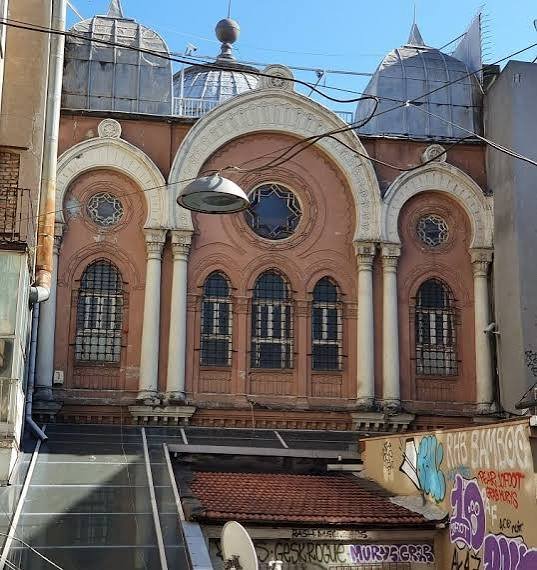
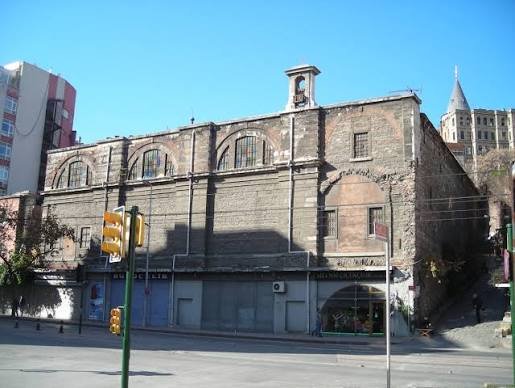
The first acts of the Armenian Catholic community were to select a spiritual leader who is acceptable to the Ottoman government, and to build their first church. Accordingly, the Surp Hisus Pirgiç Armenian Catholic Church was built on today’s Kemeraltı Street in Karaköy, next to St. Benoit High School. The construction of the church was funded by donations from the Armenian Catholic community, and it was opened for service in 1834. The community’s General Assembly gained official status in 1880, with an edict by Sultan Abdülhamit II.
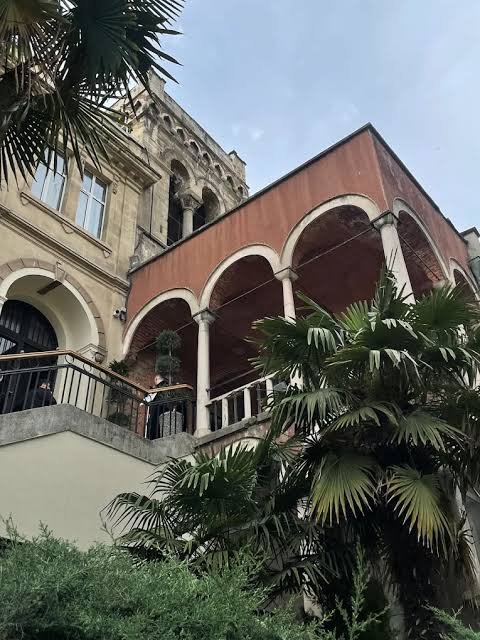
Through the course of time, the community opened other churches, as well as hospitals and district schools, and it saw a total of 12 patriarchs. After the foundation of the Republic, the seat of the Patriarchate was moved to Beirut in 1927, and its old seat in Istanbul became an Archbishopric. Today situated next to the Surp Asdvadzadzin (Virgin Mary) Cathedral in Atıf Yılmaz Street (formerly Sakızağacı) of Beyoğlu, the seat of the Archbishopric is the spiritual center of Istanbul’s Catholic Armenians.
Surp Hisus Pırgiç Church is still active today and its 150th anniversary was celebrated in 1984 with a religious ceremony.
The masonry construction church has four small altars in addition to its main altar. The narthex on the western side of the building is composed of three segments. The grave of Beşar Sıhabi, the Emir of Lebanon, is also in the church.
During the construction of the church a plague outbreak occurred in Istanbul. Subsequently, an icon of Virgin Mary from the church was carried through the streets of the city, which was thought to play some role in the weakening impact of the plague. Apparently Sultan Mahmut II also had thought so, because he gave a diamond-studded gift to the church. The icon of Virgin Mary is still kept in the church.
Part of these themes: Galata's communities
Source: Akdoğan Özkan, A Traveler’s Guide to Galata (Nar Turizm, 2016), translated by Volkan Ersoy. Obvious misprints in the printed edition have been corrected.
Last updated: · Last checked: (address and map position)
Spotted a mistake or something missing on this page? Suggest a correction