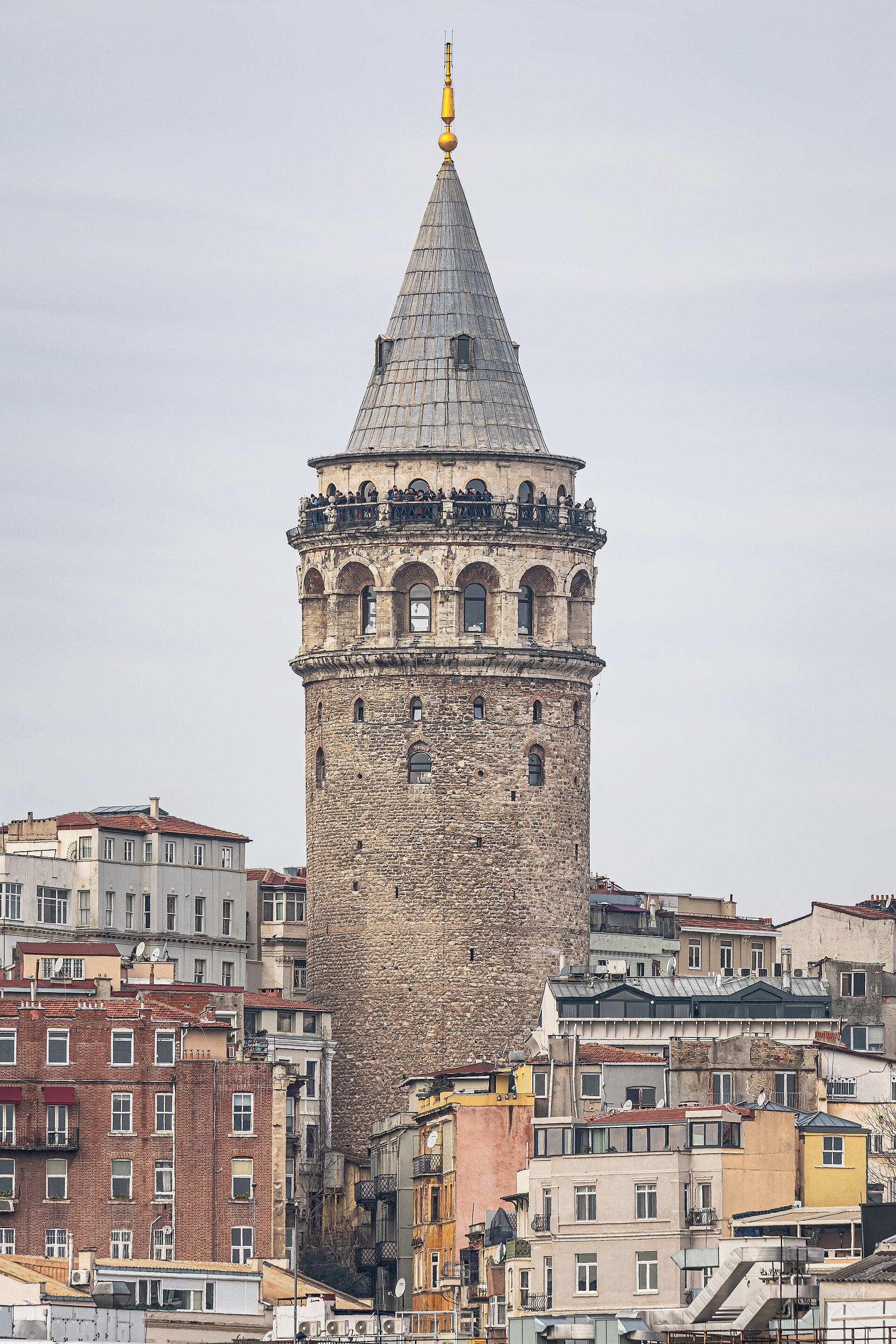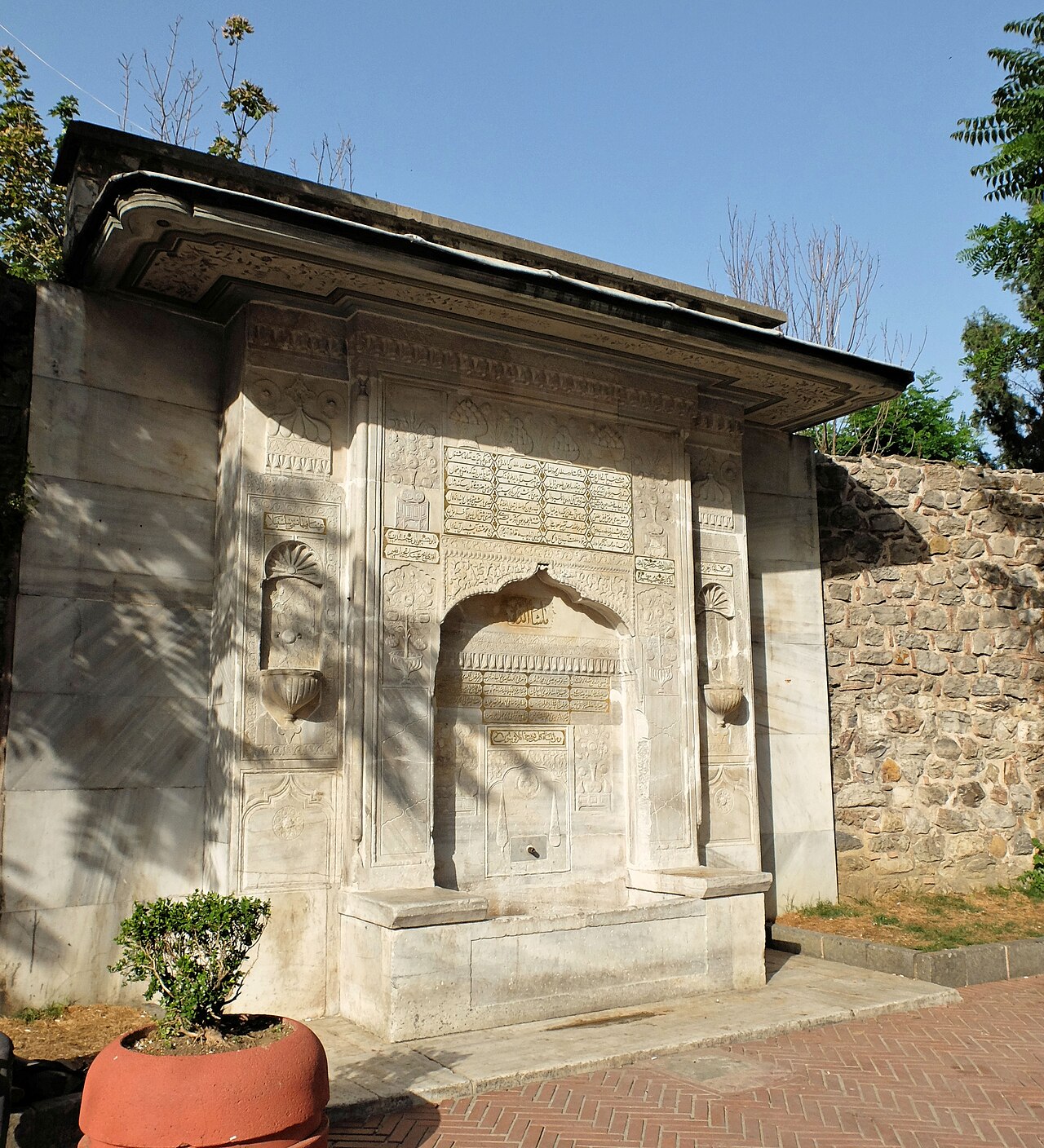
It is one of the most beautiful fountains of the 18th century. Although the fountain has no relation with Bereketzâde Hacı Ali b. Hasan, the first warden of the Galata Tower/ Castle, it was named so because it was once located next to the Bereketzâde Mescid in the Galata neighborhood of the same name.
Bereketzâde Fountain was built in 1732, in place of an old fountain, by Mehmet Efendi, the head defterdar of the era (defterdar: lit. treasurer/ bookkeeper, equaling to the title of Minister of Finance). In 1958, it was moved from its original location to the square in which Galata Tower stands today. Today, the only way to see the fountain in its original place is to check the 1856-dated engraving “Galata Tower and Bereketzâde Fountain” by the French orientalist painter and archeologist Eugène Flandin (1809-1889), or its reproductions, successfully recreated on pyrographic wooden panels by Selahattin Ölçeroğlu in 2004.
The single-faced fountain is composed of three segments. The main fountain segment is in the middle with a recessed niche, and the inscription in the niche’s arch reads “Maşaallah” (“Praise be to Allah”). Each of the other two segments on both sides features an elevated small tap with oyster shell basin in a rectangular niche. The top part of the fountain is adorned with two plates with split figs in them. On both sides of the two fig plates are footed plates with pears in them. The spaces between the plates are adorned with flowers.
Part of these themes: Ottoman Galata: Tophane and Azapkapı
Source: Akdoğan Özkan, A Traveler’s Guide to Galata (Nar Turizm, 2016), translated by Volkan Ersoy.
Last updated: · Last checked: (address and map position)
Spotted a mistake or something missing on this page? Suggest a correction