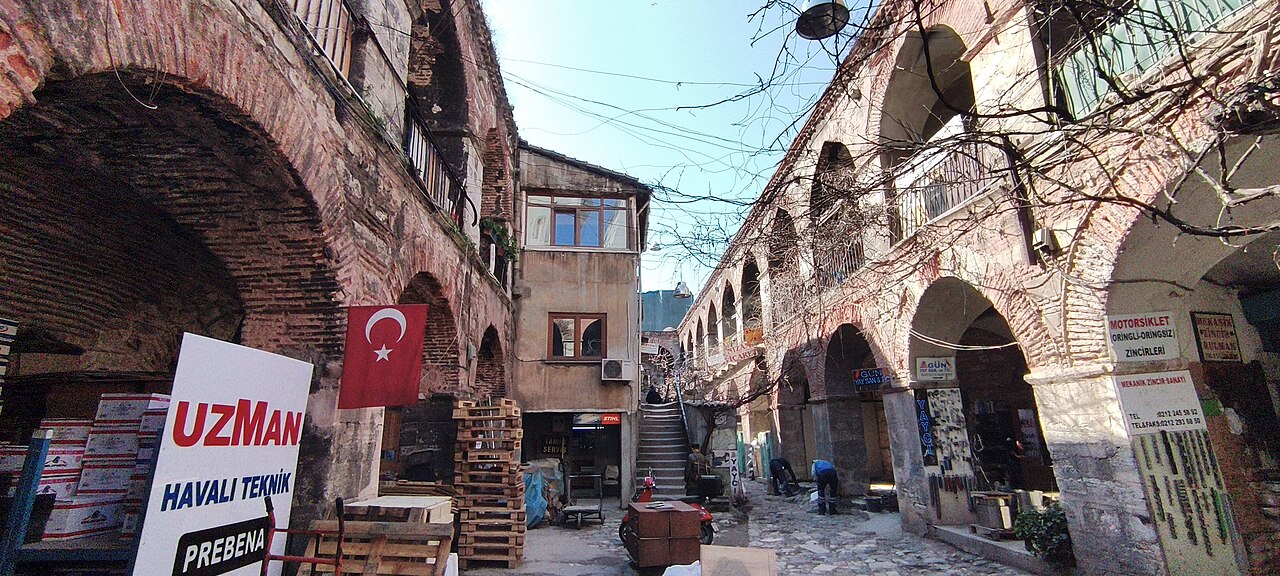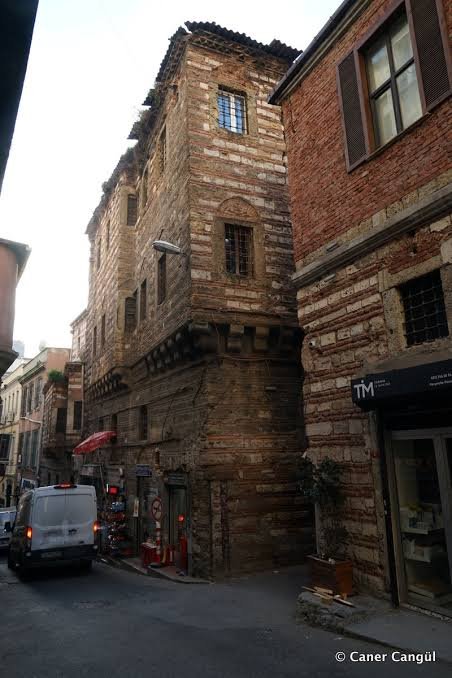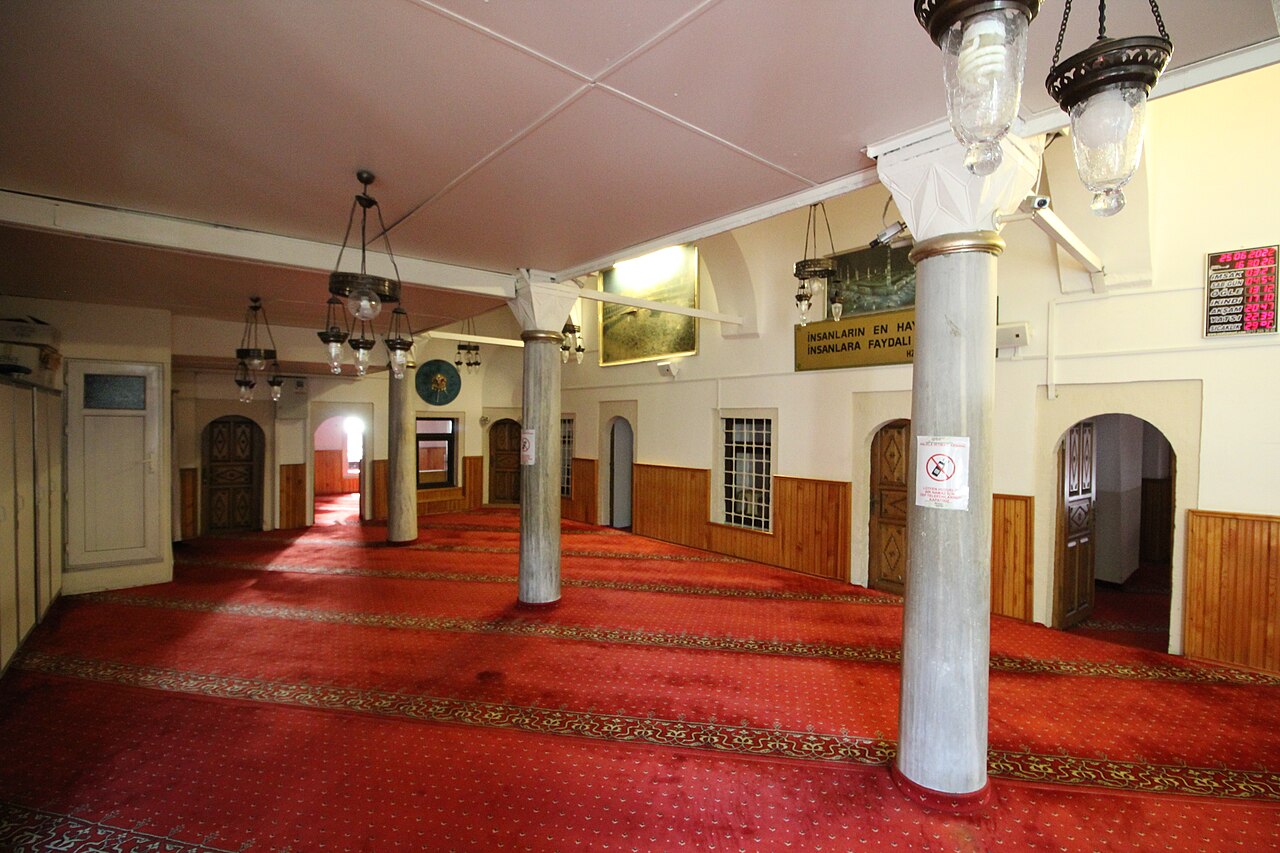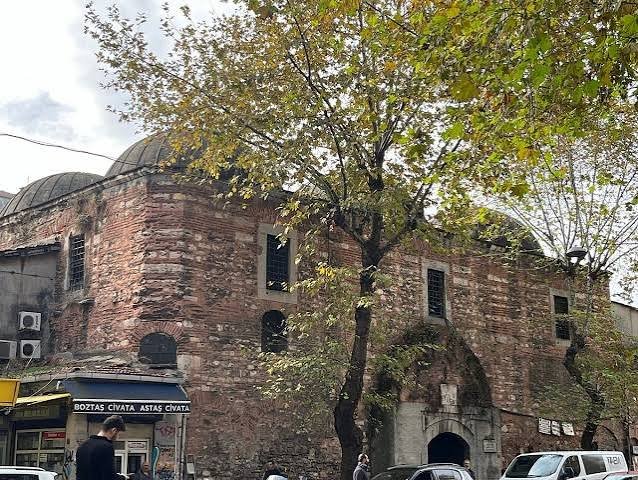
Bedestens were important commercial centers of Ottoman era Turkish cities. Galata Bedesteni, one of these centers, is located in the Lonca neighborhood, which extends inward from the Yağkapanı Gate (or, formerly, İskelekapısı Gate). The main entrance to the building is today from Tersane Street. Evliya Çelebi mentions about the bedesten’s four gates, as well as about the vaulted shops lining the outside façades, selling products such as broadcloth, Chios brocades, Chios fustians, and clothing of Cezâyir (Aegean archipelago).
The date of construction is debated. According to Ekrem Hakkı Ayverdi, who studied the architecture of the era of Mehmed the Conqueror (Mehmed II), the bedesten was among the Ayasofya endowments, constructed during the Mehmed II era and used as a warehouse. It was converted to a bedesten with a firman (edict) of Sultan Murad III in 1585. However, some sources, including this firman, contradict as to the number of domes. Semavi Eyice concludes that the bedesten is not from the Mehmed II era but older, and it was constructed with only nine domes rather than twelve or twenty. Today, Galata Bedesteni has a square plan and nine segments that are divided by four pillars. A dome sits on each segment.
The bedesten remained closed for long years during the Republic era. In 1966, the original wooden (oak) dividers were discarded and the building was converted to a commercial center. A historical function of bedestens was that they were primordial “banks,” or, more precisely, during the times when banks do not exist, people of Istanbul used to entrust to bedestens their money, jewels and other valuables, in sealed chests, for a fee. These chests, named as memleket sandıkları (or, “homeland chests/ funds”), used to be secured in the vaults of the bedestens. It may be noted, as an interesting aside, that the foundation of the Ziraat (Agriculture) Bank was based on these funds.
From recent research
An order for two kantars of soap in Galata
A court register entry shows an agreement for two kantars of soap to be brought to Galata at 530 akçe per kantar. Muhammet Ali Horoz gives the entry together with its register number.
Source: Muhammet Ali Horoz (2019), 17. Yüzyıl Başlarında Galata’ya Gelen Ticari Ürünler ve Galata Gümrük Bölgesi, p. 146, Galata court register 40, 3a/2.
Part of these themes: Ottoman Galata: Tophane and Azapkapı · Banks and hans
Source: Akdoğan Özkan, A Traveler’s Guide to Galata (Nar Turizm, 2016), translated by Volkan Ersoy. Obvious misprints in the printed edition have been corrected.
Last updated: · Last checked: (address and map position)
Spotted a mistake or something missing on this page? Suggest a correction