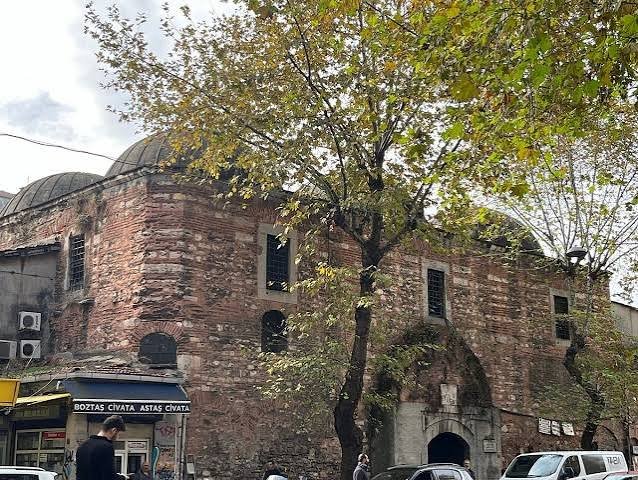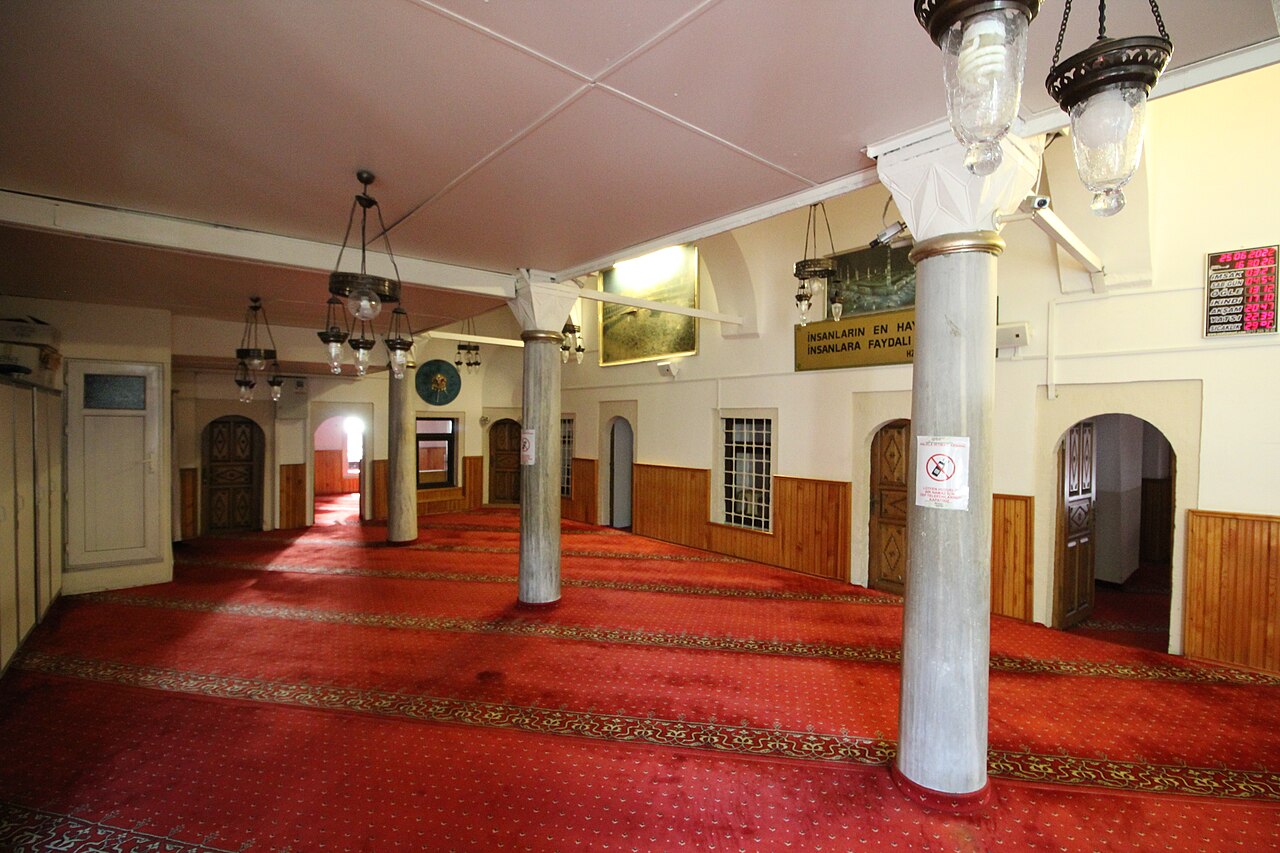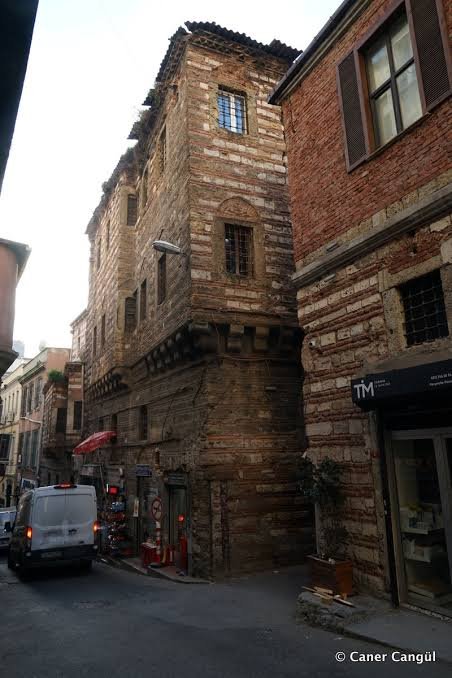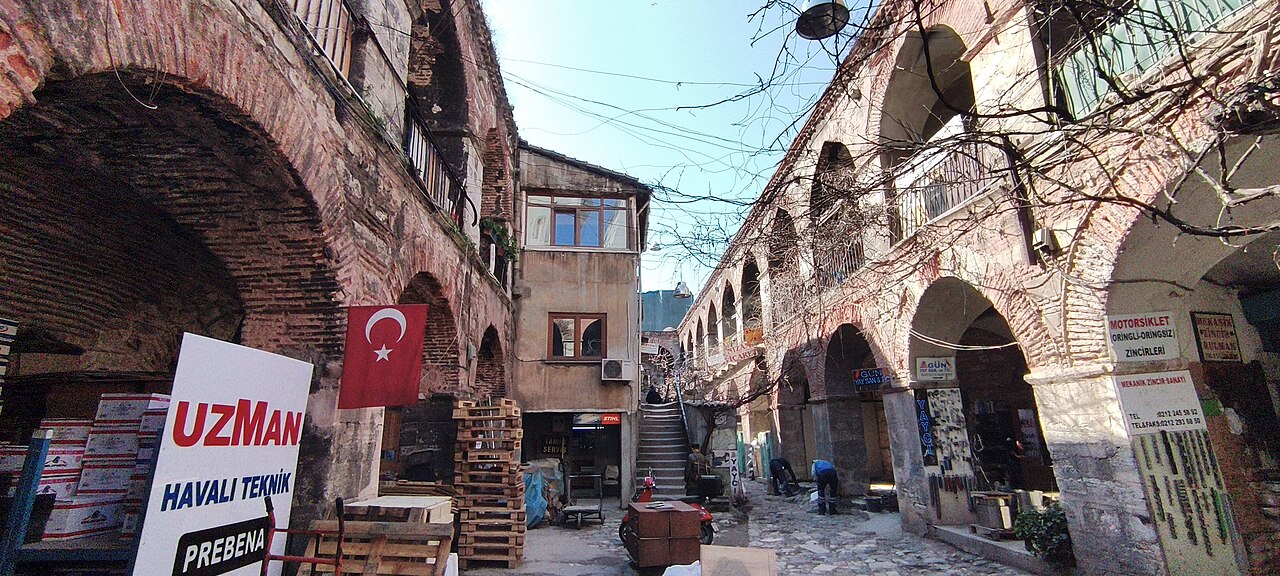
Galata had another han, rather operating like a caravanserai for merchants who visit the city. Known also as Rüstem Pasha Caravanserai, it was the most important commercial building of Ottoman Galata besides Bedesten and Yelkenciler Han. It was registered as “Kurşunlu Han” under the 1561-dated endowment of Rüstem Pasha, one of the grand viziers of Sultan Süleyman the Magnificent. It was built by Architect Sinan between 1544 and 1550. During those days, Kurşunlu Han was close to Yağkapanı and Balıkpazarı gates on the Golden Horn coastline, and it was favored mostly by Christian customers. Entry to the caravanserai is through a gate with a pointed arch. Next to the entrance is a fountain basin from the Byzantium era, made by carving a Corinthian column head. Kurşunlu Han has two floors. The pillars and the brickwork of the ground floor are different from those on the second floor, which suggests that it might be built on the plot of St. Michele Church after its demolition. Built as the seat of Genoese religious leaders, the first mention of this church dates back to 1296. The support system on the second floor is entirely in the style of 16th century Ottoman architecture. The windows have rectangular stone frames.
The han measures 83 x 35 m and its classic style, narrow and long courtyard measures 47 x 8.25 m. The ground floor has 27 rooms and 2 eyvans (or, iwan, vaulted portal opening onto a courtyard), while the second floor has 30 rooms.
Part of these themes: Ottoman Galata: Tophane and Azapkapı · Banks and hans
Source: Akdoğan Özkan, A Traveler’s Guide to Galata (Nar Turizm, 2016), translated by Volkan Ersoy. Obvious misprints in the printed edition have been corrected.
Last updated: · Last checked: (address and map position)
Spotted a mistake or something missing on this page? Suggest a correction